Tuesday, August 9, 2016

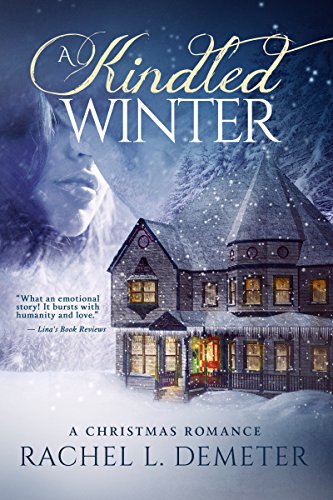
A Kindled Winter - Rachel Demeter's exploration of phobias and fetishes

Synopsis:
A week before Christmas, Jeseca Reed sets off for rustic Blue River, Oregon—her childhood home and a vault of tender memories. However, fate takes an unexpected turn when she’s left stranded in the mountains’ vast, untamed wilderness. Desperate and alone, she seeks shelter at a cottage and finds herself in the arms of a mysterious stranger.
Dr. David Drake was once a renowned cardiovascular surgeon. But a devastating tragedy has left him scarred both inside and out, unable to use his hands to operate again. For the past five years, his Blue River cottage has been his sole escape—a safe haven where he can shut out the world, bury himself in his grief, and reunite with his son’s memory.

Together they are summer and winter. Fire and ice. And yet a poignant connection forms between them. Jeseca awakens David and thaws his heart with a romance hot enough to melt snow. But before David and Jeseca can fully embrace each other, they must wade through darkness and confront the ghosts of their pasts…

Equal parts steamy and heartfelt, A Kindled Winter brings the spirit of the holidays to life with a passionate story of second chances and healing love.  

My thoughts:
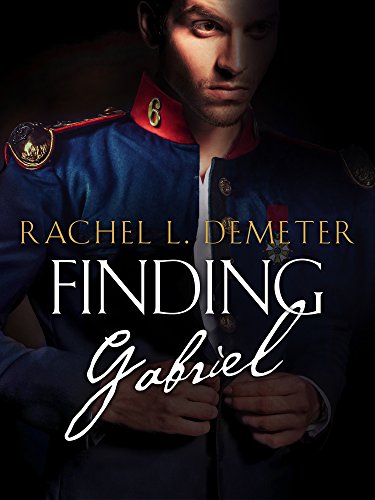
I have to give this young and intense author kudos for admitting that she has a deformity fetish and working it into a cozy holiday romance. A Kindled Winter is a second novel featuring a male protagonist sporting some horrific and mystifying injuries that, thankfully, do not affect his libido. Another must-read is her Gothic historical romance Finding Gabriel. I think the reason so many girls find the Beauty and the Beast story so compelling is because it's in our psyche to be fascinated by deformity and the juxtaposition of the grotesque and the sublime. Many young girls fantasize about tending to a wounded soldier. Rachel Demeter's protagonists did not acquire their respective deformities in a battle but rather a moment of weakness and/or forgetfulness. That adds poignancy and tragedy. A disfigured hero who got his injuries in a line of duty would be a little too polarizing and redundant - chocolate cake with chocolate sauce. To her credit, she shows how one careless act in one split second can wreck her entire life, what an unfairly high price one must pay for a relatively minor transgression. I also see a pattern of her vocalizing her phobias and fears. Both of her novels touch upon the subject of losing one's child. As far as I know, she is not a mother yet - hopefully will be in the near future - but I can tell that she had tried to imagine what it would be like to lose one's child to unnatural causes. As a writer, you need to have that universal empathy and imagine what it would be like to experience certain emotions you haven't experienced - and hopefully never will - in real life. I said this before, and I will say this again. I hope this author unfolds her wings and sores above the constraints of the romance genre, beyond what the predominantly female readership expects. There is a lot more latitude and room for maneuver with rape, battle and disaster scenes than with candlelit foreplay.

Monday, August 8, 2016

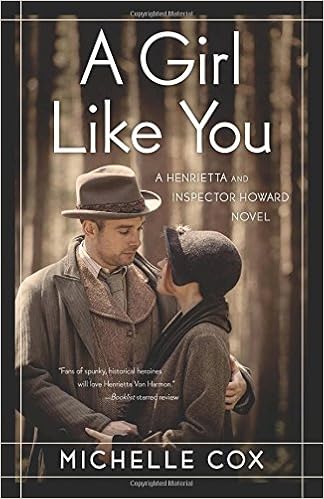
Sacrifice redefined - interview with Michelle Cox, author of A Girl Like You

Greetings, commies, libbies, femmies and book lovers! 
Today's guest is a fellow historical novelist, Michelle Cox, author of an acclaimed romantic mystery A Girl Like You. I have been following her blog featuring extraordinary stories of ordinary Chicago people, immigrants, day laborers, aspiring entrepreneurs. Today she joins us for a thorough and candid discussion about her book and the definition of self-sacrifice and gender roles during the Great Depression. She also opens up about her experience with her publisher She Writes.


MJN: Your blog, which I have been following religiously, features stories of sacrifice, sometimes eager and sometimes begrudging. Here is the recurring scenario: a girl leaves school to get a job to support her family; then she gets married and leaves the workforce to care for her husband and kids, sometimes stepkids. To a 21st century woman that sounds absurd. 

MC: You are re so right—to a 21st century woman, it does sound absurd, but that is definitely what happened back then.  What I find amazing is that most of the women I’ve featured in my blog (besides one or two exceptions) did not feel fulfilled until they took on the role of housewife.  Even if you don’t bring motherhood into it, they all seemed to feel that if they weren’t actively making a home for a husband, they were somehow a failure, no matter what their job or career was.  So when they did marry, they were often very willing to give up a job because being a housewife was the number one achievement.  Perhaps that concept existed because as a housewife, they might have at least a little bit of control over the running of a household; the alternative was to remain a spinster, living with her parents under their rules with very few social outlets (no weekend affairs or casual boyfriends!) and eventually becoming their caretaker.

MJN: The background scenario in your novel A Girl Like You also revolves around the theme of sacrifice. Your protagonist Henrietta is stuck caring for her bitter mother and younger siblings after her father commits suicide following the stock market crash. When Henrietta gets involved in a murder investigation, I imagine, for her it's a welcome reprieve from the routine of catering to her toxic family's needs. Henrietta is vulnerable, because she is looking for an emotional outlet, for that adrenaline rush. It's a miracle that she doesn't fall into a trap. 

MC: Yes, Henrietta does shoulder a lot of responsibility, knowing that she’s the breadwinner of the family.  At heart she is very pure, though she’s seen a lot of the seedier side of life, and, yes, she is quite vulnerable.  She wishes to be a “good” girl, but unfortunately, because of her extreme beauty, mixed with her poverty, risqué jobs seem to find their way to her.  Fortunately, as in all fairy/folk tale fiction, Henrietta has several “protectors” along the way.  These would be Stanley, the love-struck neighborhood boy that follows her around; Mr. Hennessey, her pseudo-father figure; and Lucy and the lesbian gang at the Marlowe who take Henrietta under their wing.  And the, of course, we have the inspector himself who starts out as her ultimate protector but becomes emotionally entangled, thereby making him the very person she perhaps needs protecting from the most.  It makes her decision about what to do with him the real test of her virtue, not what happens between her and the killer.  So she does sort of fall into a trap, just not the one the reader is expecting.

MJN: Every large city has an "underbelly" and an underground world that many respectable citizens know little about - or pretend they know little about. There are some parts that reputable young ladies just don't go into. You can sit in your ivory tower and be totally oblivious to the sewer running right beneath it. 

MC: Yes, Henrietta, for all her experience, is still a bit naïve to the true grimness of the city around her.  Her poverty has forced her to live in this underbelly, and yet in true fairy/folk tradition, she remains untouched by it.  There’s a little bit of Dickens here, if I might be so bold as to make that comparison.  Henrietta is a Little Dorrit-type, who, as I said in the previous question, has many protectors to help shield her.  In fact, Stanley is a bit reminiscent of John Chivery, the turnkey’s son, and of course, Inspector Clive Howard has a flavor of Arthur Clennam to him—disinterested kindness that perhaps turns to love? 

MJN: Your novel contains the elements of mystery, social criticism and romance. Does any of the elements prevail to put the novel in a particular genre? Is it a romantic mystery or a detective romance? 

MC: Well, that seems to be the million dollar question!  I’d like to say that it’s historical fiction with a mystery and romance aspect.  A Girl Like You is the most “mystery” of the books in this series.   The next two in the series I’m calling Romantic Suspense, but who knows how the fourth will come out?  I guess there’s a little bit of genre-blending going on, which is why it’s safer to just call them historical fiction!

MJN: Tell us about your experience with She Writes and the benefits / challenges of going with the model known as "curated self-publishing". Based on the number of positive reviews, it sounds like the publisher helped you with editing and marketing.

MC: Wow!  Big question.  She Writes Press is a hybrid publisher, which is something relatively new on the publishing landscape.  They operate very much like a traditional publisher in that they vet and distribute traditionally through Ingram Publishing Services.  Those two things are huge! The difference is that you pay an upfront fee, but that includes your cover, editing, proofing, interior design, managing your metadata, uploading across all online channels and distribution.  You also have to pay for your print run, which can be either POD or off-set, depending.  But besides all these services, you maintain complete control of your project (which is huge when compared to traditional publishing); receive a higher percentage of the royalties (60%); and maintain all rights, including film, foreign and audio.  It’s a great set-up, really.  It’s all about the author and the publisher truly being partners in getting your book out there.  It’s a model that is growing and is expected to take over more and more of the publishing space because the Big 5 is operating on an out-dated model they can no longer sustain.  Self-publishing has its limitations as well, the biggest one being selling into the marketplace.  Hybrids offer a unique third way.

In terms of marketing, all authors are on their own, really.  Even most of the authors signed by the Big 5 have to come up with their own marketing plan.  It’s ironic that most of the marketing budget at the Big 5 goes to the giants, as if they need any more PR!  So, yes, as a hybrid author, I’m responsible for my own marketing.  Besides working with other She Writes writers on a private forum in which we trade ideas, network, and offer suggestions and support, I have hired a publicity firm, Booksparks, which has handled my campaign very well, I think.  They’ve gotten me some great reviews in the trades and a lot of great press.  

About the author:

Michelle Cox holds a B.A. in English literature from Mundelein College, Chicago, and is the author of the award-winning, A Girl Like You, the first in the Henrietta and Inspector Howard series. She is known for her wildly popular blog, “How to Get Your Book Published in 7,000 Easy Steps—A Practical Guide” as well as her charming “Novel Notes of Local Lore,” a blog dedicated to Chicago’s forgotten residents. Michelle lives with her husband and three children in the Chicago suburbs. 


A Girl Like You has received two starred reviews from Library Journal and Booklist and placed as a Finalist in Romance in the 2016 Next Gen Awards. It has also been listed as a top spring read by Your Tango, Popsugar, Culturist, and Buzzfeed and is currently enjoying its second print run. Book two of the series, A Ring Of Truth, will be released April 2017.


Friday, August 5, 2016

Connected Underneath - GLBT psychological thriller by Linda Legters


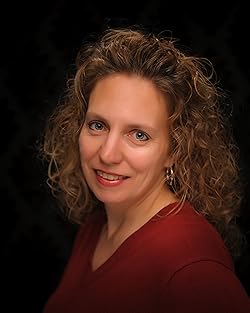
Today I am honored to feature Linda Legters, a fellow Connecticut novelist and writing instructor, author of a psychological thriller Connected Underneath.

Synopsis:
Madena, upstate New York. Like any other small town, everybody keeps an eye on everybody else's business without recognizing the secrets that connect them. The wheelchair-bound Celeste conjures up lives from what she sees and thinks she sees while peering through binoculars from her kitchen fan vent. Fifteen-year old Persephone trades sex for tattoo sessions that get her high and help her forget her girlfriend doesn't love her. Theo was the high-school bad boy who couldn't have the respectable girl he adored from afar, but now, sitting behind the counter of the last video store in town, worries wretchedly about the restless daughter he never understood. Natalie, trying to grasp the last shreds of respectability, would do anything to forget the baby she gave up long ago, including betray her husband and son. Celeste, longing to connect, combines truth with fantasy, intervenes and interferes, finally understanding that things have gone terribly wrong and that she stands at the heart of disaster.

Connected Underneath is a lyrical, scalpel-keen dissection of the ties that bind and of those that dissolve.

MJN: You and I are both CT authors. The Fairfield County is often associated with the NYC scene, and authors are often pressured (at least in my experience) to embrace that New Yorker mentality and esthetics. As a workshop facilitator, how do you ensure that all voices are heard, regardless of the political affiliations of each author? 


LL: I haven’t felt that pressure, but it’s possible this is because it is engrained in me, making me part of it. I do feel a distinct difference between urban sensibilities and Midwest (I’ll leave Southern to others) but there must be room for both, since there is an audience for both. Urban seems to be defined as edgy, radical, harsh, but there are soft stories in NY and other cities, just as there is edge in, say, Iowa. Besides, so many New Yorkers were born elsewhere. We don’t lose our Midwest or Southern or foreign sensibilities just because we move to New York, or our New York sensibilities when we leave. I believe our experiences shape the way we see New York, and that New York shapes the way we look back.


As far as workshops, I tell my students that a good story reveals instead of yelling, ‘you have to believe this,’ and that literature sheds light into corners of motivation and behavior. A reader should be allowed to reach his or her own conclusions, and evaluate where a writer has taken them. Essays are the place for exploring political positions, and the place for outright persuasion. Fiction ought to allow us to see the very many ways there are to be human.  


MJN: Your novel Connected Underneath is published by Lethe Press, which appears to be a boutique thematic publisher of gay and lesbian speculative fiction. What is the requirement for a novel to fall into the GLBT category? As our society is becoming more accepting of all sexual expressions, do you see GLBT literature going away as a separate genre and becoming incorporated into the mainstream? 


LL: It’s been an interesting journey having a novel published by an LGBT press while not being a member of the community. It has also prompted all sorts of conversations about the true depth of societal acceptance and tolerance. After all, Orlando is fresh, and anti-LGBT hate crimes top the charts, and several states are still trying to pass discrimination laws. Television and movies still haven’t come to terms with how to handle LGBT characters, not completely. Gay, lesbian and trans are still often seen as part joke, often stereotyped, often seen as aberrations which implies something unnatural, instead of part of the fabric of our daily lives.


One issue that has come to light for me is that while the LGBT community wants full acceptance, they don’t want to lose their identity. I see this as no different from, say, someone from Italy wanting to be fully accepted into American life but not having their Italian heritage denied. In other words, see me as a whole person, with many facets, regardless. This seems no different from us women wanting to be fully accepted, and not segregated in any way, but still seen as women. I assume it’s the same for Blacks and Hispanics. There are fewer gay presses and gay lit outlets, but hopefully the LGBT voice won’t be obliterated in the name of assimilation.

MJN: The names of the characters in your novel are very symbolic. We have Celeste, Persephone and Theo. They evoke cosmic, mythical themes. 


LL: True. Hopefully not over the top. I discovered that each of these characters were influenced by things that can’t be seen, and sought names that reflect this.

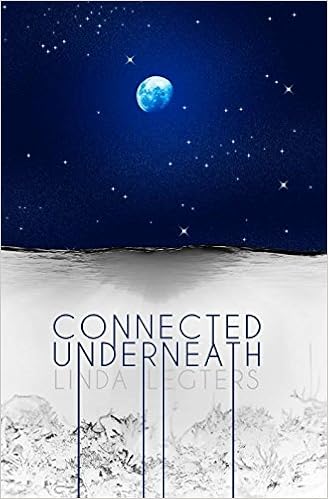
MJN: That brings me to my next question. Your cover is very chilling in its simplicity. The frozen landscape, the indigo sky and the moon as an indifferent onlooker. Did you have any input in designing the cover? 


LL: I did! Steve Berman at Lethe Press was very generous with this. I hear it’s uncommon for an author to have input. I absolutely didn’t want any imagery that defined the book or segregated it as ‘women’s lit,’ and I didn’t want to use the obvious imagery of wheel chairs or tattoos. I asked that water be a dominate theme, that it be largely monochromatic, and either Steve or the designer saw how the moon figured in to the story. Three or four options were suggested, but as soon as I saw this, I knew it was the one.  “Moon as indifferent onlooker.” I love that.

MJN: You have traveled across Europe as well as New Zealand and Australia. Your novel is set in upstate New York. Do you feel that the experiences you've gathered in other parts of the world affected your worldview? Do you consider yourself an American writer, or just a writer whose novel happens to be set in America?