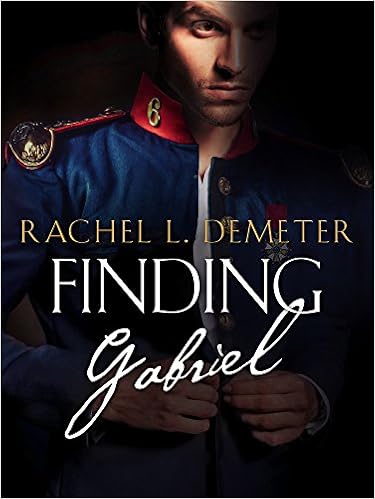
A few months ago I had the privilege of interviewing Rachel L. Demeter
for my blog. I felt a kindred spirit right away. This angel-faced
Californian who is still in her twenties has an old soul that
understands torment and can write convincingly about it. After reading a
few reviews for Finding Gabriel, I had high hopes, and the novel
exceeded my expectations in so many ways. I applaud the author for
taking risky chances and the publisher for keeping the integrity of the
manuscript, with so many publishers slapping an age minimum on sexually
active characters in the name of political correctness.
My
instant reaction was: "Wow, I've met these characters before ... Once
upon a delicious nightmare." Gabriel and Ariah have always lived in my
soul, in the depths of my imagination. The author taps into the darkest
erotic archetypes that live in our collective psyche. You can sense the
solid foundation of French and English Romanticism - Victor Hugo,
Alexandre Dumas, Gaston Leroux, the Bronte sisters. Those authors used
body horror sparingly and skillfully as a literary tool to create
certain visual and emotional contrasts.
You can tell that her
robust talent bursts beyond the constraints of the romance genre. I have
to say, the most powerful, poignant and memorable passages in the
novel do not involve lovemaking. Although the romantic component was
convincingly executed, it was the scenes of battle, violence and public
mayhem that really sent shivers down my spine. I hope that the young
author continues to expand her repertoire in the direction of horror,
Dystopia and literary realism.
Sunday, January 3, 2016
Friday, January 1, 2016
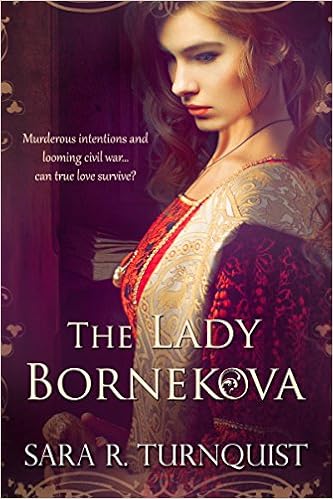
The Lady Bornekova - a clean Bohemian romance from Sara Turnquist
Happy New Year, commies!
Today's guest is Sara Turnquist, whose fascinating resume spans zoology to historical literature. Today she joins us to discuss her historical novel The Lady Bornekova set in 15th century Bohemia and the loose boundaries of what is labeled "clean fiction".
MJN: Your novel The Lady Bornekova was
published by Clean Reads. I can see the appeal of a counter-movement to the
"steamy" novels. I know there is a market for Christian novels. I
imagine, not everything that is clean is necessarily Christian. Can you elaborate
on the subtle difference?
ST: A "clean"
novel simply means that it doesn't contain language, gore, "open
door" sex scenes...you know, things that would give it an "R"
rating if it were a movie. A Christian novel is going to have a faith arc in
the story. A character that comes to faith or has a faith story.
MJN: I am of Slavic descent myself, so it was a pleasure to see
a historical novel set in Central Europe, which remains somewhat of an
underexplored frontier. By choosing a locale off the beaten path, an author
takes certain risks but also increases his/her chances of standing out.
ST: That is true. It
was challenging for me to find a lot of research on this specific area/period
in English (and I do not speak/read Czech). But I have visited the Czech
Republic several times and absolutely fell in love with the region and the
culture, becoming fascinated with what history I heard. I visited this
chateau/summer palace and was quite inspired to set a story there.
MJN: What sources did you rely on while doing the research
for The Lady Bornekova? Did you ever run into a situation where
different sources were giving you conflicting information?
ST: As I mentioned, it was difficult to find as
many resources in English as I would have liked. There was definitely
conflicting information and, this being my first novel, I was new to the amount
of research that would be necessary. I relied heavily on the location that
inspired me and the information I gathered while in the Czech Republic (which
was largely told to me by Czech people as there are not many sources there
written in English).
MJN: This is not a criticism by any means, but the blurb
describes Karin, the main character as "strong-willed and
determined". Do you think it's necessary to rely on that language to
connect with your readership? Sometimes I feel like authors, especially
female authors writing about female historical figures, are under pressure to
make that disclaimer, so the readers, God forbid, would not presume the heroine
to be a "damsel in distress". Being strong-willed meant something
different in 1400s.
ST: You make an
interesting point...all of my completed novels (which, this is the first one to
be published) feature a female character as the central main character. I try
to find words that describe them adequately. Of them all, I would say Karin is
the most strong-willed. I wanted to communicate about Karin that she has a mind
of her own and does go against the grain as much as she can for a woman of the
1400s as, you are right, it meant something much different during that time. I
have another novel being published in January 2016 with a female character who
I describe as being "somewhat naive" as she is rather sheltered in
her upbringing and ignorant to the ways of the world. "Strong-willed"
is not a word I would use to describe this character (not to say she doesn't
possess a strength of character all the same).
MJN: The cover has a bit of a Preraphaelite feel to it. Is
it an actual painting or a stock photo made to look like a painting? I
commend you for not cutting the woman's head off, leaving just the lips.
ST: I have gotten so
much positive feedback about the cover. I cannot take much credit for the
artwork. I gave my input, of course, but the graphic artist, Cora Graphics, who
works with Clean Reads, is the one who deserves the accolades. She is amazing,
in my opinion. I am almost certain it is a stock photo made to look like a
painting. That is my understanding.
Friday, December 18, 2015
Heroism beyond skin color - Steering to Freedom - a novel by Patrick Gabridge
Greetings, commies and social justice warriors!
Today's guest is a fellow Penmore Books author, Patrick Gabridge - a playwright and novelist. I have to admit, it took me a long time to muster the audacity to write this post. Every time I try to engage in a conversation about race, let's just say, they don't end well. At any rate, this post is not about me. It's about my guest of honor, Mr. Gabridge, and his hero Robert Smalls, an African-American hero who crafts a daring plan to steal the steamship Planter and deliver it, along with crew and their families, to Union blockade.
______________________
My thoughts:
Patrick
Gabridge's Steering to Freedom is an
absolute must-read for all history majors focusing on American Civil War.
This novel is an authentic account of one man's rise to heroism and assumption
of a task that's nothing short of apostolic. It's also a must-read for anyone
contemplating getting involved in social activism around the delicate and
volatile issue of interracial relations. I find that many well-meaning
individuals lack that background knowledge and have a rather cartoon-like
two-dimensional understanding of history and the racial factor. The nature of
the interracial conflict constantly changes. Racism is like cancer. You
think you've got the right diagnosis, and you start a chemo protocol, and you
think you're making progress towards victory, and then realize that the
malignant cells have mutated and become resistant to the drug, and now you need
to find a new protocol. The remedy that was relevant 50 years ago is not relevant
today. You have to reevaluate the nature of the disease and come up with new
treatment.
Incidentally, I know that the author has a deeply personal interest in African American heritage and advocacy for that particular group. Perhaps, I should warn my mixed audience that I'm coming from the "I'm color-blind" and "all lives matter" camp. (Yes, I know I'm taking risks of being crucified as a callous, ignorant, privileged republican middle-class white woman for saying that). Robert Smalls is not a "black hero". He's a hero, period. Who happens to be black. His wife Hannah, the mother of his children, whose love serves as a catalyst to Robert's daring actions, is not a "strong black woman", as some readers might be tempted to label her. She is just a woman, a mother, whose physical and emotional resilience are result of fight for survival. As I was reading Steering to Freedom, the color of Robert's skin was not constantly on my mind. I don't know if that was the intention of the author.
Gabridge's creative activities go beyond writing fiction. He is also a playwright, and his talent for dramatic dialogue is very apparent. I would love to see him adapt his own work to stage. His protagonist is an icon of courage and self-sacrifice, and a role model for all men - regardless of the color of their skin.
Incidentally, I know that the author has a deeply personal interest in African American heritage and advocacy for that particular group. Perhaps, I should warn my mixed audience that I'm coming from the "I'm color-blind" and "all lives matter" camp. (Yes, I know I'm taking risks of being crucified as a callous, ignorant, privileged republican middle-class white woman for saying that). Robert Smalls is not a "black hero". He's a hero, period. Who happens to be black. His wife Hannah, the mother of his children, whose love serves as a catalyst to Robert's daring actions, is not a "strong black woman", as some readers might be tempted to label her. She is just a woman, a mother, whose physical and emotional resilience are result of fight for survival. As I was reading Steering to Freedom, the color of Robert's skin was not constantly on my mind. I don't know if that was the intention of the author.
Gabridge's creative activities go beyond writing fiction. He is also a playwright, and his talent for dramatic dialogue is very apparent. I would love to see him adapt his own work to stage. His protagonist is an icon of courage and self-sacrifice, and a role model for all men - regardless of the color of their skin.
Wednesday, December 16, 2015
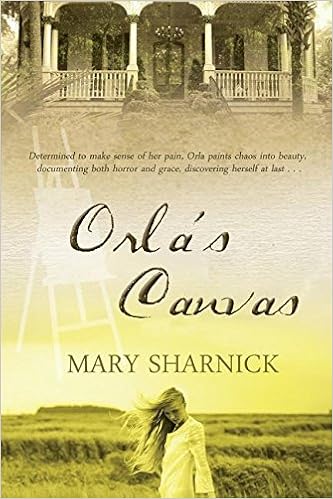
A 20th century female Huck Finn - Orla's Canvas by Mary Sharnick
Hello, commies and lovers of great fiction!
Today I am pleased to share a review of a novel by a much esteemed fellow author Mary Donnarumma Sharnick. I have read her two previous novels set in the Venetian lagoon. This time around the author sets her novel in "misspelled town" of St. Suplice, Louisiana. I admit that I do not read a lot of fiction set in the American South, but after reading Orla's Canvas I think I am going to explore that branch of literature further. It's interesting that the author herself is not from the south. She's actually a native of Connecticut. The fact that she was able to recreate the authentic southern ambiance testifies to her talent.
________________________________________________
Imagine elements of Mark Twain, William
Faulkner and Flannery O'Connor distilled and harmoniously concocted in a highly
literary and authentic modern masterpiece. Orla's Canvas is a novel that
looks like a painting and tastes like a Southern feast with Irish, French and
African flavors mixing together. The protagonist Orla Gleason is a
painstakingly observant yet refreshingly non-judgmental prepubescent Southern
girl of Irish extraction who is trying to find her voice in the volatile
political climate of 1960s. Nothing escapes her senses, no smell, sight or sound. She's
almost a creature without skin, hyper in tune with the elements. Some people's
nervous systems are wired like that. They pick up on subtlest of stimuli that
go over most people's heads. Orla can tell you the flavor of every ice-cream
cone she's had, the texture of the floorboards, the temperature of the water in
the river on any given day. Paired with photographic memory, such intense
sensitivity can lead to mental instability - unless the person is given an
outlet for channeling those sensory impressions. For Orla Gleason it becomes
art. I would not hesitate to call her a 20th century female Huck Finn.
Mary Sharnick does understand violence and brutality, and I applaud her skill for depicting them in a very raw, nonchalant manner without gratuitous editorial melodrama. I am familiar with the author's two previous novels set in Venice during the 17th and 15th centuries respectively. Orla's Canvas is very different from the point of view of setting and focus, but if you read Sharnick's previous novels, you will see how she continues to capitalize on her talent for depicting tragedy and the subsequent redemption using bold, precise strokes.
Friday, December 11, 2015
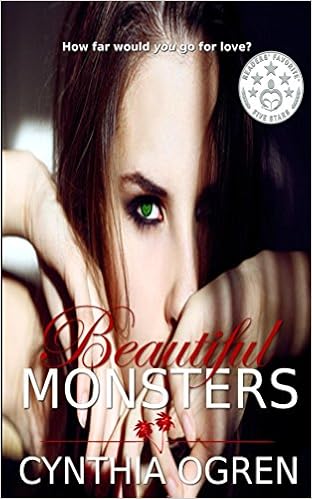
Cosmetic, synthetic, prosthetic - review of Beautiful Monsters by Cynthia Ogren
A
few months ago I had the honor of interviewing Cynthia Ogren, the author of BeautifulMonsters. As a reviewer I am supposed to view the novel independently from
the person who wrote it, but I always like to know where the author is coming
from. Ogren's narrative is refreshingly raw and candid without being bitter or
judgmental. As a former insider who has worked in the entertainment industry
and survived, she does not have a vendeta against Hollywood as some authors
would. I know that it can be very tempting to "expose" the underbelly
of a very unforgiving industry that has scarred and discarded many. The
underlying message is that some individuals want to be scarred, and they
will continue sticking their fingers into proverbial outlets, because the side
effect of pain is sick masochistic pleasure. Ogren's female protagonist Riley
Rinaldi, an executive makeup artist who also flirts with acting and choreography,
is one of such individuals, or rather she has convinced herself of that. With a
long list of disasters on her romantic resume, she half-jokingly refers to
herself as Bloody Mary of Romance. That statement becomes a self-fulfilled
prophecy as she embarks on what she believes to be her last romantic journey
with tormented egocentric heartthrob Keller Cross. Both bring an impressive vintage collection of inner demons, and when those demons engange in a dance ... buckle your seats!
Film
is not just an escape for the moviegoers. It's an escape for those who are
involved in the production process, from the executives dubbed as Suits to the
actors and the crew. If you feel hostage to your past, to your secrets and
misdeeds, to an uncomfortable relationship, playing a role can indeed be an
escape. But there is another side to it - that quest for liberation can lead
you into an even deeper, darker trap. If you work on a set for 20 hours, the
line between reality and fantasy starts to blur. You can longer tell where the
actor ends and the character begins. Makeup and prosthetics become a part of
your body. You have to have a really resilient psyche to be able to maintain
your sense of reality and your place in that reality. It's the price people pay
for creating movies.
Ogren's
Beautiful Monsters is a credible, psychologically authentic depiction of
an entertainment microcosm.
Wednesday, December 9, 2015
N.M. Catalano
Greetings, commies!
Today I am please to feature a splendidly naughty, intense, sincere and eloquent (did I mention bestselling?) erotica author Nadine Marie (N.M.) Catalano.
______________
Today I am please to feature a splendidly naughty, intense, sincere and eloquent (did I mention bestselling?) erotica author Nadine Marie (N.M.) Catalano.
______________
MJN: In your biographical blurb you mention that your life
has been filled with intense emotional experiences. Do you feel it's important
for an author to have a colorful emotional past to write convincing
multi-dimensional characters? They say, write what you know? Or is it enough to
have a vivid imagination?
NMC: In my opinion I feel that
yes, it would be beneficial for one to write from intense emotional experiences
but I think that might also make it one-sided. I think it is more important
for one to feel deeply, which is what you have said being from a colorful
emotional past. I'm sure it helps if one were to have intense emotional
experience as well, of course. But to bring a reader in, make them feel it deep
inside, the writer must feel what his characters are feeling, be able to live
the experiences of what is happening in the story, each angle of it, even if
only from a vivid imagination and a fictional standpoint. That is what makes
writing exhausting and draining, make it seem as if we're opening a vein and
pouring everything within onto the blank page. Without it, the story is flat
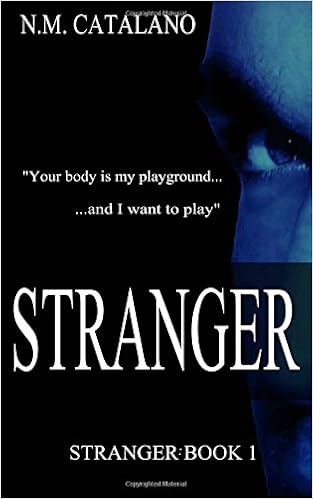
and lifeless. When I was writing STRANGER, my first release, I was completely
inside myself and living in those lines and words. So many readers have said it
felt like what was happening in the story was happening to them, they were inside
the story. That was the greatest compliment.
MJN: You mention that you are in love with all your
characters. I imagine, many of them are based on real life individuals. As a
writer, I know I am guilty of writing alternative endings in literature to
relationships that did not pan out a certain way in real life. Have you ever
had anyone from the real world approach you and say, "Hey, I recognize
that plot twist!"
NMC: *smiling* Yes, many of the characters in my stories are
based on real people. None have said they recognize the plot twist though. What
they have said, or rather asked is for me to write their fictional happy ever
after. Another thing they're taken with is seeing how they are perceived
through someone else's eyes, their traits, mannerisms, what makes them special,
their beauty from within, and without. They are amazed, their words being,
"That's me? That's how I'm seen?" It's a beautiful and humbling experience
and I feel so lucky to be able to give them that gift.
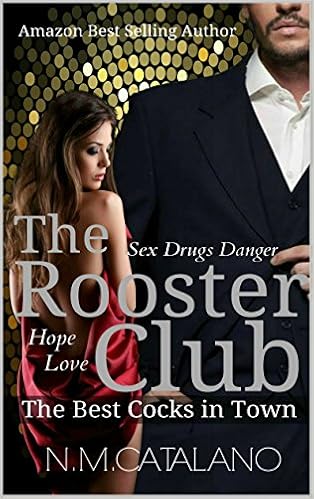
In my latest release, THE ROOSTER CLUB, THE BEST COCKS IN
TOWN all of the men are based on a real group of men who actually did call
themselves this. Most every single situation I've written actually happened,
from the sex to the drug deals in some way or another. But a lot of us who grew
up during this era lived amongst these scenarios, whether it was us, someone we
knew, or someone they knew. This lifestyle was rampant, and still is in many
ways. We've stopped calling the places discos, they're clubs now, there's still
a drug of choice, and addiction has been expanded to include technological. All
of the main players in the story are alive in some way, shape, or form now and
we all know them.
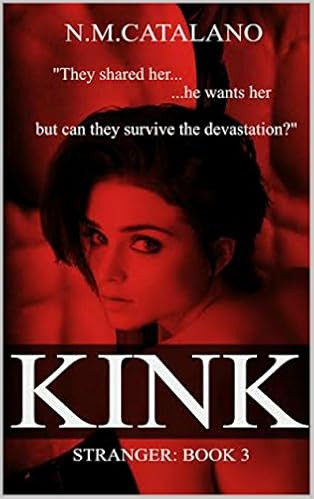
MJN: I noticed that there is a slick, almost Spartan vibe to
your covers. The titles are terse one-worders, and the color scheme is very
minimal. Stranger. Kink. I do believe that sometimes less is more. An abstract
cover can be more intriguing and suggestive than a close-up of a sixpack or a
fake rack.
NMC: The vibe of the stories made me want to keep the covers
crisp and minimalistic with that element of intrigue. I believe it's because
the theme of the stories are all zeroed in on something, pin pointed to a
specific concept that's masked in sensuality and mystery. Although my stories
are romantic in feel, they are contemporary, and it's definitely more about the
story rather than just the six pack on the cover. It's about feeling, pulling
you in, getting you lost, it's about the mind, the heart, the body, and the
soul. My last two books touched on very sensitive topics. KINK had cutting and
rape. In THE ROOSTER CLUB, THE BEST COCKS IN TOWN the story was built around
addiction. My upcoming release PERFECT is based also on addiction but a
different kind.
MJN: You have two talented beautiful daughters. As a mom, do
you ever cringe at the idea of your children having experiences like the ones
you describe in your books?
NMC: Every. Single. Day. We live in a very beautiful but also
a very dangerous world. It's hard to know who you can trust and who you can't.
Society has made the unacceptable and forbidden now common place and
acceptable. It's a daily battle I fight reminding them the difference of right
and wrong, what's acceptable and what's unacceptable and trying to keep them
from growing up too fast.
As far as them being women, it's a fine line I teeter on
when trying to keep them loving themselves, (God knows the media throws enough
at them for that). Because I write primarily erotica, I don't want to make
their sexuality something taboo. Rather, it is something that should be
embraced. The fight is making sure they know it should be with the special
one. Promiscuity can be dangerous. With songs playing on the radio belting
out lyrics saying, "I want you to eat my booty like groceries," wtf,
come on!, I cringe. Yeah, please do, but love, respect, and appreciation should
be first and foremost.
My primary objective is to teach my children about these
things: love, honor, respect, and appreciation. First, to yourself, then to
everyone and everything around you. If I can do that successfully, then I will
have done my job as their parent.
MJN: Your other area of expertise is fashion design. How do
the two passions complement each other? Do you believe that your fine motor
skills enhance your prose, make it more ... tactile and appealing to the
senses?
NMC: I have never thought about a relation between motor
skills and writing. Obviously there is as one must have command of one's motor
skills in order to do the act of writing. Where I do see, and feel, the
relationship is the concept of creating. All art comes from the heart and soul.
In my minds eye, when one creates I see it as a living being, it's own entity,
being born from inside the individual. It's its own life force, we as writers
and artists are only the catalyst by which it comes to life. And you hear so
many writers say they have voices/their characters talking in their heads
demanding to come out, insisting on being born.
When I finish a story, and to me it's never finished, I'm
exhausted, my brain is fried but I feel exuberant.
Yes, I do love my all of my characters <3
Thank you again so much for chatting with me. Join me on
Facebook and at my blog.
~ N.M. Catalano
Subscribe to:
Posts (Atom)