Monday, March 7, 2016

Eva Flynn - author of Renegade Queen - on solidarity and rivalry within feminist ranks


Morning, commies!
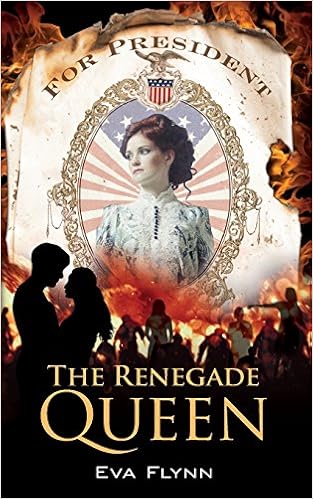
In the honor of March 8th, the international holiday of female solidarity, I am pleased to introduce a gifted, humorous and passionate author Eva Flynn, the author of The Renegade Queen.  I've been waiting for this opportunity to conduct a thoughtful, constructive interview with a feminist. Too many of my discussions on gender end in a ... cat brawl. Not very dignified. But wait, the heroine of Flynn's novel had her own share of cat fights - with a fellow feminist Susan B. Anthony. Who said that girls who fight for the same cause have to see eye to eye? Please join me for this marvelous interview.
___________________________


MJN: Victoria Woodhull is "discarded by society" ... So much meaning in those three words. First of all, what defines "society"?  Is your immediate neighborhood, your church, your country club, or something on a larger scale?  To many women, even in the 21st century, the idea of being "discarded" is horrifying.  Yet for some of them, the idea is electrifying! They thrive on their status of being discarded.  Sometimes, being discarded means notoriety, a public scandal, a moment in the limelight, a chance to be heard and gain sympathizers. Sometimes, being discarded means just that - tossed into obscurity.  Tell me how you personally define "discarded".

EF: What a great question. Victoria Woodhull both loved and loathed her position in society. She wanted to be accepted by the elite but knew she never would be and she used her rejection to her advantage politically. At one point in the novel, Representative Benjamin Butler tells Victoria that she has a distinct advantage to demand her rights because she is not a lady and does not have the encumbrances that come with the social standing.

My personal definition of being discarded is being told over and over again through words or deeds that you have no value and are not worthy of being acknowledged. Victoria certainly felt that way which gave her greater empathy for the immigrants and the newly freed slaves and helped her put together a coalition of support behind her radical ideas. I guess you could say she was the first female populist.

MJN: Interestingly, some of the influential women in history, who had political power and gave their male contemporaries a run for their money, were not preoccupied with the fate of other women or advancing any "female" causes. They considered themselves above the typical "female" concerns.  Nor were they particularly concerned with the fate of the less fortunate. I'm referring to Cleopatra, Elizabeth I, Catherine the Great of Russia, Queen Victoria. Essentially, they had many qualities that one would associate with men, including aggression and certain callousness. My mother, who is a very regal, powerful alpha-female herself, with a touch of cynicism and even nihilism, said that "social activism is for those who lack real power." Basically, as a political leader, you can either focus on advancing your country's global status OR trying to combat the socioeconomic disparity, but not both.  Would you agree? I'm asking because your heroine does campaign for women's rights. She does embrace activism.

EF: I love that quote by your mother! In the case of Victoria Woodhull, America was just recovering from The Civil War and the idea of America as an important country was not present at that time in our history. If you fast forward today and look at recent female presidential candidates, I never got the sense from Hillary or Carly that they were too concerned about narrowing the gap between the rich and the poor or advancing women/minority issues. I think both campaigns were more focused on America’s stature within the world. Could women do both? I would like to think so, but in American history I can only think of three Presidents who did both:

·         Woodrow Wilson helped secure the suffrage for women in 1920 and we became entered WW1.
·         FDR signed the New Deal and we entered WW2.
·         Lyndon Johnson signed the Voting Rights Act, crafted the “Great Society” legislation, and furthered our involvement in Vietnam.
·          
MJN: Let's talk about the intimate lives of some of the great women in history. They were either celibate or promiscuous, rarely in between. Victoria does have one great love of her life - Colonel James Blood. Do you believe that for a woman on a mission, one strong emotional attachment is dangerous? On one hand, it can fuel her determination, but on another hand, it can make her vulnerable.

EF: If a woman has the right mate, then it’s a great asset. We all need support and love from trusted advisors. Elizabeth Cady Stanton’s husband did not even agree with his wife that women were equal but he stayed home and helped raise their kids while she went on speaking tours across the U.S. demanding her rights. Margaret Thatcher was married to Denis for over fifty years. Carly Fiorina has been married to her husband Frank since 1985 and he took an early retirement so he could support her career. It’s rare for a man to be willing to support a woman’s large ambitions, but when they do then they are invaluable mates.

MJN: Your novel explores the subject of rivalry between Woodhull and Susan B. Anthony, who was a Quaker and therefore a more likely feminist candidate. I commend you for highlighting the fact that two men can be on the same side ideologically and still have quite a bit of personal friction.

EF: Yes, there’s one point in the novel and this is based on letters written by Susan B. Anthony where she does not know whether she should support Victoria Woodhull’s testimony in Congress asking for the right to vote. She does not agree with Woodhull on everything and Anthony also feels that Woodhull’s family background is beneath her and the cause. Anthony confides this to a Congressman and he says, “Good Lord woman, this isn’t politics, do you think I’d ever get anything done if I sat around and worried about the backgrounds of my fellow Representatives?”  He goes on to tell Anthony that he co-sponsors all sorts of legislation with people he does not like, but he believes in the bill. The rivalry with Anthony and Woodhull became very personal and they both lost sight of the higher goals.

MJN:  You begin your biography by saying that you were raised with feminist bedtime stories. As a mother of two boys, how do you tackle the issue of gender roles? Do you tell the same bedtime stories to your sons, and do you adjust them for a male audience?

EF: This is a really interesting question and it’s a topic that we struggle with at home. For example, my first grader came home one day last year and said, “Mommy, I feel sorry for you.” And I asked him why and he said, “because you do not get paid as much as boys, my teacher told me so. Girls do not make as much as boys.” And I had to question whether it was appropriate for my son’s teacher to bring up the wage gap to such a young audience without any kind of context they could understand. And I also wondered what message this sent to the girls of the class. My son took these statements from the teacher just as “a fact of life” rather than something that is worth discussing or exploring.

I have young boys, so at this stage I do explain to them the story of the early suffragists and I also explain to Martin Luther King to them in the most simple terms so they can understand both the mistakes this country has made and how people can make a difference.

I was in my son’s classroom last week (he is now in second grade) and I was looking at the biographies the teacher has in her class and it was: white man, white man, white man, Rosa Parks, white man, white man, white man. Now these are books that were given to her by parents, and do not represent the school library but I was saddened to see that she did not have biographies of women. So I’m going to see what biographies I can buy and donate.

MJN: One of the reviewers commented on the timeliness of your book, in light of a viable female presidential candidacy.

EF: Yes, it is exciting that we are getting closer to a female candidate in recent years. Before Hillary and Carly, we had Geraldine in the 1984 election and Sarah Palin in 2008. What I have found interesting in recent weeks is the comments that feminist icon Gloria Steinem and former Secretary of State Madeleine Albright made that seem to suggest (although they have since apologized and backpedaled) that women should support women.  Have women ever supported women? If you look back at Susan B. Anthony, two women ran for President (Victoria Woodhull and Belva Lockwood) in her lifetime and she never supported either one. In fact, when Victoria Woodhull was running, Anthony was arrested for voting….for Republican Ulysses S. Grant. For whatever reason, the majority of women have never felt that it was important enough to have a women in the White House either as President or Vice-President that they vote based on gender alone.

MJN: Are there any trends in modern feminism that you consider frivolous and unnecessary? For instance, do you think there is validity to allegations that we live in a "rape culture" and there is an active "war on women" being waged? Most importantly, if Woodhull were to visit 2016 America, what would her reaction be to current state of affairs?

EF: Well I actually wasted my time reading an entire article about how true feminists will grow out their armpit hair, I can put that down as frivolous! I do think that women judge other women harshly and the definition of “feminist” can become so political and polarizing. I do not agree with the feminist leaders of every issue, for example, and I realize that my disagreements may put me out of favor with some staunch feminists. I think we should all be less judgmental. I do think we live in a culture that hypersexualizes women and marginalizes their value. Movies and popular music, for example, frequently disrespect women. Before I wrote The Renegade Queen as a novel, it was a movie script. And I was very excited to talk to many kind and famous producers. One production house script reader told me that my novel was about a “Marxist whore that the Chinese audience would not understand.” What a way to distill a woman’s life, especially a woman who broke all sorts of barriers! I can’t imagine a script reader saying anything similar about a man.

I think Victoria would be both pleased and dismayed. She would be pleased at how much progress we have made, but she would be shocked that it took until 1993 for marital rape to be illegal in all states. And she would be shocked that we have never had a female president. And “equal pay for equal work” was a campaign that Susan B. Anthony first introduced in 1848.

Friday, March 4, 2016

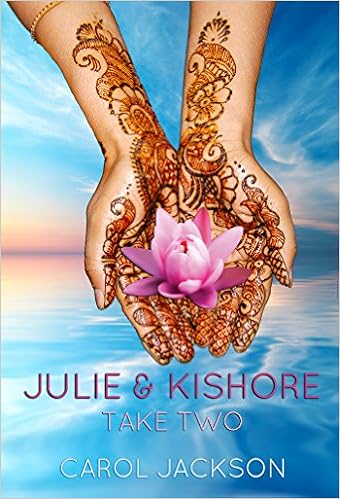
Julie & Kishore: Take Two - a novel of interracial love in 1980s New Zealand

Greetings, commies and lovers of all colors and faiths!

As temperatures continue to rise, we continue to explore the theme of of interracial romances involving white women and Indian men. A few weeks ago I reviewed a novel by another Ravenswood author Gry Finsnes, Goodbye Bombay, featuring a Norwegian lawyer and her Indian lover. Today I am pleased to circle back to Carol Jackson, whose debut autobiographical novel Julie & Kishore I featured last year. The love story continues in Julie & Kishore: Take Two.


The novel reads like a memoir - because it is to a large extent a memoir, rooted in the author's personal experiences. Her heroine faces prejudices without bitterness. What I find refreshing is that the speaker/protagonist, for being a thoroughly modern, empowered Western woman, she is not an activist of any sort. She is not championing for interracial marriage but rather pursuing her own happiness, even it it means stepping outside the boundaries of what is common in her social circle. Not being a deliberate rebel by nature, she does not bask in the controversy that her relationship causes. She still craves the support of her biological family. Julie is tangible and real, as she is no stranger to hand-wringing, giggling, gossiping or tearing up. She's girly and sentimental and vulnerable. I applaud the author for not depicting her heroine as a cartoonish social justice warrier who walks with her middle finger pointing towards the sky and whose every action is directed against the proverbial "convention". Julie is a very orthodox girl - in the context of 1980s New Zealand - who does something slightly unorthodox. 

Let's be candid. Not all interracial marriages are the same. The differences are softened by the similarities in class. After all, Julie married an Indian boy from an upstanding family whose socioeconomic background was similar to hers. Would her parents be just as supportive if she were to marry a Maori? Historically, European-Asian and European-SouthAsian marriages have faced less scrutiny than European-African marriages.

Tuesday, March 1, 2016

The Renegade Queen by Eva Flynn - unforgetable mixture of brashness, candor and humility


Morning, commies!
I have an author interview scheduled for March 8th, the international women's day celebrated worldwide. I would like to share my thoughts on Eva Flynn's debut novel The Renegade Queen. I have a soft spot for characters described as "renegades so controversial, they were erased from history". The above mentioned renegades are Victoria Woodhull and the love of her life James Blood, disgusted by war.

My thoughts:
With a female presidential candidate in the news, it seems timely to revisit the broader issue of female leadership, making her novel very relevant. In her bio, the author states that she grew up hearing stories of 19th century feminists, and the depth of that background knowledge is quite apparent in her novel. It's narrated in the first person - a daunting task for a historical novel charged with ideology, because it's so tempting to lapse into the "talking head" mode. Flynn recreates the inner world of Victoria Woodhull through candid, graphic commentary. The content is not for the faint of heart. The uninhibited heroine describes acts of domestic violence in a very casual tone. Not a touch of melodrama. I applaud the author for not delivering the narration through the prism of 21st century feminist ideology, as many less skilled and vigilant authors would be tempted to do. Flynn's Woodhull is both daring and at the same time humble. If you're a woman, regardless of your social standing and your view of gender issues, you will relate to Victoria Woodhull, even though she may not feel like "the girl next door". The Renegade Queen is a must-read for anyone interested in the historical aspect of gender studies. 

Wednesday, February 24, 2016

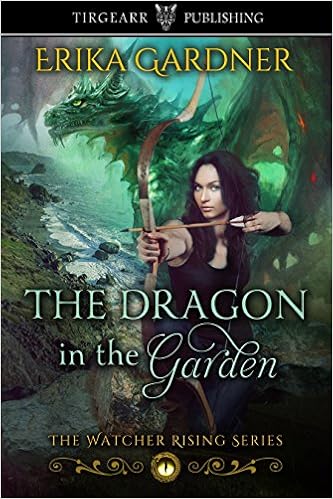
The Dragon in the Garden by Erika Gardner - an allegory for maturing womanhood

Greetings, commies!
With St. Patrick's Day a few weeks away, it's time for another Irish-themed novel. Today's pick is Erika Gardner's fantasy The Dragon in the Garden, recently released via Tirgearr Publishing.  

Synopsis:
There is magic beneath the mundane and in The Dragon in the Garden, Siobhan Orsini witnesses it all. No lie can fool her, no glamour or illusion can cloud her Sight. She sees through them all and wishes she could close her eyes. Returning to face her past, Siobhan inherits her grandparents’ house in California’s wine country. She encounters a talking dragon, a hot fallen angel, a demon lord, a Valkyrie, and, oh yes, her ex-boyfriend. And that is just in the first twenty-four hours.
It’s time to find out why she has this power.

Siobhan seeks out the Oracle and learns that only her Sight can help mankind navigate the travails of an ancient war. Our world is the prize in a battle between the dragons, who would defend us, and Lucifer’s fallen angels, who seek to take the Earth for themselves. Using her gift, she will have to make a choice that will decide humanity’s future.


My thoughts:
With a degree in Medieval History and Biological Science, Erika Gardner is a perfect candidate for writing a fantasy blending mythology and science. The protagonist's name is Siobhan, a tribute to Gardner's Irish ancestors. Superficially hardened by life's trials, Siobhan periodically reverts to her worldview as a wounded five-year old, at times unable to tell the difference between reality and fantasy, which adds psychological authenticity to the narration. Siobhan believes herself to be exceptional, but in reality, I know many lonely women who report similar paranormal experiences.

Interestingly, the release of this novel coincided nicely with the premier of a hit show "Lucifer", chronicling the adventures of the fallen angel on earth after quitting hell. Despite the racy subject matter, the narrative itself is tame and PG-13 for the most part. This could very well be a YA novel, except that the protagonist is in her 20s.

Narrated in the first person, the novel is heavy on dialogue, and that's the tool used for advancing the plot. You will not see many lengthy narrative paragraphs. I take The Dragon in the Garden as a parable of maturing womanhood and attempt to make sense of all-too-common (unfortunately) heartbreaks through the prism of allegoric imagination.

Monday, February 15, 2016

Goodbye Bombay by Gry Finsnes - an illicit interracial romance for the cynics

Greetings, commies!
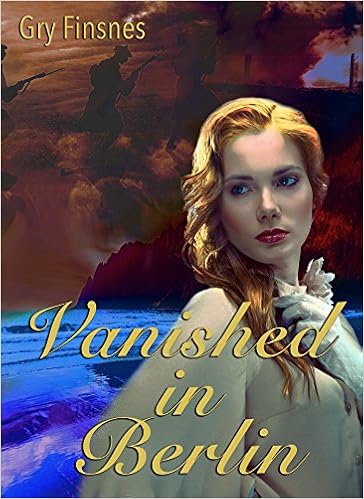
How about some heavy-duty forbidden interracial love the week after Valentine's Day?  You're in the right place! Today's guest of honor is Gry Finsnes.  Last year I interviewed her about her debut novel Vanished in Berlin set during WWII.  She's back with a new gem Goodbye Bombay.
 
Synopsis:
Bombay in 1980, India’s business centre, was a swirl of parties mixing all religions and nationalities. The Norwegian lawyer Christine is married but falls in love with the good-looking Parsee Zarin. They meet in a houseboat in Srinagar and declare their love in the Mogul gardens, but this is just the beginning of a dramatic series of events leading them to the beaches of Goa and the tea gardens of Darjeeling. Twenty years later Christine tells her story to a friend in England when a stranger turns up.

My thoughts:
"Goodbye Bombay" is Gry Finsnes' second novel that deals with the same issues as her debut novel "Vanished in Berlin" - ethnic and religious identity, loyalty to one's roots versus urges of the heart. Both novels feature major cities in the titles.

What's captivating and stimulating about "Goodbye Bombay" is the setting and the cosmopolitan cast. It's important to bear in mind that this is NOT a novel about "real" India, as experienced by the majority of the Indian population. The beaches of Goa and the tea gardens of Darjeeling are famous romantic destinations for western tourists and Indian elite, but they are off limits to the members of the lower castes.

As a professional western woman in 1980, the protagonist Christine can allow herself certain liberties that women in more dependent situations could only fantasize about, including entertaining the idea of an extramarital affair with a man from a different ethnic group. I don't think I need to go into the reasons why a Norwegian woman would be fascinated by an Indian man.

Christine is not making an effort to integrate into the Indian community. She sticks out as what she is - a professional Western woman. She is not about to kick off her high heels and walk barefoot through an impoverished village. Her young daughter seems to have a more organic, more intuitive connection to India. I commend the author of avoiding the major cliches that some authors fall into when depicting cultural clashes. Christine is aware of her inability to organically integrate into her surrounding, but there is no "culture shock" per se. Christine is blunt, analytical, a little callous, perhaps. She's not a star-struck wide-eyed ingenue who has a guilt attack at the sight of starving children on the street.

I also commend the author for not giving into the pressure of creating a universally likable ingenue that all readers will root for. She's not afraid of depicting Christine as arrogant, entitled and self-serving.

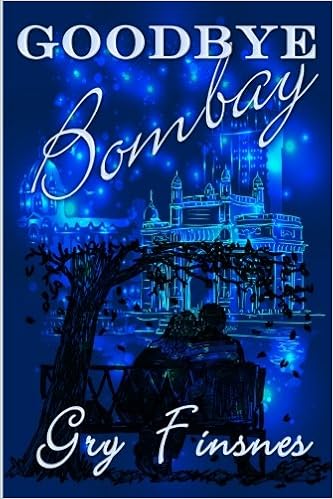
My only main criticism is the cover. Too much blue, not enough contrast. If you look close enough, you can see what looks like a couple sitting on a bench, looking at the city in front of them. It's neither telling nor misleading. For a novel of that literary caliber I would've liked to see something more minimalist and/or symbolic.

Thursday, February 11, 2016

Tackling unintentional plagiarism in sci-fi - interview with John B. Rosenman

Hello, commies!
Today's guest of honor is John. B. Rosenman, a retired college instructor and an amazingly prolific author of sci-fi, fantasy and horror.  It's a pleasure to have him as my guest, because I finally got a chance to ask all those burning questions.  Such as ... How in the world do you avoid plagiarism in the world of sci-fi?  And what do you do if you accidentally "borrow" from another author's concept?
______________________________

MJN: You are a retired Norfolk State University professor. One of your accomplishments was to design and teach a course on how to write science fiction. You have written and published about 350 stories. To me that's mind-boggling. How do you keep coming up with original concepts? There are so many sci-fi authors out there and only a finite number of yet unexplored concepts. 

JBR: Good question, Marina.  Of course, coming up with original concepts is a problem in all fiction, not just science fiction.  You can unintentionally reinvent the wheel in mainstream fiction, mysteries, westerns, romance fiction, you-name-it.  The problem is more pronounced in science fiction because it’s so conceptually rich and if you recycle a saga about a distant world with gigantic creatures burrowing through the sand, it’s instantly recognizable.  Readers will shout, “Whoa, Frank Herbert already did that in Dune.  It’s a rip-off!”

So you read as much science fiction and science fantasy as you can to become as familiar as possible with what’s been done.  That experience will provide you with some radar.  However, it can’t provide complete protection because science fiction is so vast.  It’s the largest genre and in my opinion embraces all the others.  Yes, it has a finite number of yet unexplored concepts, but you can present even traditional concepts in an infinite number of ways.  You know, often you can make old wine new by putting it in a new bottle.

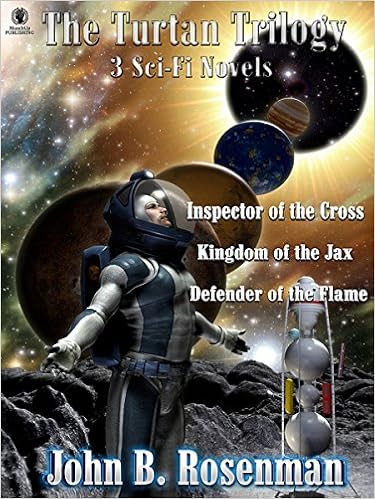
If I venture into familiar territory, I strive to make it original through the way I treat it. For example, there have been countless stories and novels that have dealt with an alien invasion from space.  Perhaps H. G. Wells’s The War of the Worlds is the best known.  Well, I’ve explored this concept in several novels.  I try to keep it fresh by giving it a unique slant in my approach and language.  In ASenseless Act of Beauty, ships from two hundred worlds invade Viridis, a beautiful African planet to colonize it just as Europeans invaded Africa.  I also present this event through multiple viewpoints, including an alien’s.  In my Inspector of the Cross series, I deliberately expanded Joe Haldeman’s prize-winning The Forever War.  Thanks to time dilation, Haldeman’s hero reaches a thousand years of age.  Talk about a long war!  Ah, but my hero is four thousand years old and counting, and unlike Private Mandella, Inspector Turtan is humanity’s best soldier and only hope. 

I used to visit a local Barnes & Noble and stroll about, letting my eyes and mind wander.  Suddenly, I’d see a book or person and BAM!, an idea would just leap into my head.  Sometimes it was sheer magic.  I once saw a book called The Calm Technique and another title, The Death Technique, sprang into my mind.  The character in my story has the ability to physically decompose, become a corpse, and then reverse the process. That is his “technique.”  Was this concept original and new enough?  I had to trust in my vision and ability when I wrote it.

MJN: Have you ever encountered a short story or a novella where you scratched your head and said, "Huh, this reminds me of something I wrote." Sci-fi writers often travel in the same circles.  So when you have so much of your material "out there", I'm sure you are wondering, "Okay, who is reading my stuff and getting ideas from it?"

JBR: This doesn’t happen to me much.  I have read stories where the Devil appears and threatens mankind.  When I do, I’ve occasionally been reminded of my dark fantasy story “The Last Snowman,” in which a young boy has to protect a snowman from Satan to save humanity.  But I thought my story was original when I wrote it and I still do.  That’s what I mean when I say you can take an old concept and make it new.  If writers couldn’t do this, fiction would stagnate. 

In the last few days, an individual has responded to an ad for one of my novels by asking if he could write a script for it.  Now there’s a twist!  I know that bits and pieces of what I read occasionally remind me of stuff I’ve written, but it doesn’t happen often.  I do hope though that my scribbles have sparked other writers’ imaginations and they are getting ideas from me—as long as they don’t plagiarize and outright steal.

MJN:  You have over 20 books with various genre presses, many of which put out predominantly e-books.  I always thought that with new advancements in publishing technology, a digital book should be a multisensory experience, with special sound effects and illustrations and animated videos.  Like a graphic novel only one notch up.

JBR: Hey, Marina, that sounds like science fiction! J  Well, actually it isn’t, and you’re absolutely right.  Enhanced eBooks include embedded media, interactivity, narration, etc., and here’s one link concerning them: http://ebookarchitects.com/learn-about-ebooks/enhanced-ebooks/

I don’t know about other folks, but my Kindle Paperwhite only accommodates static books with texts and pictures. No moving parts or animation, no voiceover.  That’s okay, though, since I only made the leap to Kindle four or five months ago.  That’s right, I had published all these eBooks, but if I wanted to read them and others, I had to do it off my computer screen. 

I have little doubt that such books will become increasingly common. The eBook revolution or evolution is here to stay, and more and more bells and whistles will be developed, especially since customers will demand them.  Where there’s a demand, they will find a way.  You know, I’ve had five audio books published, and there’s no reason they can’t evolve, too.  Just imagine what they might become when other media are added.

Here’s an idea: eventually we will not only be able to interact with these books, but enter them.  We will live in our own virtual worlds, beyond our physical bodies.

MJN: Your Turtan Trilogy is a sci-fi romance. How do you combine the two styles in equal measure?  Would you say it's more sci-fi with romantic elements, or romance set in another universe?  I know there's that category "paranormal" romance.  But I imagine, sci-fi romance is substantially different.

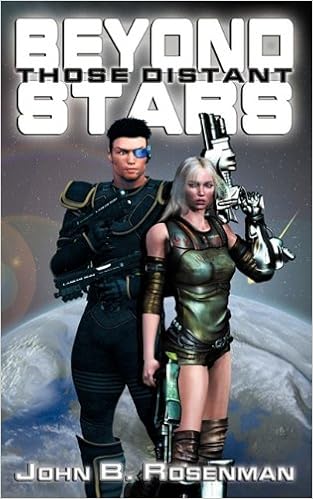
JBR: It’s more sci-fi with romantic elements.  While the romantic relationship is important, it’s not the main thing.  Some of my novels have been categorized differently.  Sci-fi Romantic Adventure is one example.  One of my novels, Dark Wizard is categorized as Paranormal Romance, but there are sci-fi elements present. They are relatively slight, though.  Sci-fi romance features science fiction more.  For instance, my novel Beyond Those Distant Stars is about a female cyborg who captains a ship from star to star.  She has a romance with a Jump Pilot whose brain is usually detached from his body so he can directly operate and control the ship.  All this presupposes an advanced science which can make such achievements possible.  Their romance is important and occurs while they are fighting the alien invaders, but it’s secondary or subordinate to the Space Opera main plot.  It’s possible to have a story or novel that is a combination of paranormal, sci-fi, fantasy, horror, comedy, YA and other elements so that classifying it is difficult.  Instead of being easily pigeonholed, it may be a hybrid of several ingredients.

MJN: You have contributed to several anthologies, as many sci-fi authors do.  Is there a science to making a successful, harmonious anthology, in which every story fits like a mosaic piece? I'm asking because I've read some fantastic anthologies, that have a very organic flow to them, tied with a loose theme.  And then there are anthologies that taste like peanut butter and chicken fingers and sliced strawberries on the same plate.

JBR: Part of it is science; part of it is feel.  It’s important to analyze and crunch numbers, but editors should realize it’s an art as well. I just had a story accepted by ROAR7, an anthology devoted to furry creatures or anthropomorphic animal figures.  We’re thinking mainly of fierce critters here, aren’t we?  Lions, tigers, and bears.  Well, my 8 K story, “A Touch of Magic,” is about a sentient Teddy bear.  Why not?  She’s furry, isn’t she?  And sometimes she looks like she’s about to roar.  The thing is, you have to decide how broadly or narrowly you’re going to define and interpret the guidelines. Sometimes a radical or unexpected submission will ignite and illuminate the collection and make you look at the subject in a new way.

As editors accept the stories or pieces, they should think about the arrangement. What goes where?  Usually the first and last selections are especially important.  Do some of the stories have a similar theme or flavor?  Perhaps they should be grouped together.  Is one story especially dark or gloomy?  Perhaps it should be followed by a cheerful or lighter one.  Your reference to “organic flow” is crucial.  A good anthology seems almost to be a living organism whose parts interact and complement each other.  Even a slight rearrangement of them would diminish the total effect.

Wednesday, February 10, 2016

Barbara Jean Coast - author(s) of Poppy Cove Mystery Series


Hello, commies!

Today I have two very special guests in one, Heather Shkuratoff and Andrea Taylor, who co-author cozy mysteries under the pen name of Barbara Jean Coast. They work in tandem, like the two characters from their Poppy Cove Mystery series.
_________________________________
 
MJN: I know it sounds crazy, but I only recently heard the term "cozy mystery". To me cozy and mystery sounds like a contradiction in terms, like "clean erotica". Tell me about the audience for that type of mystery. Does it differ from the regular mystery readership?

Heather Shkuratoff: Cozy mysteries don't have any gratuitous sex or violence. They are usually character driven and community minded, quite often in series. They tend to have a core group of main characters, and the crime solvers are often people going about their bucolic lives, have known or known of the victims and haphazardly find the clues to solve the crimes. The murders or other crimes are a big part of the story, but not the whole picture. The main crime solvers in the books are not always detectives by trade - the majority have some other passion, career or hobby that they pursue and focus on, and cozies usually describe that aspect of their lives in great detail. They sometimes find themselves in peril as they figure out what happened, but all gets resolved in the end. Cozies serve a unique function. They take readers into darker subjects but return them back to a place and time where the end often justifies the means, and all is well for most of the characters, anyway.

Andrea Taylor: The audience mainly consists of women, but there are a growing number of male readers and writers sharing their take on the genre. The readers are fiercely loyal and quite often express their love of the crime solving heroes or heroines, and really get to know the books and settings in the series. Sometimes they are regular mystery readers, but being that the cozies most likely run in series, they like to follow them in order, and are usually eager for the next story.

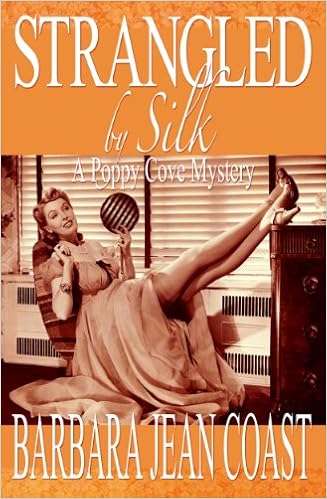
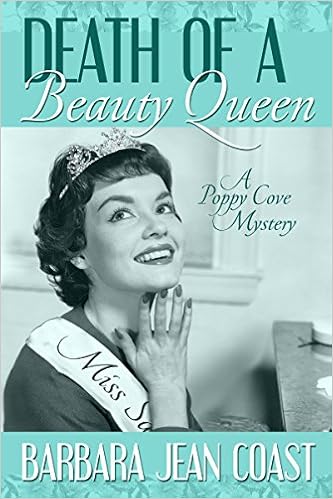
MJN: The cover for "Strangled by Silk", as well as the subsequent books, is very playful, yet there is a dark undercurrent. The title is very telling. You know there is going to be a death.

Andrea Taylor: Cozies tend to have a little black humor to them. Most of the titles reflect that sense of ironic humor, with either a play on words to be catchy and in the form of a pun, or some form of melodrama.

MJN: Your Poppy Cove series is set in California during the 1950s. It was a time of social shifts and the dawning of civil rights movement. One of your heroines is divorced - something that was far less common in the 1950s. How does the socio-political scene play into your plot development?

Heather Shkuratoff: It's actually very important in our series. The main characters Daphne and Margot, as well as secondary fellow Santa Lucians will evolve as the times change. For us it was very important to pick that time as the cusp of realization of life isn't all what it seems to be on the surface.

Andrea Taylor: Some of the stories are about the character's pasts, and some are about their futures. We have mapped out plans for our people, as the times move on.

MJN: The two recurring characters in your series are two dress shop owners. It sounds like in your series you have wed your love for mystery with love for fashion. The fashion scene has changed quite a bit in the past 60 years. Are there certain elements you would like to come back?

Heather Shkuratoff: Yes, well made clothes with great construction. There's a few manufacturers out there trying to weed their way through the mass market today, but the average garment was created with much more care then. The fit and swing of well thought out design and construction had so much more elegance than some of what we see today.

Andrea Taylor: Just no girdles, please. We can all agree to evolve past those, can't we?

MJN: If you could magically transport yourself back to 1950s and live as a single independent young woman, would you do that? I'm not talking about a Donna Reed type character, but someone like Daphne or Margot. Would you be willing to give up the technological comforts and the career opportunities of the 21st century?

Andrea Taylor: Sure, I probably would. I do use and enjoy social media, tablets and some gadgets, but sometimes I'd like to give them up and connect with people and things on a more tangible level. My main career opportunities are with writing and people, I could do them then as well as now.

Heather Shkuratoff: I would love to. They had it pretty good in the 50's, and I do feel that I could still be myself in that time. Social media, digital devices are great, but I do still love books, glossy magazines and actually talking face to face with people. I'd still want to write and sewing and designing, well, I'd be right in there like a dirty shirt.