Thursday, August 4, 2016

Sister Agatha: The World's Oldest Serial Killer - Blarney Pulp Fiction by Domhnall O'Donoghue


Synopsis:
It is not secret that the Catholic Church in Ireland has taken a hard fall in the past few decades, plagued with sexual and monetary scandals. The films coming out of Ireland have been mostly depicting the church in the light of hypocrisy, deceit and conflict. After a while, every movement gets old, loses its cutting edge shock value and solicits more eye-rolls and gasps. That's when you know you need to shake things up and redirect the movement. Domhnall O'Donoghue takes the trend one step further in his novel "Sister Agatha: the World's Oldest Serial Killer". His title heroine, (nee Butsy Miller) is not some dour two-faced, child-beating embezzler. She's a serial killer - bent on becoming the oldest person in the world! The only way to achieve that status is to dispose of the four individuals ahead of her, who are scattered all over the world. It's an impulsive end-of-life desire to be "first". Aged 118, she is going through a teenage phase for the second time in her life.

The tone of the novel is that of bittersweet naughtiness. Its' marked by the same sharp, effortless eloquence one would expect from an Irish author. O'Donoghue lampoons Irish stereotypes and perpetuates them at the same time. As a wishy-washy Catholic like myself can certainly appreciate it. The novel is meant to tease and appease both who shamed the Catholic Church and try to exonerate it. 


My thoughts:
It is no secret that the Catholic Church in Ireland has taken a hard fall in the past few decades, plagued with sexual and monetary scandals. The films coming out of Ireland have been mostly depicting the church in the light of hypocrisy, deceit and conflict. After a while, every movement gets old, loses its cutting edge shock value and solicits more eye-rolls and gasps. That's when you know you need to shake things up and redirect the movement. Domhnall O'Donoghue takes the trend one step further in his novel "Sister Agatha: the World's Oldest Serial Killer". His title heroine, (nee Butsy Miller) is not some dour two-faced, child-beating embezzler. She's a serial killer - bent on becoming the oldest person in the world! The only way to achieve that status is to dispose of the four individuals ahead of her, who are scattered all over the world. It's an impulsive end-of-life desire to be "first". Aged 118, she is going through a teenage phase for the second time in her life.

The tone of the novel is that of bittersweet naughtiness. Its' marked by the same sharp, effortless eloquence one would expect from an Irish author. O'Donoghue lampoons Irish stereotypes and perpetuates them at the same time. As a wishy-washy Catholic like myself can certainly appreciate it. The novel is meant to tease and appease both who shamed the Catholic Church and try to exonerate it. 

Tuesday, August 2, 2016

Bug Jargal - one of the first African protagonists in Western Literature


Victor Hugo, arguably the definitive figure in French Romanticism, mostly known for Les Miserables and Notre-Dame de Paris, wrote a couple of novels in his youth that were not as widely known. The critics dismiss them as juvenile and sensationalist. However, that's not to say that those novels were not valuable in their own right, even though they pale in literary merit before his other works. One of such novels  is Bug Jargal. Originally published as a novella in a literary magazine, it was republished as a full-length novel in 1826. It features the adventures of an enslaved African prince of the title and a French military officer named Leopold D'Auverney during the tumultuous early years of the Haitian Revolution. Hugo was known for his sympathy for the underdog and toying with the societal boundaries, even though he personally had little to no direct contact with the oppressed whose rights he championed. In writing Bug Jargal, he was really playing with fire - and enjoying every bit of it - by having his main character, an African slave, fall in love with a high-born French girl.The novel is out of print, but there are electronic versions of it floating around. At a time when race and privilege are such hot topics, it would be really interesting to take a moment to see how race was handled by a 19th century novelist. Bug Jargal is an enthralling and daring tale of a romantic black hero.

Monday, August 1, 2016

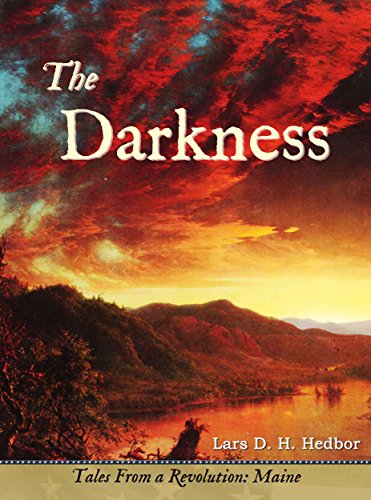
Lars D.H. Hedbor - novelist of the American Revolution - ordinary people involved in extraordinary events

Lars D.H. Hedbor is a novelist of the American Revolution whose work speaks to me in a special way, as his mission is very similar to my own: to explore the obscure stories. He is an amateur historian, linguist, brewer, fiddler, astronomer and baker. Professionally, he is a technologist, marketer, writer and father.  His love of history drives him to share the excitement of understanding the events of long ago, and how those events touch us still today.


MJN: You state that your mission is to explore the lesser known episodes from the American Revolution. I feel solidarity with you in that regard, as it is my own mission to uncover hidden gems and illuminate obscure figures. That presents a potential challenge from the marketing perspective. On one hand, you don't want to write an umpteenth fictionalized account about George Washington. On another hand, you want the characters to be somewhat recognizable. Some readers gravitate towards the familiar, and others gravitate towards the obscure and previously unexplored. How do you find that balance?

LH: One of the animating principles of my writing is the fact that events are shaped not only by those who stride across the pages of our history books, as mythical colossi, but also -- perhaps mostly -- by ordinary people, making daily decisions about how best to muddle through.  

Too, as you note, many of the stories of the powerful and famous have been explored ad nauseum in fiction, and there's not much that I think I can add to those accounts.  I have discovered that there's a hunger for stories that readers can relate to their own lives, too, and only a small fraction of any potential audience consists of people who will be historical figures in a future classroom text.  ;)


Beyond that, though, the American Revolution is often reduced nearly to caricature -- the brave and heroic Minutemen facing down the craven Redcoats in Boston, New York, and Philadelphia -- and the complexity and context of the familiar events of that struggle are lost.  There were good and brave men (and women!) on both sides of the contest, people with less-noble intent, and lots of folks just muddling through while events beyond their ken unfolded around them.  
Their stories are no less compelling for being less-known, and I like to think that by telling them, I can help to right the many injustices committed by simplistic teachings of our national origin story.

MJN: You list playing fiddle as one of your passions. I imagine, you have endeavored playing some of the English, Scottish and American tunes from the Colonial period. 

LH: Oh, I wish I had enough skill to play those!  In truth, I would love to take them on, but time for practicing on the fiddle is quite limited with everything else that I do.  Now you've got me wondering where to find some sheet music, though... so perhaps soon.  

MJN: Tell us about your publisher. It looks like it's a small tight-knit group of authors. Is it a thematic co-op, or a traditional small press that occasionally opens to submissions? 

LH: I started out published by a small indie press.  After my first book, which enjoyed modest success in their hands, they developed an interest in going in other directions than traditional historical fiction, so I struck out on my own, founding Brief Candle Press.  Later, I had the tremendous good fortune to acquire a handful of solid midlist science fiction books by truly gifted and well-reviewed authors.  Since then, I have taken on a couple of new titles, but being essentially a one-man show, I do not at present have the luxury of developing a "slush pile," although that may change in the future.

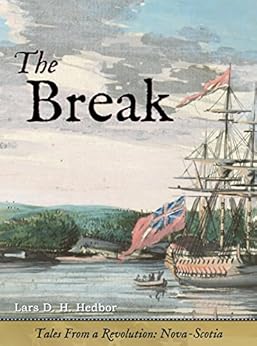
MJN: The titles of your novels are terse, even Spartan in their brevity. The Prize, The Break, TheSmoke, The Light. Is there a deliberate motive behind the titles of the novels? 

LH: In titling my books, I have tried to capture their central themes in a single word.  The Prize refers both to Carleton's Prize, a tiny island in Lake Champlain that figures heavily in the story, and to the prizes of liberty and love that my characters seek.  The Smoke evokes both the smoke of a campfire, and the brutal destruction suffered by the tribes of the Iroquois Confederation as they were forced to choose sides between the British and the Americans.  And The Light reflects the deep introspection of its Quaker characters as they seek the moral clarity of their inner light as they consult with God to find a way forward between the violence of the Revolution and their core beliefs, at risk of British suppression.  

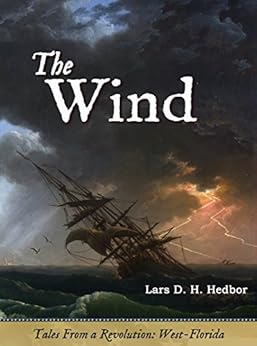
I'll confess that I sometimes struggle to find a title for a new book that fits this now well-established pattern, but then I'll go back and re-read the book and discover that there is a central theme that I'd like to bring to the fore.  With their subtitles (e.g., The Prize: Tales From a Revolution - Vermont), they would be pretty unwieldy names for books, too, so this practice works well for a number of reasons.

MJN: The blurbs of your novels also have a similar element, referencing a seemingly ordinary protagonist: "another farm boy", "a simple sailor", "an ordinary young woman". There is something special about everyday people who hold no political power witnessing or participating in events of historical significance.

LH: I think that most of us feel that we are people of limited political power in our own lives, and I would like both to entertain my readers with stories of how "just folks," while they might sit outside of the limelight of the historical record, helped to create that historical record -- and also, more subversively, to cause my readers to realize that they are capable of leaving their own marks on history, even if their names are not recorded in its hallowed halls.

I believe very strongly that we can best understand our present (and work to shape our future) by understanding our past, and while it is informative to study the lives and choices of those whose names we do remember, I think that it's even more interesting and useful to understand how regular people lived and what choices they made.


Monday, July 18, 2016

The Job Blower - Melinda de Ross - a good-natured mockery of chicklit and rom-com

Synopsis:
Camilla Jackson is an ordinary young woman with an extraordinary knack for attracting disaster. When she is fired from her job as a secretary at a law firm, she realizes she has no idea what she wants to do next. Every job she does land ends up tragi-comically. But when she meets the drop-dead-gorgeous journalist, Carter Evans, her life seems to brighten. Until she discovers that he hides some very deep and painful scars. So will Camilla help him heal and, in the process, find her own way?

My thoughts:
I admit to feeling a sense of ethnic solidarity with the author. We're both fully bilingual, bicultural, A-type, sarcastic Eastern European authors who navigate between the first and the second worlds. Which means, one of our guilty politically incorrect pleasures is making fun of neurotic, pea-brained, thin-skinned American women who can start a nuclear war with one snap of fingernail clippers. (I can hear some of you saying "Don't like America? Go home, commie!") Okay, okay, I will go home where I belong in just a minute. As soon as finish writing my review.

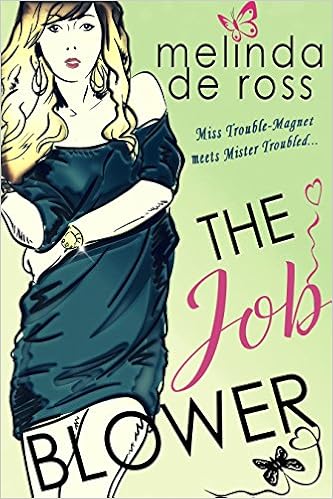
A title like The Job Blower is sure to catch your attention. With a ditsy hair-twirling blonde on the cover? You can't go wrong. What makes the narrator/protagonist sympathetic is a certain degree of self-awareness and self-mockery. Even when plunging head first into romantic melodrama and self-pity, she acknowledges how vapid and trivial her problems are. The author mentions being a fan of Sophie Kinsella. Well, you can certainly feel Kinsella's influences in "The Job Blower". If this novel was ever to be turned into a movie, I can imagine Anna Farris playing the lead.

Thursday, July 14, 2016

Bridget's Story - an enticing introduction to the Keith R. Baker's bestselling Longshot series

 A few weeks ago I had the privilege of interviewing the author of the bestselling Longshot series. I am passionate about Irish and Irish-American history, so the premise of the prequel captivated him. Bridget's story is very illustrative and typical in a sense that many first-generation Irish Americans were ambivalent about clinging to their Celtic roots at a time when integration into the Anglo-Dutch dominated mainstream afforded them certain privileges and opportunities. Even though Bridget's life started with a tragedy, with her short-lived first marriage ended abruptly when her young husband is killed in a mining accident (must be #1 on the list of potential causes of death for the Irish), she goes on to form a successful second marriage with Rob Finn. A young widow with a child from the first marriage would make an easy target for unscrupulous characters, yet Bridget was able to bounce back against the odds. She goes on to have a large family with her new husband. But their idyllic domestic life is interrupted by the Civil War. Despite the very real threat of becoming widowed again, now with multiple children, Bridget puts her husband's duty-motivated decision to enlist above her own fears. The novella is only 30 pages long, but the author manages to lay the foundation for his thrilling series. Bridget's Story ends with a cliffhanger. There are so many unanswered questions that will make you want to pick up the first book in the series. The author establishes Bridget as a sympathetic heroine and instantly wins the readers' solidarity.

Sunday, July 3, 2016

Blizzard by Cindy Rinaman Marsch - a lyrical survival novalla

Greetings!
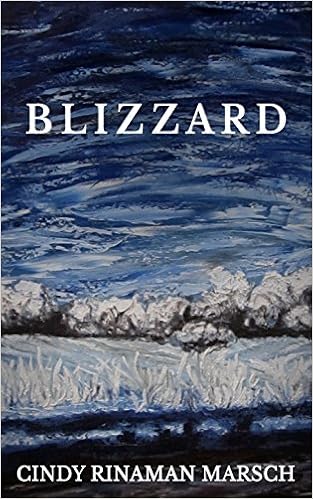
Blizzard is a gripping, lyrical, chilling novella from a fellow Historical Novel Society author, Cindy Rinaman Marsch. As we are preparing to celebrate 4th of July, I think it would be appropriate to post a review of a novella about a brave American family in face of a life-threatening storm.

Synopsis:
A homesteading farmer, his pregnant wife, their daughter, and the grandmother wake to a beautiful winter morning on the prairie. And then it descends upon them - the infamous Children's Blizzard of 1888. Who will survive?
 

My thoughts:
Cindy Rinaman Marsch's "Blizzard" sets a new standard in survival stories. Experience the intimacy of a tight-knit family amidst a natural disaster, with all the lyricism and physicality interwoven. The gorgeous, detailed prose is worthy of Jack London or Hemingway and will evoke the same emotions as "To Build a Fire" and "Old Man and the Sea". This is the opposite of formulaic "survival" stories. This could also be turned into a short art-house film.

Saturday, July 2, 2016

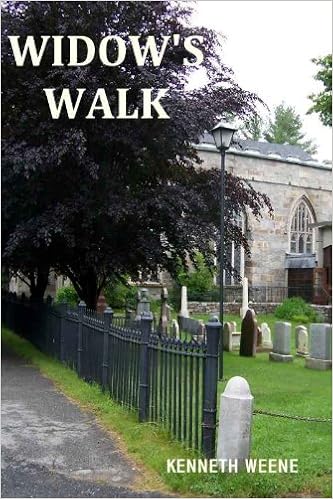
Widow's Walk by Kenneth Weene - a vignette in Irish-American experience

Greetings, commies!
Recently I have been on a journey of revisiting old books that moved me a few years ago. Some of them leave a different impression the second time around. You start seeings nuances that you missed the first time around. One of such books is Kenneth Weene's Widow's Walk, an exploration of Catholic guilt and sexual repression in the context of the Irish American experience, a contemplative social and spiritual etude.

Synopsis:

Mary Flanagan, caught between her sense of religion and obligation on one hand, and her very human desire for love on the other, is in emotional limbo. When she meets Arnie Berger, who becomes both her lover and philosophic guide, Mary's world seems to be transformed.Changes also come for Mary's children, who have been trapped in their own dilemmas. Sean, a quadriplegic, is looking for a fulfilled life. Kathleen must cope with infertility and anger in her search for happiness. The lives of all three Flanagans are turned upside down by happiness and tragedy.

My thoughts:

The topics that Kenneth Weene explores in his novel "Widow's Walk" are challenging and perilous from a literary standpoint. In our increasingly secular world, the word "religious" is more and more frequently is followed by the word "fanatic". What once was regarded as mainstream behavior for a member of the Catholic faith is now frequently viewed as an archaic affectation. In light of current scandals, Catholicism often becomes material for sneers and criticism. It is very easy to turn a character who happens to be an observant Catholic into a caricature.

Kenneth Weene avoids falling into those inviting traps. His portrayal of Mary Flanagan is sympathetic and realistic. Weene's background in psychology is apparent throughout the novel, and his usage of the present tense in the narrative enhances the impression of the speaker being an objective yet sympathetic observer.

"Widow's Walk" is neither a feel-gooder or a tear-jerker, although it could have easily turned into one under the pen of a less skilled author. Infertile wives abandoned by their husbands, disabled Vietnam veterans - all those topics can be exploited and butchered by Lifetime Channel. The fact that Kenneth Weene can write about those issues without lapsing into sentimental genre testifies to his commendable literary skill. The book can be enjoyed by believers and unbelievers alike.