Hello, commies!
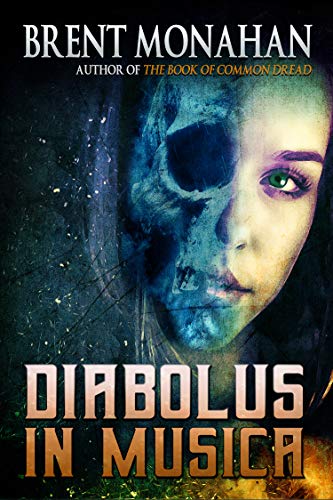
Diabolus in Musica artfully blends high art and horror (just like in real life). Everyone knows that the devil wears Prada and loves beauty.
Synopsis:
A struggling tenor in a third-rate German opera house, Jack Horn feared his singing career was over. Then he met Belinda Fausse. World-renowned diva, beautiful temptress, she promised him fame and passion beyond his wildest imaginings. And she taught him well—until her private plane disappeared over the Atlantic.
Now Jack lives alone in Belinda's house, haunted by the night. For that is when she returns to him, taking his voice, his body, his being. And he is possessed by her, drowning in her perfume, suffocating in her embrace. Then friends and rivals begin to die, in ghastly, mysterious ways—and Jack realizes that no prayer is ever answered without a sacrifice...
My thoughts
Brent Monahan's "Diabolus in Musica" will leave you with a strange deja vu feeling in a good way. The author weaves familiar archetypal themes of vanity, temptation and sinister contracts with the dark side. Be prepared to hear the echos of "Phantom of the Opera" and "Faustus". A handsome, vain though only moderately talented tenor with a telling name Jack Horn trades places with Christine from "Phantom of the Opera". His "Phantom" mentor is a stunning, mysterious, elusive diva by the name Belinda Fausse, whose career suggests that she is pushing 40 though she doesn't look a day over 25. When Belinda takes Jack as her lover and voice student, he has an unsettling feeling that there are dark powers at play and that there is a price to pay for this new skill and knowledge he is about to gain.
I happen to come from a family of classical musicians. My birth father is a former opera singer, so I am familiar with many of the musical terms. But even if you are new to the world of opera, the author does a good job explaining the jargon without the characters sounding like "talking heads" (something Dan Brown and his imitators are guilty of).
What I like about this novel is that there isn't a lot of in-your-face gore. The horror is more suggestive than explicit. So if you can appreciate a modern gender-bender "Phantom of the Opera" type story, "Diabolus in Musica" is for you!
Wednesday, April 3, 2019
Sunday, March 24, 2019
Prince Rogvolod: the Donald Trump of pagan Russia
![]() |
| Rogvolod with daughter Rogneda |
Rogvolod (aka Rögnvaldr), a son of a noble Swedish couple, was the first documented ruler of Polotsk (modern day Belarus), a city situated on both banks of the Dvina river. Not much known about his childhood, other than he was born around 920. Several chronicles suggest that he seized the land and had a fairly firm grip on it.
![]() |
| Images of Krivich people reconstructed from the skulls |
Before his arrival, the city was in it embryonic form, consisting of scattered settlements. His arrival made quite an impression on the indigenous Krivich population. (The etymology of the tribal name is up for debate. Some historians claim that it stems from the word "crooked/twisted", hinting to some birth defect, while others suggest that it stems from the word "blood".) Most of the Krivich people were artisans: blacksmiths, iron workers. Women had the same rights as men and were expected to excel in the same trades. They possessed all the skills necessary for building a city, and now they had a leader to mobilize them. Rogvolod invested heavily into urban development. He recognized the opportunities for trade and industry that the riverfront location offered. Thanks to Rogvolod, Polotsk was placed on the map as an actual center for trade.
![]() |
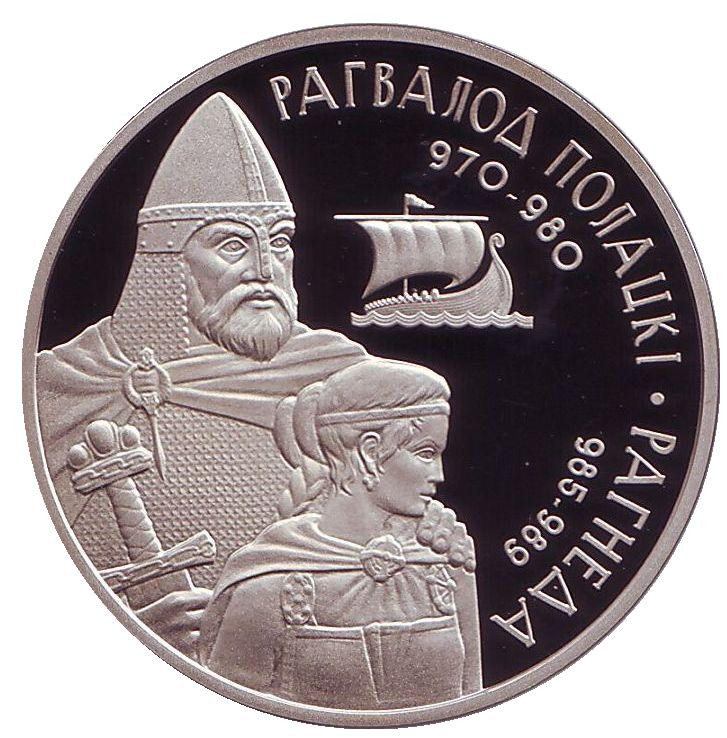
| A coin depicting Rogvolod and Rogneda |
Just like Donald Trump, Rogvolod was obsessed with building towers and walls. He had an elaborate system of labyrinths in his city. He used high quality wood for the key edifices. The name of his wife is unknown, but she did not play the key figure in his family life. The centerpiece of his nuclear family was his beautiful and arrogant daughter Rogneda. He also had two young sons, but their names and ages were not recorded. Understandably, Rogvolod was not the world's humblest man. His daughter inherited his personality traits. Rogneda knew that her purpose in life was to help her father form an advantageous alliance. She also had considerable latitude when it came to choosing her spouse. Rogvolod loved his daughter and wanted her to be happy, so he gave her a lot of say when it came to reviewing various candidates.
![]() |
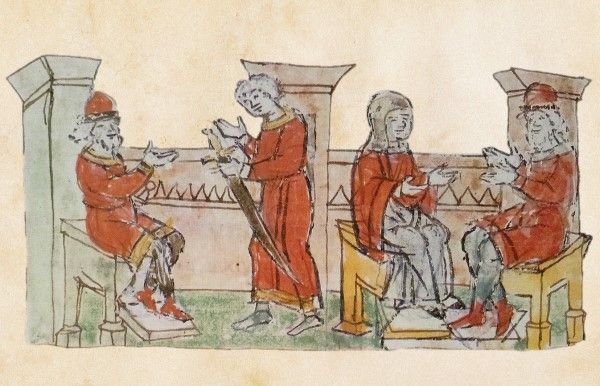
| Rogvolod consulting Rogneda |
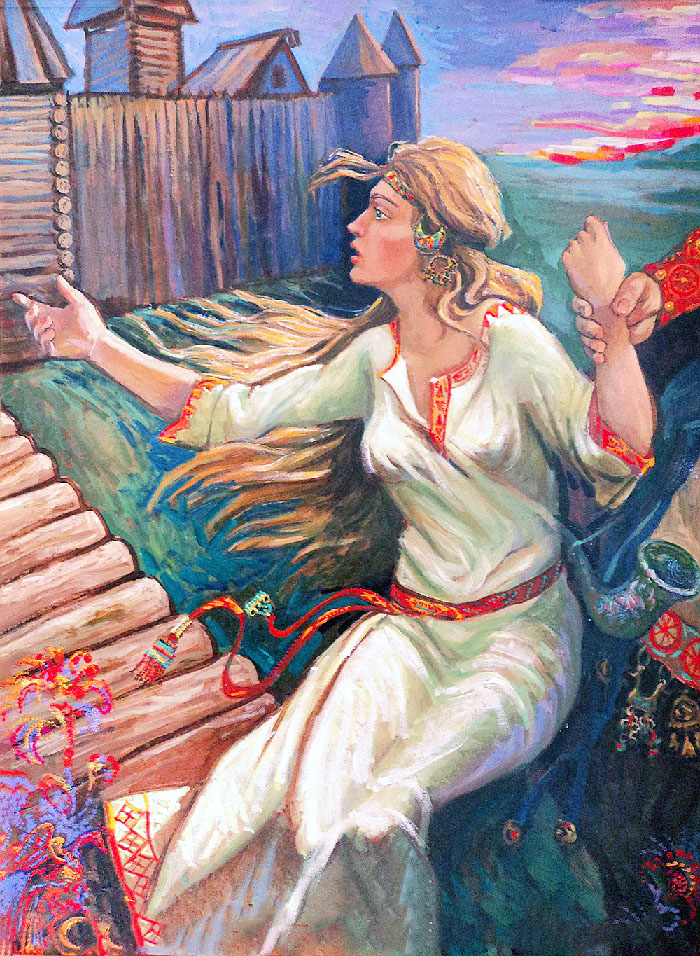
Rogneda was particularly keen on one candidate: Prince Yaropolk of Kiev. Apparently, he was up to her standard. Alas, that union was not to materialize, as Yaropolk fell victim to a court intrigue and was assassinated. His younger illegitimate half-brother Vladimir, born to a servant girl from the Drevlian tribe, decided to try his luck. Rogneda rejected him on the grounds of him being illegitimate. "I shall not marry a bastard born to a servant girl!" Vladimir was infuriated by the rejection, but not nearly as infuriated as his maternal uncle, General Dobrynius, the older brother of the said servant girl. Dobrynius urged Vladimir to make Rogneda pay for her arrogance. In 980 Vladimir assembled an army consisting of Slavs, Varangians and even a few Asiatic tribes and stormed the city of Polotsk. After taking the city, he raped Rogneda in front of her whole family and then murdered her parents and younger brothers. The city was destroyed, and Rogneda was forced to marry Vladimir. There is a record of her lamenting, "I am deeply saddened. My father is dead, and his city overtaken by the invaders. All because of me, because of my pride." She blamed herself for the tragedy that befell her family.
At the very top of the post is a very eloquent depiction of Rogvolod and his daughter by a contemporary illustrator. An average viewer will be appalled by the fact that Rogneda is portrayed as much smaller in size and sitting at her father's feet, like a little dog. Well, we have to look deeper, beyond modern day stereotypes. Ancient Slavs and Scandinavians did not regard feet as dirty. Feet represented freedom, mobility and accomplishment. Rulers wore ornate boots to draw attention to their feet. Very often, it was the most ornate and costly part of their apparel. There is also a memorial coin depicting Rogvolod in his armor with his hand on his daughter's shoulder.
Wednesday, March 13, 2019
Malusha: the runt who gave birth to a prince
Greetings, commies and SJWs!
For your enlightenment, a bit of women's history that explores, predictably, the issues of gender, ethnicity, faith and social status. Today's heroine is Malusha, the mother of Vladimir the Great aka Vladimir the Baptizer - the Russian prince responsible for Russia's massive conversion from paganism to Christianity.
Let's take a moment to examine the historical canvas. The 10th century was an exciting time to be a Slav, regardless of what faith your adhered to. Princess Olga (d. 969) is considered Russia's first openly Christian monarch. At that time, the new monotheistic religion was garnering some interest among the Slavs and was regarded as somewhat of a hipster fad. Most Christian influences came from the Byzantium, but there were some Catholic diplomats and missionaries trickling in from the West. As Olga's name suggests (a version of Helga), she was of Scandinavian extraction. Her husband Igor was also Scandinavian and a pagan, as were their children. Olga did not force her beliefs upon her family, because she believed that conversion had to be gradual and voluntary. Her sons did make fun of her for endorsing such strange notions as monogamy and chastity - concepts that were unfathomable to healthy male Russian noblemen.
When Igor was killed by his subjects in 945, Olga took over Kiev. The people behind Igor's death were Drevlians, a tribe whose name translates as "forest dwellers", a community of hunters and trappers. Princess Olga had a long-standing vendetta against them for having murdered her husband. Pushing aside her Christian concepts of forgiveness, she exacted revenge against their communities. Among the enslaved captives were Malusha "the runt"and her older brother Dobrynius, orphaned children of a Drevlian prince. Instead of executing them, Olga took them into her court. Thanks to his powerful physique and fortitude, Dobrynius went on to become a soldier and gained certain prominence, autonomy and authority.
Malusha was trained as Olga's personal assistant. Her job was to take care of Olga's furs and jewels. The girl was very small, dainty and beautiful, and the middle-aged princess developed motherly feelings for her. It is rumored that Olga was grooming Malusha for conversion to Christianity. Those plans went out the window when Olga's own son Svyatoslav had a fling with Malusha. When Olga found out that her servant was pregnant by her own son, she became enraged and exiled Malusha into the countryside. It was there that Vladimir was born. Despite his illegitimate origin, Vladimir went on to become one of Russia's most influential rulers. Nobody really expected him to rise to power when he was a young child.
Malusha's fate remains a mystery. It is certain that she did not take part in her son's upbringing. Vladimir was taken away as a toddler and placed under the supervision of his maternal uncle. Dobrynius, whose name ironically means "gentle soul" was a rather violent fellow in real life. As a former slave, he had a bit of a chip on his shoulder and became outraged whenever someone brought up his past. His goal was to purge all softness and sensitivity from his nephew's heart. In fact, Vladimir's youth is marked by debauchery and cruelty. Before converting to Christianity, he was a notorious pillager and womanizer, who did not always ask for consent. His tumultuous past did not prevent the Orthodox church from proclaiming him a saint after he initiated massive conversion to Christianity in 989.
And what became of his mother? Some sources suggest that Malusha did convert to Christianity and became a nun. There are several speculative depictions of her in literature, film and art. Some artists depict her as a casualty of a political conflict and a sexual scandal, while others depict her as more self-contained and empowered. A modern illustration depicts her as a heartbroken woman whose child is torn away from her. There is, however, a flattering statue of her with her son in the city of Korosten. She does not look like a frail slave girl but as a proud Slavic goddess. Indeed, she is a runt who gave birth to a prince.
Tuesday, February 19, 2019
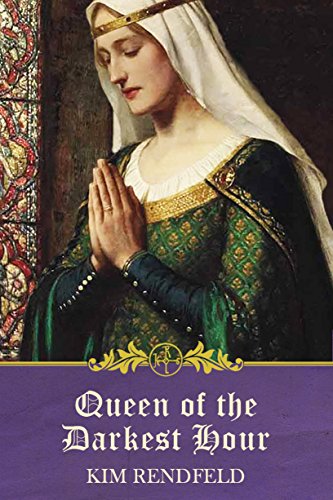
"Queen of the Darkest Hour" - another Carolingian gem by Kim Rendfeld
Synopsis:
Francia, 783: As wars loom, Queen Fastrada faces a peril within the castle walls: King Charles’s eldest son, Pepin. Blaming his father for the curse that twisted his spine, Pepin rejects a prize archbishopric and plots to seize the throne. Can Fastrada stop the conspiracy before it destroys the realm?
Based on historic events during Charlemagne’s reign, "Queen of the Darkest Hour" is a story of family strife endangering an entire country—and the price to save it.
My thoughts:
Queen of the Darkest Hour is the third much anticipated (at least by me) novel in the Charlemagne era trilogy. It is in the same vein as The Cross and the Dragon and Ashes of Heaven’s Pillar. The three novels stand on their own, and the first two reference Charlemagne and his family to some extent, but this one delves deeply into his domestic life, namely his third marriage to Fastrada. The style of the narrative is consistent with the author’s prior works. You can expect the same great attention to historical detail, meticulous descriptions of clothing, rituals, dishes. The author is a self-identified feminist, so it’s not surprising that her focus is on the female figures of Carolingian history. I am grateful that Fastrada, Charlemagne’s third wife, is not “feisty”. She doesn’t fit any of the anachronistic clichés plaguing so many historical novel heroines. She doesn’t complain about feeling “stifled” by her station in life, nor does she strive to improve the lot of the underprivileged. What you have is a very balanced, pragmatic, conventional young woman of 16 who was groomed for a very specific role – to be Charles’ consort, stepmother to his brood from prior marriages and hopefully produce a few heirs of her own. She keeps her own emotions in check and puts her duty first. She has no illusions about Charles fully belonging to her. He is a mature, powerful man with "baggage". She manages to establish rapport with Charles’ existing children, including his hunchback son Pepin, who is only 2 years her junior and whose feelings are a mixture of resentment and lust. Pepin is probably the most psychologically complex and interesting character in the novel. I want to personally thank the author for not putting him on a pedestal, as many authors are tempted to do when they deal with a character suffering from some sort of deformity. In terms of plot development, if you know Carolingian history, there will be very few surprises. If you are not familiar with the story of Fastrada, do not rush off to google her. Enjoy the suspense.
Francia, 783: As wars loom, Queen Fastrada faces a peril within the castle walls: King Charles’s eldest son, Pepin. Blaming his father for the curse that twisted his spine, Pepin rejects a prize archbishopric and plots to seize the throne. Can Fastrada stop the conspiracy before it destroys the realm?
Based on historic events during Charlemagne’s reign, "Queen of the Darkest Hour" is a story of family strife endangering an entire country—and the price to save it.
My thoughts:
Queen of the Darkest Hour is the third much anticipated (at least by me) novel in the Charlemagne era trilogy. It is in the same vein as The Cross and the Dragon and Ashes of Heaven’s Pillar. The three novels stand on their own, and the first two reference Charlemagne and his family to some extent, but this one delves deeply into his domestic life, namely his third marriage to Fastrada. The style of the narrative is consistent with the author’s prior works. You can expect the same great attention to historical detail, meticulous descriptions of clothing, rituals, dishes. The author is a self-identified feminist, so it’s not surprising that her focus is on the female figures of Carolingian history. I am grateful that Fastrada, Charlemagne’s third wife, is not “feisty”. She doesn’t fit any of the anachronistic clichés plaguing so many historical novel heroines. She doesn’t complain about feeling “stifled” by her station in life, nor does she strive to improve the lot of the underprivileged. What you have is a very balanced, pragmatic, conventional young woman of 16 who was groomed for a very specific role – to be Charles’ consort, stepmother to his brood from prior marriages and hopefully produce a few heirs of her own. She keeps her own emotions in check and puts her duty first. She has no illusions about Charles fully belonging to her. He is a mature, powerful man with "baggage". She manages to establish rapport with Charles’ existing children, including his hunchback son Pepin, who is only 2 years her junior and whose feelings are a mixture of resentment and lust. Pepin is probably the most psychologically complex and interesting character in the novel. I want to personally thank the author for not putting him on a pedestal, as many authors are tempted to do when they deal with a character suffering from some sort of deformity. In terms of plot development, if you know Carolingian history, there will be very few surprises. If you are not familiar with the story of Fastrada, do not rush off to google her. Enjoy the suspense.
Friday, January 25, 2019
Hello commies!
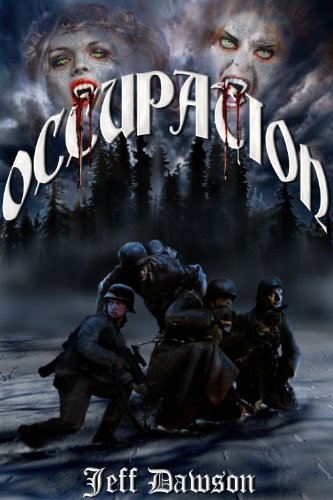
If you love WWII history and vampires, but are tired of teen drama and lip gloss, here is a treat for you. Two in one. Occupation by Jeff Dawson is a disturbing, borderline irreverent tale set in Nazi-occupied Eastern Europe.
Synopsis:
Are you ready for vampires to regain their standing in the genre? Are you ready for them to stop "sparkling" and take on a worthy opponent? Then wait no longer. This book will satisfy even the most "blood thirsty" appetites with an added twist; one of the clans is able to release a very nasty bacteria into their respective hosts which after ninety days or so unleashes a very ghoulish end to the recipients.
The Third Reich has occupied Poland!
The plan of "relocating" the population is well underway with one problem the Germans could never have imagined. Unknowingly, they are removing the food supply of the Romanov and Boirarsky vampire clans. Needless to say, they do not care for each other at all. Too much bad blood has been spilled over the past centuries. Will they be able to unite and take on the true enemy—the Third Reich, or will they perish as the food supply begins to diminish?
Get a copy today and find out if the clans succeed in uniting and dealing the Third Reich their first defeat..
My thoughts:
I was introduced to Jeff Dawson's work through a historical novel group. Being of German, Jewish, Polish and Russian extraction, I view WWII and the invasion of Poland through a unique lens. This topic is of great interest to me. I have to give Dawson kudos for exercising his very peculiar sense of humor. "Occupation" is a very dangerous mix of sacred and profane. I am surprised that this novel didn't ruffle more feathers among WWII purists. I can see someone saying that topics like the Holocaust or the occupation of Poland are off limits when it comes to creating alternative history / speculative fiction. You just don't take something as campy as vampires and inject them into a real human tragedy. And I think it is was a very gutsy move on Dawson's behalf, because he exposed himself to some pretty violent criticism. What is it called in politically correct circles? "Trivialization of human suffering." Dawson alternates very realistic, graphic scenes of nonchalant violence with scenes that border on campy. His choice of names for the vampire characters is peculiar. They are neither Russian nor Polish. He creates pseudo-Slavic, quasi-Central European sounding names. The end result is potent, multilayered kitsch.
If you love WWII history and vampires, but are tired of teen drama and lip gloss, here is a treat for you. Two in one. Occupation by Jeff Dawson is a disturbing, borderline irreverent tale set in Nazi-occupied Eastern Europe.
Synopsis:
Are you ready for vampires to regain their standing in the genre? Are you ready for them to stop "sparkling" and take on a worthy opponent? Then wait no longer. This book will satisfy even the most "blood thirsty" appetites with an added twist; one of the clans is able to release a very nasty bacteria into their respective hosts which after ninety days or so unleashes a very ghoulish end to the recipients.
The Third Reich has occupied Poland!
The plan of "relocating" the population is well underway with one problem the Germans could never have imagined. Unknowingly, they are removing the food supply of the Romanov and Boirarsky vampire clans. Needless to say, they do not care for each other at all. Too much bad blood has been spilled over the past centuries. Will they be able to unite and take on the true enemy—the Third Reich, or will they perish as the food supply begins to diminish?
Get a copy today and find out if the clans succeed in uniting and dealing the Third Reich their first defeat..
My thoughts:
I was introduced to Jeff Dawson's work through a historical novel group. Being of German, Jewish, Polish and Russian extraction, I view WWII and the invasion of Poland through a unique lens. This topic is of great interest to me. I have to give Dawson kudos for exercising his very peculiar sense of humor. "Occupation" is a very dangerous mix of sacred and profane. I am surprised that this novel didn't ruffle more feathers among WWII purists. I can see someone saying that topics like the Holocaust or the occupation of Poland are off limits when it comes to creating alternative history / speculative fiction. You just don't take something as campy as vampires and inject them into a real human tragedy. And I think it is was a very gutsy move on Dawson's behalf, because he exposed himself to some pretty violent criticism. What is it called in politically correct circles? "Trivialization of human suffering." Dawson alternates very realistic, graphic scenes of nonchalant violence with scenes that border on campy. His choice of names for the vampire characters is peculiar. They are neither Russian nor Polish. He creates pseudo-Slavic, quasi-Central European sounding names. The end result is potent, multilayered kitsch.
Tuesday, January 1, 2019
Viking: Russian history for mainstream global audiences
Hello, commies and Russian history buffs!
With a budget of almost 21 million, Viking was the third most expensive Russian film. What exactly can you expect for that kind of money? More of the same old, pretty much. It better be the proverbial 100 dollar bill to be "liked by everyone".
My feelings prior to watching “Viking” were mixed to say the
least. Cautiously optimistic but mostly skeptical. A part of me rejoiced at the
prospect of seeing Russian history marketed to a global audience. At the same
time, I knew not to expect anything too authentic, too meaty, too technical or
scholarly that would alienate average viewers. Of course, the script and the
execution had to be stripped of everything too ethnic, too Slavic, to make it
more palatable for those who know very little or nothing about Russia’s
conversion to Christianity in the 10th century and the complex man
behind it. For one, the title is misleading. It prepares you for a Nordic saga.
And it is a Nordic saga to an extent, as it features certain Nordic warriors on
the Russian territory. The title is slapped on to attract those viewers who
normally would not give a Russian historical a chance. I am not going to judge
the marketing team too harshly. My biggest complaint is that there is nothing
imaginative or innovative about the cinematography. Maybe I am jaded from
seeing too many CGI effects. “Viking” combines the same proven tricks that you
expect in a superhero movie. The same washed out color scheme with occasional
splashes of blood. The hunt sequence in slow motion in the opening scene. Female
characters played by actresses with highlights and spray tan. Contrived sex
scenes showcasing girl power to placate the feminist viewers. If you are not
preoccupied with historical accuracy, if you gulp those Xerox epics on HBO, “Viking”
is another predictable, forgettable, generic Hershey kiss to shove into your
mouth.
Sunday, December 2, 2018
Paper Tigers - sex, politics and journalism
Hello, commies!
It's tempting to think that opposites attract. There are many classic love stories involving partners from the opposite sides of the barricades. Lou Aguilar's Paper Tigers is not your typical Pride & Prejudice tale. Set in post 2016 election DC, it is a story of two ambitious journalism interns trying to reconcile their libidos with their ideological differences.
Synopsis:
Two ambitious new interns at the Washington Post—a cowboy conservative and a patrician feminist beauty—match wits and sparks while vying for a reporter slot. But can chemistry trump ideology in the mad age of Donald Trump?
They came to the Washington Post from opposite sides—Nick Jarrett, the conservative son of a Wyoming rancher, and Laura London, an Ivy League feminist firebrand. They are young, bright, and attractive. Sure, they’re just copy aides, glorified gophers, relegated to delivering parcels and answering phones on different news desks. But someday, they'll be Post reporters who will save America—either from the Left or the Right…if only they can solve their "silly" romantic issues first. Chief among them are their radically opposed politics —sexual or otherwise.
My thoughts:
What does it take to make a career in journalism nowadays? The media is saturated with stories of dubious credibility, and the readership is jaded, overstimulated and polarized. There is very little place for idealism and personal expression. The young copy aides at Washington Post are up for the challenge. The author introduces us to an ensemble cast of twenty-somethings. The focus is on Nick, whose conservative views make him a bit of an oddity in the oasis of liberalism, and his colleague/love interest Laura, an entitled feminist. Laura thinks of herself as a free-thinker, but in reality all her "strong opinions" are just canned slogans. She comes with the whole bouquet of liberal beliefs: vehemently pro-abortion and self-proclaimed atheist (though on one occasion she calls herself an agnostic). We are talking about someone who champions other women's uteri and nipples yet tolerates abuse from her own boyfriend Phil, justifying his behavior. She praises the New Man archetype (metrosexual, submissive beta-male), yet she is drawn to Nick's cowboy demeanor. For a liberated woman, who is free to pick her own sexual partners, she puts too much stock into other women's approval of her relationships. Like most "empowered women", Laura is deeply insecure and conflicted underneath that veneer of girl power. The proverbial shoemaker without shoes. Personally, I found it a bit surprising that Nick, so blunt and genuine, would take serious romantic interest in Laura. Even though the author suggests otherwise, I personally see Nick's pursuit of Laura as a social experiment. He wants to see if flexing his Prince Charming muscle will break Laura's defenses. When the push comes to shove, he puts his journalism career first and makes rather bold moves to make a headline splash, knowing that it will not score him any points with Laura. It's pretty obvious that their relationship is doomed, despite the physical attraction. Opposites may attract short-term, but they don't form lifelong matches. "Paper Tigers" is an enjoyable read regardless of your own political beliefs. You will catch yourself nodding and smiling, whether you watch Fox News or CNN.
It's tempting to think that opposites attract. There are many classic love stories involving partners from the opposite sides of the barricades. Lou Aguilar's Paper Tigers is not your typical Pride & Prejudice tale. Set in post 2016 election DC, it is a story of two ambitious journalism interns trying to reconcile their libidos with their ideological differences.
Synopsis:
Two ambitious new interns at the Washington Post—a cowboy conservative and a patrician feminist beauty—match wits and sparks while vying for a reporter slot. But can chemistry trump ideology in the mad age of Donald Trump?
They came to the Washington Post from opposite sides—Nick Jarrett, the conservative son of a Wyoming rancher, and Laura London, an Ivy League feminist firebrand. They are young, bright, and attractive. Sure, they’re just copy aides, glorified gophers, relegated to delivering parcels and answering phones on different news desks. But someday, they'll be Post reporters who will save America—either from the Left or the Right…if only they can solve their "silly" romantic issues first. Chief among them are their radically opposed politics —sexual or otherwise.
My thoughts:
What does it take to make a career in journalism nowadays? The media is saturated with stories of dubious credibility, and the readership is jaded, overstimulated and polarized. There is very little place for idealism and personal expression. The young copy aides at Washington Post are up for the challenge. The author introduces us to an ensemble cast of twenty-somethings. The focus is on Nick, whose conservative views make him a bit of an oddity in the oasis of liberalism, and his colleague/love interest Laura, an entitled feminist. Laura thinks of herself as a free-thinker, but in reality all her "strong opinions" are just canned slogans. She comes with the whole bouquet of liberal beliefs: vehemently pro-abortion and self-proclaimed atheist (though on one occasion she calls herself an agnostic). We are talking about someone who champions other women's uteri and nipples yet tolerates abuse from her own boyfriend Phil, justifying his behavior. She praises the New Man archetype (metrosexual, submissive beta-male), yet she is drawn to Nick's cowboy demeanor. For a liberated woman, who is free to pick her own sexual partners, she puts too much stock into other women's approval of her relationships. Like most "empowered women", Laura is deeply insecure and conflicted underneath that veneer of girl power. The proverbial shoemaker without shoes. Personally, I found it a bit surprising that Nick, so blunt and genuine, would take serious romantic interest in Laura. Even though the author suggests otherwise, I personally see Nick's pursuit of Laura as a social experiment. He wants to see if flexing his Prince Charming muscle will break Laura's defenses. When the push comes to shove, he puts his journalism career first and makes rather bold moves to make a headline splash, knowing that it will not score him any points with Laura. It's pretty obvious that their relationship is doomed, despite the physical attraction. Opposites may attract short-term, but they don't form lifelong matches. "Paper Tigers" is an enjoyable read regardless of your own political beliefs. You will catch yourself nodding and smiling, whether you watch Fox News or CNN.
Subscribe to:
Posts (Atom)