Thursday, October 8, 2015

The Prince of Prigs - a glimpse into Stuart era England - interview with Anthony Anglorus

Salutations, commies!
If you are tired of metastatic Tudor novels, I have a special treat for you - The Prince of Prigs, a novel by Anthony Anglorus set during the English Civil Wars featuring the adventures of highwayman Capt. James Hind, who robs the Roundheads to fund the royalist cause. His cause is threatened when Oliver Cromwell comes to power.
________________

MJN: What attracts me to your work is the subject matter. I was talking to another historical novelist, and she said that she had trouble pitching her 17th century England piece to publishers, because the Stuart dynasty was not as marketable or recognizable as the Tudors. The English Civil War period often gets overlooked. Hopefully that's about to change. Do you see the Stuart dynasty gaining more prominence? Because frankly, I'm a little tired of Henry VIII. 
 
AA:
I suspect that interest could well move forward to the Stuarts; certainly they seemed to be a dramatic family - James I had the Gunpowder plot, still remembered every year in England on November 5th, Charles I lost his head, Charles II seemed to be trying to set up a nation of his own descendants, James II tried to convert England back to Catholicism and was deposed...every one of them seemed to be associated with high drama. Although I think anything about Charles II would probably be an X-rated drama! The English Civil War does seem to be a neglected period, however, and I suspect that it will largely remain so - it is difficult for us in our modern secular society to comprehend the reasons behind it and I suspect that this is why it tends to be avoided. Although my book is set within this period, it is in a time of comparative quiescence - I don't want to have to try to explain the reasons for a civil war.
 
MJN: Speaking of recognizable names and archetypes that live in people's collective knowledge. Your earlier novel's title is The Other Robin Hood. If there's a pair of star-crossed lovers, they are compared to Romeo and Juliet. If there's an ugly man with a noble heart, he's compared to Quasimodo.  And if there's a man who defies law, he is compared to Robin Hood.  Do you ever get frustrated by the fact that you have to rely on built-in archetypes?


AA: I'm not sure that 'rely' is the right word; in my case, the aim was simply to offer an idea of the subject matter in the title. I was trying to sell a book. That can't happen unless a potential reader picks the book up, and you need something to make them do that (metaphorically in the case of the internet).

Using archetypes catches the eye and no, it doesn't frustrate me as a rule. Although, given that I write mainly about highwaymen, I do get frustrated by the universal image of Dick Turpin as the archetypal gentleman highwayman. He never was gentle, he was a brutal thug with no redeeming features - most of the actions credited to him were performed by William Nevison (the ride to York), James Hind and Claude Duval (in both case, gentleman highwaymen).

 
MJN: Cromwell. Such a controversial figure. The Irish feel about him the same way Jews feel about Hitler.  I don't think it's a fair comparison, because Cromwell was not as bent on purity of race. He was more bent on purity of religion.  (Here we go again comparing one historical figure to another). And yet, the man was a hero to many. I see him as a very conflicted and tragic figure, especially after reading Victor Hugo's play Cromwell and writing a dissertation on it.  I am sure you are aware of the publication called Cromwelliana dedicated to the study of the English Civil War. What is your personal take on him?
 
AA: As I said, I have tried to avoid the actual war itself as much as possible. But I did have to study numerous books on the subject to give myself a 'feel' for the period. As Cromwell features throughout the book (and indeed the sequel, which does include the Drogheda massacre), I especially had to study him.

I felt that he was a very complicated man. Very devout Christian to be sure, but he would only tolerate Protestant Christians and had no problem with killing those with differing faiths; he believed that he was doing God's Will. As regards Ireland, he genuinely believed that the Catholics had 'invaded' Ireland in order to usurp 'the True faith'. We know this to be untrue, Catholicism was there long before Cromwell, but he was certain of it. We can only surmise how he came to be so misinformed, but I would be inclined to look long and hard at firebrand Puritan preacher Hugh Peters. Cromwell seems to have been easily influenced overall; there is a distinct possibility that his attitude towards King Charles was 'adjusted' by his son-in-law, devout republican Henry Ireton. In my opinion, the Irish look on him more harshly than is justified, but the English look at him through rose-coloured glasses. He was a consummate politician, but as a military leader, he lost more battles than he won. He is regarded here as the 'father' of modern parliamentary democracy, but I struggle to justify that accolade; the rump parliament (1648-1653) was about as corrupt as you can imagine. Cromwell threw them out and took up the role of 'Lord Protector'(1653-1658) - dictatorship, again hardly a model of democracy. He was succeeded by his son, who resigned a year later. In desperation, Charles II was offered the crown and the old form of rule was reinstated, with no restrictions. In fact, it was not until 1687-89 that any restrictions were placed upon the monarch at all.


So overall, I don't believe that Cromwell deserves his reputation, either in Ireland or England. I think there were far more notable characters around at the time.
 
MJN: Let's talk about the cover for The Prince of Prigs. It's very basic and minimalistic, and it features a very particular model weapon. 


AA: My publisher selected the image, and in fact I suspect it is an 18th Century model. But the principle holds - a highwayman would have carried a gun, flintlocks were just becoming available at the time I was writing about, and a successful highwayman like Hind would certainly have had the most modern equipment.
 
MJN: On your site you mention an incident of having your work rejected and then stolen by a publisher.  It sounds like every creative individual's nightmare.  It must happen more often than people realize. At the end of the day, people who do such atrocious unethical things must feel like they can get away with it.  What can an aspiring musician/writer to do minimize his or her chances of being ripped off like that? 

AA: Not a lot. As a writer, you can have much more protection because usually, numerous places have had a look at some of the book but in music, you're as helpless as I was way back then. It's simply down to money. As a teenager, I had no way of fighting a huge music publisher in court - all they would need to do is waste my lawyer's time as much as they could with trivial and pointless issues, and I'd have run out of money well before it arrived in court. Nothing's changed.

Friday, October 2, 2015

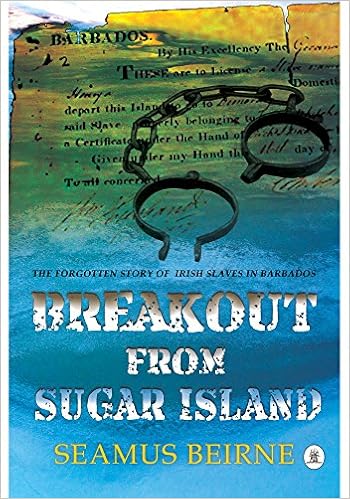
Breakout from Sugar Island - a novel of Afro-Celtic solidarity by Seamus Beirne


Seamus Beirne, a native of Co. Roscommon, Ireland, opens up about the history and inspiration behind his critically acclaimed debut novel Breakout from Sugar Island dedicated to the 60,000 Irish slaves that perished in Barbados as casualties of Oliver Cromwell’s brutality. He explores the Afro-Celtic bond in an Anglo-Saxon dominated society.

MJN: Given that both the Irish and Africans were marginalized by the Protestant Anglo-Saxon community, there was a certain sense of Afro-Celtic solidarity and camaraderie. In the years leading up to the American Civil War, there was as community of so-called "amalgamators" in the Five Points, interracial families - Paddies and free blacks. Would you say that the sense of camaraderie is still alive, especially in light of recent events involving police brutality? 


SB: I think there is always a sense of solidarity among oppressed peoples. Despite skin color or nationality, oppression is still oppression. We had a dramatic example of that in the Mexican-American War when a battalion of Irish soldiers deserted the American army and went over to Mexico. They were known as St. Patrick's Battalion, and were nicknamed affectionately the Red Beards. Is that feeling of solidarity vis-a-vis Irish, Mexican and African Americans alive today? It's questionable given the antagonism of some high profile Irish Americans like Bill O'Reilly and Sean Hannity to minorities and immigrants. Granted they do not speak for, or represent, all Irish Americans, but an awful lot of Irish names pop up espousing political beliefs and values, suggesting that their bearers are unaware of a time in the 19th century when "No Irish Need Apply" signs were common in New York and Boston.


MJN: One of the reviewers compared your style to that of Alexandre Dumas and John Millington Synge.  That's a very interesting comparison, given that Dumas was known for his flighty, flippant style, while Synge was venomous and bitter.  How does one reconcile the two styles? I imagine, you are likened to Dumas for the adventurous/swashbuckling element, and to Synge for your social commentary. 


SB: I'm hoping that Peter Duffy compared me to Dumas for his swashbuckling narrative and not his flippant style. Although in truth, the Irish can be very flip and ironic, especially in their dialogue. All one has to do is read Roddy Doyle to get a taste of the latter. The comparison with Synge, while flattering, may come down to this: Synge wrote, for the most part, about simple country people, the harshness of their lives, their colorful language, and their enthrallment to Catholicism, certain elements of which echoed their Celtic pagan past. My story too touches on the harsh life of the average rural person of 18th century Ireland, although my focus is not on religion per se, except in the case of the secret agrarian society of Whiteboys. Here religion played a significant role, with the common man being in favor of such societies and the Church hierarchy opposed. In the novel I touch on the tension between these two.


MJN: I am absolutely tickled that you come from Co. Roscommon. My husband's ancestors are from that part of Ireland, and I've set my novels there.  On your website, while discussing the separation of classes in 18th century Ireland, you say that if a servant violated the code of conduct by making eye contact with the gentry, the consequences could include flogging or worse.  What would "or worse" mean in that case? 


SB: It all depended on the power broker involved. If he despised the help or his tenants, which many of them did, then a sadistic or insecure streak might lead to harsh punishment. Remember we are talking about a time when a poor person could be hanged for stealing a loaf of bread. In most situations, however, uninvited eye contact might bring no more than a rebuke. In my novel I establish a strong bond of friendship between the landlord and an old servant. So some of the gentry were decent people. Wasn't all black and white. In other circumstances the punishment could be more severe. As crazy as it sounds, unsolicited eye contact with the gentry in most European societies could be interpreted as disrespectful or challenging.

MJN: Are there any figures in Irish history that are particularly demonized to this day? We all know that you don't mention the name of Oliver Cromwell out loud.  Are there any unutterable names?  Lord Lucan, perhaps?


SB: There is one name and one name only. Cromwell. He is the Hitler of Ireland. I don't think Lord Lucan was in the same league.

MJN: Another element of your biography that tickled me was that you had studied for priesthood.  Apparently, for a young man of Irish extraction it was a very commendable path.  Did your Irish Catholic upbringing had influenced your original interest in priesthood, or was it a higher calling that transcended your ethnicity? 


SB: For centuries in Ireland Catholicism was like water to fish. During the long sway of English occupation, it was a bulwark against the foreign foe. In those circumstances it was hard to separate genuine love of religion from genuine hatred of the English. After the treaty of 1921, the State and the Catholic hierarchy became bedfellows. With the result that for ninety years Ireland was in effect a theocracy. In those circumstances separating what was a higher calling from what was in the cultural DNA is a difficult question to answer. So, on a surface level what might appear as a higher calling may well have been in the murky regions of the subconscious a far more mundane decision to deal with the lack of prospects for self-realization in the Spartan conditions of 1950's Ireland.

MJN: Congratulations on your numerous literary awards.  Can you tell me more how you obtained them?  I assume you got them prior to the publication of your novel?


SB: Yes I got them prior to the novel's publication. I submitted three chapters for a reading critique to a committee. Some of the awards were for Breakout, and some for an as-yet-unpublished novel about Ireland during WWII.

Thursday, October 1, 2015

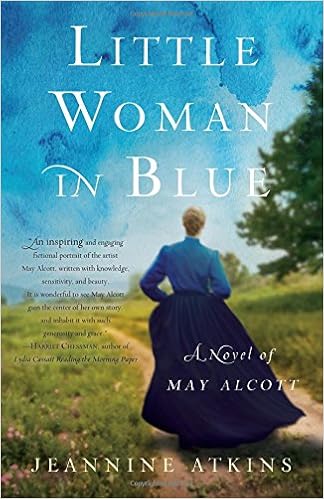
Little Woman in Blue - exploration of 19th century American matriarchy - interview with Jeannine Atkins

Greetings, commies!
I just finished reading Little Woman in Blue, a marvelously eloquent and historically accurate new novel by Jeannine Atkins depicting the artistic and romantic pursuits of May Alcott, the younger sister of Louisa Alcott, the author of the timeless Little Women series. Here is the synopsis:

May Alcott spends her days sewing blue shirts for Union soldiers, but she dreams of painting a masterpiece―which many say is impossible for a woman―and of finding love, too. When she reads her sister’s wildly popular novel, Little Women, she is stung by Louisa’s portrayal of her as “Amy,” the youngest of four sisters who trades her desire to succeed as an artist for the joys of hearth and home. Determined to prove her talent, May makes plans to move far from Massachusetts and make a life for herself with room for both watercolors and a wedding dress. Can she succeed? And if she does, what price will she have to pay? Based on May Alcott’s letters and diaries, as well as memoirs written by her neighbors, Little Woman in Blue puts May at the center of the story she might have told about sisterhood and rivalry in an extraordinary family.

____________________________________________
MJN: I am grateful that you have written this novel. There are too many novels inspired by the life and works of Jane Austen.  Too many titles flashing "Mr. Darcy ___" … Fill in the blank. So seeing a novel inspired by the life of the Alcott sisters is refreshing.
 
JA: I've had my share of fun with Jane Austen and those she's inspired, but yes, let's hear it for the Alcotts! Are their fans shyer? Or do readers prefer empire waist gowns to crinolines? The Alcott family has its romances and accompanying chatter and subterfuge, but the story is more focused on matriarchy.
 
MJN: Let's talk about the tradition of brides wearing white. The historical purist in me always has a fit when I see a film set in the Middle Ages or Renaissance period featuring a bride wearing white. That makes me want to pull my hair out.  For a long time, white was considered the color of abdication and death, not purity.  Purity was something that was expected from a first-time bride. It was non-negotiable.  Brides would often opt for red, royal blue, emerald. The idea of white wedding gowns started with Jean Jacque Rousseau, who idealized the pastoral life of simple shepherds and milkmaids who wore white linen. In the opening chapter of your novel, the 30-year old bride insists on wearing grey.
 
JA: May Alcott followed fashion from "the continent" (as you mention later, Europe was a source of culture and style) and would have known that Princess Victoria in white set a fad. Boston then and now tended to be more practical than stylish, and Anna was always one to blend in. Not so May ... or so she first thought.
 
MJN: The grass is always greener on the other side of the pond.  Europe has always been a source of fascination for Americans, just as the New World has been a source of inspiration for Europeans.  Both parties sought the other continent as a place of opportunities that they were denied on their native soil.  If I remember from "Little Women", Josephine was gravitating towards Europe, at the same time as Irish immigrants were coming to America by boatloads.  Do you think that for some people there truly are opportunities on another continent, or is it just an illusion, wishful thinking?
 
JA: I think there's a mix of real and illusion. When the Alcott sisters were coming of age, some practical things were falling in place enough so that New Englanders could consider spending more time on art and literature. The Alcott's neighbor, Ralph Waldo Emerson, urged them to look at the robins, pines, and fields outside their windows, but many still wanted to write or read about nightingales and cypress trees. The Boston MFA didn't open until 1878, so if May wanted to see art in museums, she really did have to go to Europe.
 
Of course those Irish immigrants were hungry, and many found jobs in the kitchens and laundry rooms of Boston homes. Louisa and May's mother, Abigail, was one of the country's first social workers, helping Irish immigrants find jobs. As a young woman in Boston, May would teach some Irish children. Their descendants helped shape the city.

 
MJN: Alcott was a notorious feminist and suffrage activist. Feminism in 1860s was very different from feminist 150 years later.  There is no denying that the gender gap still exists. However, the severity of it has been subject to debate.  There are some individuals who will acknowledge that yes, women get paid less for the same work as men do, and shrug it off.  And then there are some who will insist that there is a "war on women" being waged. Personally, I believe that the world is not nearly as sexist or patriarchal as some people perceive it to be.  We all know that perception is subjective, that's why I'm not passing any judgment.  But do you think that Alcott herself had an accurate perception of the gender disparity?
 
JA: I think that Louisa Alcott might agree with you. Both she and her mother had faith in the change that might come once women got the national vote, and were first to sign up to vote in Concord. That, as many voters find, could only do so much. Louisa did get irked to find her opinion unwanted on some town matters, though, as she wasn't shy to bring up, as a well-paid author she paid some of the highest taxes in town. Beyond the politics though, I think Louisa's role as a woman writer, and the one she created for Jo March in LITTLE WOMEN, has inspired other writers, including J.K. Rowling. And the importance of ordinary girls is something many readers took in.
 
MJN: The idea of writing a book based on close family members who are still very much alive is daunting.  Louisa did not even bother to change the name. She used the same letters in different order - May / Amy.  The character of her real life sister who died, Beth, was given the same name in the book.  Clearly, Beth could not object to her depiction, given that she was dead by the time the book was written.  But May was peeved that the character based on her chose domestic bliss over artistic pursuits. Do you think that deep inside Louisa envied her youngest sister and used fiction to exercise power over her?
 
JA: Jealousy is usually if not always part of the relationship of even loving sisters. While Louisa was more modern and independent in overt and intellectual ways than May, I think May was truly more ahead of her time in that she could conceive of a life that would have both love and meaningful work. It took Louisa a very long time for her to imagine a strong woman could have both romance and art, and it was May who led her there. So, yes, somewhere inside Louisa must have envied what she couldn't believe she could have.

Monday, September 28, 2015

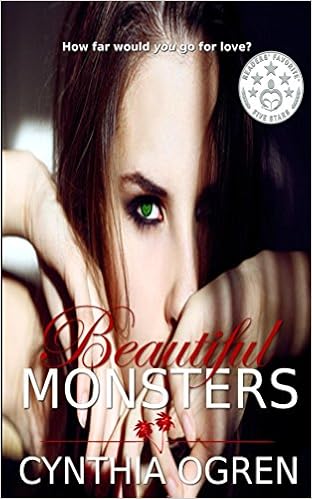
Beautiful Monsters - Cynthia Ogren's Hollywood-themed romance

Greetings, commies!

Say hello to the glamorous and witty CynthiaOgren, a pop culture devotee and author of an introspective and richly developed novel Beautiful Monsters set in Hollywood filled with all the drama you’d expect from a glamorous romance – with a few unexpected twists.

MJN: When people talk/write about Hollywood, it's usually with a mixture of feelings that seem to contradict each other: admiration, envy, judgment and ridicule. In real life, the grotesque and the sublime goes hand in hand. In Hollywood, these elements are taken to a whole new level. As an author, you have to know enough about the industry to make your narration authentic. At the same time, your proverbial "beef" with the industry can't be too raw. If you have too many horror stories that you've experienced first-hand as an actor or director, you will be too emotional to tie those stories into a coherent plot. So what is your personal experience with Hollywood - if any - and which one of the above-mentioned emotions is prevalent?

CO: First of all, thanks for inviting me to your blog interview, Marina. I'm delighted to be here, and I'm further delighted to reply to your interesting, well-conceived questions.

Hollywood: the land of contradictions! It's the perfect setting for Beautiful Monsters because, just as it's a brittle glass stage for actors, it's also the perfect testing ground for my characters. I haven't spent too much time in Hollywood or LA, but as an avid pop culture devotee, I've watched and read about it for years—everything from tabloid newspapers to reality television to biographies. Also, my sister was a working actress on stage, television, and film for many years. While she never became famous, she worked with many big-name stars, and she dished to me regularly about the gossip, the craft of acting, and the accompanying lifestyle.

You might be surprised to hear that I have no beef whatsoever with Hollywood. Hollywood is just a spotlighted microcosm of the same lifestyle that most of us share on a more mundane scale. Essentially, we all are beautiful monsters to some extent. While many people think that being a celebrity would vastly improve their lives, I wanted to show that it's not all it's cracked up to be. There's enormous pressure accompanying great beauty, riches, and fame—and numerous complications. And it's extremely difficult to live a sane life under that constant microscope. Some manage it, others don't.

MJN: We hear so many stories about Hollywood stars destroying their lives behind the scenes because they feel "ugly" and "empty" and "unloved" even though on the surface it seems like they have all the bragging rights in the world. There is a school of thought out there, perpetuated by authors like Victor Hugo and Charles Dickens who glorified the "little people" of the world, that true love is only accessible to those who are totally stripped of all material and social benefits. Only outcasts, the deformed and the destitute, can find true love and friendship that's not tainted by vainglory. I don't know if I personally buy into that theory. I think writers invent those theories to make the down-and-out people feel a little better and give them some hope. What do you think?

CO: Well, I'm not so quick to paint the common folk as white and the rich as black—or vice versa. In fact, I feel we all should be painted in gray tones. I do think it's a wonderful to give hope and insight to the great masses of common folk, but in Beautiful Monsters, I try to break that stereotype. Most actors are not so full of bravado as they portray on camera or at award shows. In fact, actors are some of the most insecure people on the planet. They are at the mercy of gossip, age, studio whims, and the good will of their fans. It's a bit of a cutthroat business, and there are always prettier, younger actors right behind them who would sell their souls for a chance for a role—any role. I do, however, agree with Hugo and Dickens that wealth, fame, and beauty do not make us happy. A wealthy aristocrat—or a film star— does not automatically draw the happy card. Rather, it's the love of family, wonderful friendships, and our interests that make life fulfilling. And those are available to people across the socioeconomic spectrum.

MJN: I see you have a dual major in English and Psychology. I often see those career paths matched up. Was there any specific branch of psychology that you studied in depth that gives you a more three-dimensional perspective when you create your characters? Your book was described as having emotional depth and meaning, so I was wondering your interest in psychology had something to do with that.

CO: Yes, psychologists and writers have much in common. They both study people, so it's a perfect marriage. I've always been a people watcher who is interested in the human psyche. I particularly find abnormal psychology interesting. People (and characters) are not one-dimensional prototypes. They all have a place on the abnormal behavior scale— with neuroses, quirks, and abnormalities. That's what makes the world diverse and interesting. All my characters have distinct personalities with inherent quirks and flaws. I LOVE flawed characters, so Riley and Keller are imbued with all manner of idiosyncrasies. When I take these two damaged characters and put them on the glass stage of Hollywood AND throw obsessive love into the mix, we're in for a wild ride! I'm very interested in the topic of love because it makes no practical sense. People do outrageous things in the throes of love. It's said that the legal plea "not guilty by reason of temporary insanity" was developed because of this phenomenon.

MJN: Let's talk about the structure of your novel. One of my favorite plot tools is having a movie within a movie, or a book within a book. In Beautiful Monsters, you have a production-within-a-novel structure. How does the storyline on screen complement the turbulent love story between Riley and Keller?

CO: I'm all about subtext. Readers are smart, and they are readily able to grasp the subtleties of a well-layered plot. Beautiful Monsters is three levels deep. It's the title of the book, of course; it's the title of the vampire film that's the setting of the book (more subtext and analogy there); and it's the theme of the book. The vampiric element of the story lends itself to the predatory nature of some of Riley and Keller's friends and co-workers. And Riley and Keller have both monstrous and redeeming characteristics, which makes them beautiful monsters—just as we all are. The element of obsessive love with Hollywood as a setting allowed me to cut the dynamic open and explore it thoroughly. In fact, I'll be examining it more in the sequel, which I've started. I've been humbled and delighted to have readers search me out and rave about the book, demanding a sequel. I think they relate to what Riley and Keller endure to be together.

MJN: Let's talk about your female protagonist Riley Rinaldi and the role that makeup artists play. My birth father is a former opera singer. He says that getting into character and putting on a mask really messes you up. Sometimes you lose that fine line between the character and the performer. Sometimes the masks sticks to the face too tight and you cannot rip it off without taking some of the skin off with it. Makeup artists are the often unsung and neglected heroes who help create those characters. In a sense, they play that Frankenstein role of literally "creating a monster". Do you believe there is a symbiotic bond between the makeup artist and the actor?

CO: Very interesting question! Yes, I do think there is a symbiotic relationship between the makeup artist and the actor. Just as an author gives birth to his books, the makeup artist must feel that same pride and concern for the characters he creates. And conversely, the actor is dependent upon the makeup artist to give him the "face" of the character he populates. On a side note, I had to chuckle when you mentioned method acting because it plays a vivid role in the sequel to Beautiful Monsters. The readers want more of Riley and Keller, so I'm going to dish it up in spades!

Wednesday, September 23, 2015

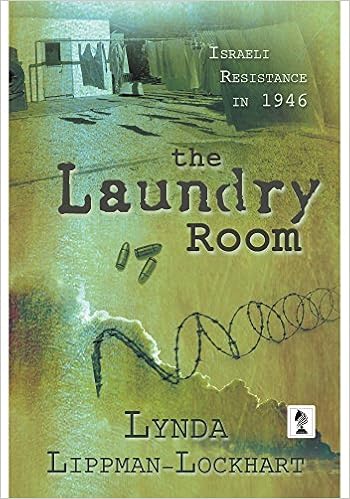
The Laundry Room - a novel of the Israeli Resistance of 1940s - interview with Lynda Lippman-Lockhart


A recent release from Penmore Press, Lydia Lippman-Lockhart’s novel The LaundryRoom tells the story of the Israeli resistance of 1946. 


In today’s interview Lockhart opens up about the emotional genesis of the book. “On my tour to Israel, one of the stops was at the Ayalon Institute. The place, and what went on there, captured my imagination. When I returned home I started doing research and found almost nothing about it.  That was six years ago. I contacted the museum and received an email from one of the youth who had participated in the clandestine operation. We corresponded for two years while I wrote the book. Sadly she died one month before the book came out. Almost every important incident in the book is true.”

MJN: You have a degree in education and spent 26 years teaching English at a high-school. Incidentally, it was a career I had once contemplated. Then I realized that our educational system has become extremely bureaucratic and politically polarized and standardized, without much latitude for creativity. God help you if you deviate one step from the approved curriculum. At least that was my experience. I realize every state, every district is different. I imagine, your experience was a positive one. Otherwise you wouldn't have lasted 26 years. Do any of the frustrations I expressed ring a bell?


LLL: I also felt the strain of government bureaucracy, but what I did in my classroom was not an issue. Yes, there were certain curricular activities I was supposed to teach, but I had the latitude to do it my way. I loved every minute. I have been to my student's college graduations, weddings, baby-namings, and still reap the benefits.


MJN: Does your teaching tenure provide any kind of miniature marketing platform? Do you still stay in touch with some of your students and their parents, who would welcome a chance to read your book?


LLL: I have been retired eight years, yet my faculty has been a terrific support system by attending my book signings, liking my Facebook posts, and linking me to others.


MJN: Israel's position is rather controversial. That's what makes writing about it so interesting. No conflict - no story. Right? That being said, do you get annoyed when people ask you questions, "So what is your position on ____?" I am asking because I write about Irish history and the nationalistic movement, so there's always one person in the audience who asks me, "So whose side are you on?"


LLL: I have never been put on the spot. My story was more about conviction and loyalty than it was about one particular country. Every country has had their heroes.


MJN: In my experience, one thing that suburban Jewish Americans do not always realize is that Israeli culture is very different from their own. They romanticize their brothers and sisters in the Middle East. They even take that coveted trip to Israel in order to see the holy landmarks, expecting it to be an eye-opening experience. And it does end up being an eye-opening experience - but not in the sense that they had expected. Can you elaborate on that a bit?


LLL: I have been to many countries, but there is something about Israel that crosses the boundaries of one’s imagination. My experience was much more than I could have ever imagined. Three of the world's most influential religions were born there. Yes, there are problems there, but what country doesn't have problems? Look what Ireland endured for so long.


MJN: Can you recommend any films that touch upon the early days of modern Israel? I can think of one The Black Book. It does briefly show life in a kibbutz, though most of the film is set in Holland during WWII.  


LLL: I'm not familiar with any film available in the US. That's why my book should be made into a film.