Greetings commies!
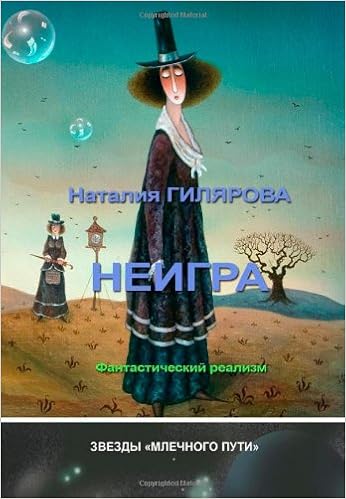
Another post for my Russian audiences. I became acquainted with Natalia Gilyarova's prose through Milky Way, a Russian language speculative fiction publication in Jerusalem.
Neigra depicts an absurd family, estrogen dominated family consisting of two sisters and their great-great-grandmother. Delightfully self-centered and antisocial, the three women defy every stereotype of self-sacrificing Russian womanhood. Their autistic, encapsulated world is disturbed with the arrival of when a freakish creature that looks like a humanoid infant and talks in riddles like the Sphinx from Greek mythology. The novel is set in a parallel universe, an imaginary, surrealistic, other-dimensional Russia.
Natalia Gilyarova is a thoroughly western author, her esoteric tastes having formed under the unmistakable influences of Lewis Carroll and Hans Christian Andersen. Her prose does not overflow with that pompous "soulfulness" and "down-to-earthiness" that seem to be eastern Slavic trademarks. She does not bemoan the proverbial "woman's lot" so frequently mislabeled as "domestic bliss". Some of her passages seem to be written by an extraterrestrial, which is both refreshing and stimulating. Playful absurdities combined with a biting sense of humor will make you feel as you've been tapped by a cat's paw, leaving you with superficial scratches.
Tuesday, October 18, 2016
Sunday, October 16, 2016
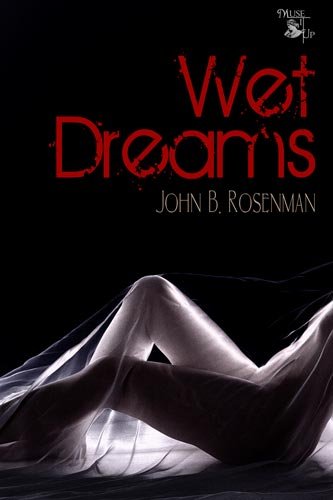
Wet Dreams - John B. Rosenman's horror novella
Commies, in a mood for a quick, engrossing, satisfying read, check out John B. Rosenman's novella Wet Dreams.
Synopsis:
A summer-long vacation and a lavish mansion in the country to enjoy it in. What could possibly go wrong? For John and Karen Santos, it provides a wonderful opportunity to heal their marriage, which has been damaged by John’s infidelity.
While there, they sleep in a waterbed surrounded by ghostly, watchful mirrors. In a dream, John is visited by Laura Martin, the wife of Rex Martin, the mansion’s previous owner. Soon sex and murder embrace in a dark, twisted psychodrama, and John confronts an age-old question: Does anyone ever really know another person, even if you’re married to her?
My thoughts:
Rosenman is a wonderfully prolific and multifaceted author. I have read his sci-fi fiction, which ranges from fantasy to hardcore space opera, and I've also read his hauntingly nostalgic novel "The Merry-Go-Round Man" exploring the dark dynamics of a small town at the dawn of the civil rights movement. Rosenman is not a hostage to any particular genre or ideology. When I picked up "Wet Dreams", I was curious to see how he would handle the issue of marital problems with an element of supernatural horror. The scenario of a middle-aged couple struggling to rekindle their relationship is a common theme in fiction and film, but Rosenman spices up the scenario with a touch of horrific revenge, proving that revenge fantasies are not only for young adults. He also reminds us that inside every jaded middle-aged suburbanite lives a hormonal, volatile teenager.
Synopsis:
A summer-long vacation and a lavish mansion in the country to enjoy it in. What could possibly go wrong? For John and Karen Santos, it provides a wonderful opportunity to heal their marriage, which has been damaged by John’s infidelity.
While there, they sleep in a waterbed surrounded by ghostly, watchful mirrors. In a dream, John is visited by Laura Martin, the wife of Rex Martin, the mansion’s previous owner. Soon sex and murder embrace in a dark, twisted psychodrama, and John confronts an age-old question: Does anyone ever really know another person, even if you’re married to her?
My thoughts:
Rosenman is a wonderfully prolific and multifaceted author. I have read his sci-fi fiction, which ranges from fantasy to hardcore space opera, and I've also read his hauntingly nostalgic novel "The Merry-Go-Round Man" exploring the dark dynamics of a small town at the dawn of the civil rights movement. Rosenman is not a hostage to any particular genre or ideology. When I picked up "Wet Dreams", I was curious to see how he would handle the issue of marital problems with an element of supernatural horror. The scenario of a middle-aged couple struggling to rekindle their relationship is a common theme in fiction and film, but Rosenman spices up the scenario with a touch of horrific revenge, proving that revenge fantasies are not only for young adults. He also reminds us that inside every jaded middle-aged suburbanite lives a hormonal, volatile teenager.
Thursday, October 6, 2016
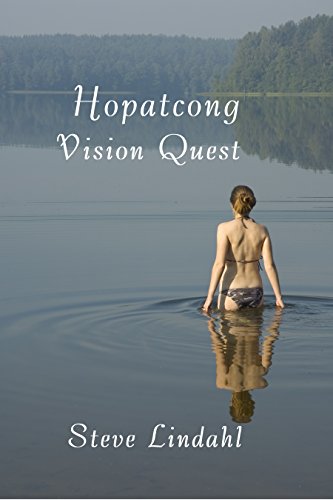
Hopatcong Vision Quest - Steve Lindahl's mystical thriller
Commies,
Fall is a great time to curl up with a multi-layered mystical thriller. I am pleased to announce the release of Steve Lindahl's latest release Hopatcong Vision Quest. I have been a fan of Lindahl's multi-layered thrillers, and his latest certainly doesn't let you down. His theatrical background shines through in his work. In his latest psycho-mystical thriller Hopatcong Vision Quest, Steve Lindahl continues to explore the raw subjects of emotional trauma, denial and seeking refuge in the supernatural. The author's prose bears the Gothic elements of Faulkner, while his cinematic vision reveals influences by David Lynch. Hopatcong Vision Quest is an excellent companion piece to his previous novels White Horse Regressions and Motherless Soul.
Synopsis.
Two drownings occur in Lake Hopatcong within days of each other, with similar circumstances. Diane is certain the deaths of her mother and of Ryan's wife were not accidents, despite the results of the official investigation. What she doesn't suspect is that the trail to the justice she seeks runs through a past life she and her friends shared hundreds of years earlier. With the help of a hypnotist, Diane, Ryan, and Martha look into their hidden memories. They learn that they lived in a Native American village on the shores of the waters that later became the lake they love.
Oota Dabun, Diane's counterpart in her past life, always dreamed of having a vision quest, a rite normally reserved for the young men of her village. This Lenape woman reaches for her dream in an unusual and compassionate fashion which teaches Diane a great deal about the capacity of the soul they share. Diane discovers relationships as well as repeating events, both of which provide clues that might lead to the justice she's after. Along the way she learns about life, love and the strength of the human soul.
Fall is a great time to curl up with a multi-layered mystical thriller. I am pleased to announce the release of Steve Lindahl's latest release Hopatcong Vision Quest. I have been a fan of Lindahl's multi-layered thrillers, and his latest certainly doesn't let you down. His theatrical background shines through in his work. In his latest psycho-mystical thriller Hopatcong Vision Quest, Steve Lindahl continues to explore the raw subjects of emotional trauma, denial and seeking refuge in the supernatural. The author's prose bears the Gothic elements of Faulkner, while his cinematic vision reveals influences by David Lynch. Hopatcong Vision Quest is an excellent companion piece to his previous novels White Horse Regressions and Motherless Soul.
Synopsis.
Two drownings occur in Lake Hopatcong within days of each other, with similar circumstances. Diane is certain the deaths of her mother and of Ryan's wife were not accidents, despite the results of the official investigation. What she doesn't suspect is that the trail to the justice she seeks runs through a past life she and her friends shared hundreds of years earlier. With the help of a hypnotist, Diane, Ryan, and Martha look into their hidden memories. They learn that they lived in a Native American village on the shores of the waters that later became the lake they love.
Oota Dabun, Diane's counterpart in her past life, always dreamed of having a vision quest, a rite normally reserved for the young men of her village. This Lenape woman reaches for her dream in an unusual and compassionate fashion which teaches Diane a great deal about the capacity of the soul they share. Diane discovers relationships as well as repeating events, both of which provide clues that might lead to the justice she's after. Along the way she learns about life, love and the strength of the human soul.
Monday, October 3, 2016
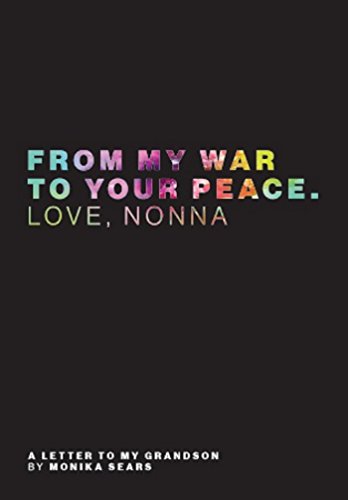
From My War to Your Peace - Holocaust memoir by Monika Sears

As we celebrate the Jewish New Year, I thought it would be appropriate to share my review of this poignant and powerful survival story.
Synopsis:
Born in Poland in 1939, brown eyed, dark haired and Jewish, Monika was off to a bad start. Her Father was marched off and shot in the first few days of the Nazi invasion. Her Mother, not knowing what had happened to him, took her to Warsaw to try and find him. So began the years of running and hiding. Monika was shuttled between aunties, in Warsaw, in the country, in rat infested basements and for weeks silent under a table with a little doll, two toy armchairs and books she did not know how to read; her Mother had found a room in the apartment of a virulently anti-semitic countess and whilst her Mother could pass for Aryan, Monika could not.
Lodged with another auntie she was forced to drink, dance and sing obscene songs for even more drunken farmhands. She never raised her brown eyes. She had learnt fear and obedience.
My thoughts:
In 1939 Poland, looking Aryan, or being able to downplay Semitic features, could mean the difference between life and death. Monika Sears, the author of her short but intense Holocaust memoir "From My War to Your Peace" knows that firsthand. Incidentally, she is a cousin of an established Holocaust memoir writer Julian Padowicz, the author of the acclaimed "Mother & Me" series. There are many parallels between the two fates. Julian and Monika, six years apart, share Jewish heritage and a similar socio-economic background. Both report that their Semitic looks increased their chances of being singled out by the Nazis. Both had complicated relationships with their biological mothers and shared tender bonds with their simple but well-meaning Polish Catholic nannies who tried to convert them to Christianity and save their souls. "From My War to Your Peace" is addressed to Monika's son, who is of Italian extraction. She frequently makes affectionate references to Edouardo.
Everything about this book is unpretentious, from the basic cover to the candid, drama-free, "once upon a time in Lodz ..." narrative style. There is undeniable power and poignancy in the simplicity. This is how small children view tragedy - they absorb the sights and the sounds but then get distracted by the parallel worlds. They will see a playmate with his guts spilled, lying on the pavement, and then their attention will shift onto the texture on the soldier's uniform. I highly recommend this book for anyone who is interested in WWII and Jewish history.
Thursday, September 22, 2016
Librarian's Notes - a collection of stories set in Brooklyn.
Greetings, commies!
Another post for my Russian readers. Today I am sharing my thoughts about a recent collection of stories by a fellow bilingual writer Elena Litinskaya whose work I first sampled in the online literary journal that translates as The Drawing Room.
As an avid reader of Victorian era literature, I can appreciate the narrative technique Elena Litinskaya takes in delivering her collection of stories "Librarian's Notes". In the 19th century it was common to have a first-person narrator who was not the main character but rather a somewhat detached observer and a commentator. The said librarian is not just one particular person. It's a collective presence, a benevolent multi-headed dragon. We have many simultaneous conversations and points of view going on at the same time, but all those heads are tied to the same body. The heads do not always agree. Some are more sympathetic, while others are judgmental. They argue with each other, try to bit each other on the nose, but they create a unique harmony that's not always pleasant to the ear. It's disturbing and extremely engaging. It's like listening to an avant-garde symphony.
Obviously, the author, a librarian in real life - among other things - is extremely well read and familiar with various narrative techniques. The author's erudition and her microscopic attention to detail, her ability to observe people and imagine their private lives and what is happening behind the facade. The librarian's job is very similar to that of a bartender or a priest. The tasks librarians perform often go beyond acquiring, organizing and lending books. Library patrons do not spill their souls to librarians to the same extent as they would, say, to a bartender, but there is that element of intimacy, because librarians know what kind of books you borrow. They say, you are what you eat, and same must be true for what you read. In fiction and film the figure of a librarian is often shrouded in mystery, and quite rightly so. After all, those people have access to your reading history, so they are in a position to draw certain conclusions about you.
I want to say a few words about the setting of the collection. The stories are mostly set in the ethnically and ideologically diverse Brooklyn. Most of the library employees and patrons are immigrants with their own family sagas: Russians, Jews, Haitians, Italians, Irish. There are references to some events that had taken place in other parts of the world. Brooklyn feels like a sci-fi space ship floating in space with aliens from various planets on board. The author explores the familiar themes of addiction, ambition, mental illness, family conflict and above all, loneliness. The paradox is that we are feeling increasingly lonely in an increasingly connected world, where there is so little privacy. To quote a line from a famous song by the Beatles, "All the lonely people ... where do they all come from?" You could write a novel about each one of them. Being a librarian gives you an opportunity to tap into the loneliness of others. By recommending books, librarians hold certain power to alter the lives of their patrons.
About the author:
Elena Litinskaya was born and raised in Moscow where she completed a course of Slavic studies. She has translated poetry from Czech. Has been living in the US since 1979. She spent 30 years working at Brooklyn Public Library. On the creative front, she has written seven volumes of poetry and prose.
Another post for my Russian readers. Today I am sharing my thoughts about a recent collection of stories by a fellow bilingual writer Elena Litinskaya whose work I first sampled in the online literary journal that translates as The Drawing Room.
As an avid reader of Victorian era literature, I can appreciate the narrative technique Elena Litinskaya takes in delivering her collection of stories "Librarian's Notes". In the 19th century it was common to have a first-person narrator who was not the main character but rather a somewhat detached observer and a commentator. The said librarian is not just one particular person. It's a collective presence, a benevolent multi-headed dragon. We have many simultaneous conversations and points of view going on at the same time, but all those heads are tied to the same body. The heads do not always agree. Some are more sympathetic, while others are judgmental. They argue with each other, try to bit each other on the nose, but they create a unique harmony that's not always pleasant to the ear. It's disturbing and extremely engaging. It's like listening to an avant-garde symphony.
Obviously, the author, a librarian in real life - among other things - is extremely well read and familiar with various narrative techniques. The author's erudition and her microscopic attention to detail, her ability to observe people and imagine their private lives and what is happening behind the facade. The librarian's job is very similar to that of a bartender or a priest. The tasks librarians perform often go beyond acquiring, organizing and lending books. Library patrons do not spill their souls to librarians to the same extent as they would, say, to a bartender, but there is that element of intimacy, because librarians know what kind of books you borrow. They say, you are what you eat, and same must be true for what you read. In fiction and film the figure of a librarian is often shrouded in mystery, and quite rightly so. After all, those people have access to your reading history, so they are in a position to draw certain conclusions about you.
I want to say a few words about the setting of the collection. The stories are mostly set in the ethnically and ideologically diverse Brooklyn. Most of the library employees and patrons are immigrants with their own family sagas: Russians, Jews, Haitians, Italians, Irish. There are references to some events that had taken place in other parts of the world. Brooklyn feels like a sci-fi space ship floating in space with aliens from various planets on board. The author explores the familiar themes of addiction, ambition, mental illness, family conflict and above all, loneliness. The paradox is that we are feeling increasingly lonely in an increasingly connected world, where there is so little privacy. To quote a line from a famous song by the Beatles, "All the lonely people ... where do they all come from?" You could write a novel about each one of them. Being a librarian gives you an opportunity to tap into the loneliness of others. By recommending books, librarians hold certain power to alter the lives of their patrons.
About the author:
Elena Litinskaya was born and raised in Moscow where she completed a course of Slavic studies. She has translated poetry from Czech. Has been living in the US since 1979. She spent 30 years working at Brooklyn Public Library. On the creative front, she has written seven volumes of poetry and prose.
Friday, September 9, 2016
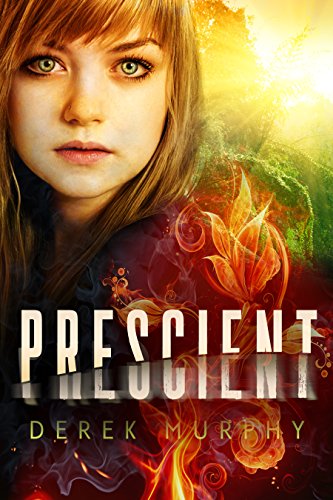
Prescient - a Dystopian novel by Derek Murphy
Commies,
I wanted to share this gem of a Dystopian novel by Derek Murphy, the founder of Urban Epic imprint. I got a free copy of Prescient as a download, and I highly recommend it to general readers, not even fans of sci-fi or Dystopia, as it raises some universal philosophical questions.
What if I told you you'd be dead in a year?
That a food corporation would experiment with genetic modification, and nearly destroy the human race. Would you believe me? Sounds crazy, right? Because nobody can see the future.
Nobody but me.
And what I see isn't pretty.
A dystopian wasteland.
Bodies rotting to nothing in the streets.
Humans on the brink of survival.
The wilderness eating away at what used to be my hometown.
A shadow organization rounding up children. Bands of warring tribes.
And let's not forget the modifieds - the zombie-like remains of what used to be the human race. Civilization is destroyed. There is no chance to undo the damage. No one can save the world... except me.
Because for me, it hasn't even happened yet. For me, it might never happen.
The only thing is, the more time I spend in the future, the less I want to erase it. Stopping the future might break me... I'd be erasing a face, a smile, that I never want to forget.
My thoughts:
I got this book as a free download, and I'll probably be checking out more items by the same writer, even though I'm well out of the YA age bracket myself. As an author, you also have to be an actor, key grip, director of photography, etc. Derek Murphy is all of the above. No wonder he holds a PhD in literature. You have to be a psychologist too in order to generate plausible, sympathetic characters. As a male author, he writes rather convincingly from the point of view of a teen girl living in 2015-16. He knows what's important to an average female in that age bracket. Although, his heroine is not entirely typical. Having lost her mother at a young age, she had to grow up fast, even though she claims that she is immature next to her more socially visible and sexually assertive friend Crys. It's fascinating how maturity and success are measured among teens. Also, for a teen girl, his protagonist has a pretty rich vocabulary and a great deal of critical self-awareness. She is observant and articulate, even though she acknowledges that her interests are on par with those of her peers (making sure that lip gloss matches the sweater, not looking like a dweeb at a senior party, impressing a popular guy). It's very common for kids from a sheltered background to assume that their future is going to be cloudless and bright. So that assumption is being challenged when the main character has a disturbing time-travel experience that gives her a glimpse of dystopian wonderland.
Wednesday, September 7, 2016
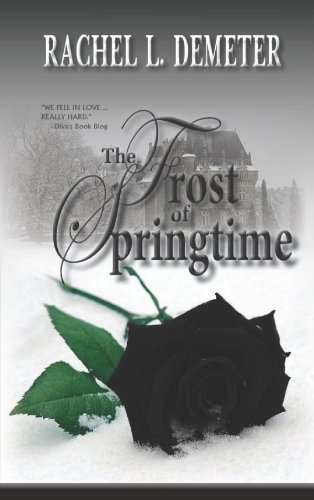
A cross between Cosette and Lolita - review of Rachel Demeter's "The Frost of Springtime"
Greetings, commies!
I am more than a little depressed at the moment, because I've run out of books by this author to read. I was introduced to Rachel Demeter's work through a historical novel blog, and so far I have read all three of her novels. The Frost of Springtime is her first novel, and it doesn't have that green freshman :ugly duckling" feel at all. It's an incredibly eloquent, multidimensional and historically accurate debut.
Synopsis:
On a cold Parisian night, Vicomte Aleksender de Lefèvre forges an everlasting bond with a broken girl during her darkest hour, saving her from a life of abuse and misery. Tormented by his own demons, he finds his first bit of solace in sheltering little Sofia Rose.
But when Aleksender is drawn away by the Franco-Prussian war, the seasons pass. And in that long year, Sofia matures into a stunning young woman—a dancer with an understanding of devotion and redemption far surpassing her age.
Alongside his closest friend, Aleksender returns home to find that "home" is gone, replaced by revolution, bloodshed, betrayal—and a love always out of reach. Scarred both inside and out, he's thrust into a world of sensuality and violence—a world in which all his hours have now grown dark, and where only Sofia might bring an end to the winter in his heart.
My thoughts:
So many authors who write romance spend a great deal of time and effort on crafting love scenes, but Rachel Demeter spends more time preparing the historical and esthetic ambiance. I cannot speak for all readers, but what happens inside the bedroom is predictable. It's what happens outside the bedroom that interests me. I am delighted that she chose to use the Franco-Prussian war as the backdrop for the novel. It's not a war that gets a lot of coverage from modern historical novelists. One classic who covered it extensively is Guy de Maupassant. Late 19th century was such a fascinating time for European culture. More and more women were entering the performing arts while retaining their "respectable" status. It became acceptable for women who were deemed virtuous and suitable for marriage to cultivate and exhibit their talents outside the social salons. The female protagonist Sofia Rose is a case in point. While many of her colleagues are still deemed morally marginal, she is regarded as chase and virtuous because she spends her nights at a religious convent. But don't be fooled by those sapphire eyes and ivory complexion. Sofia Rose is not a one-dimensional angel. Her Catholic convictions are tested when she develops an aching infatuation with her much older - and conveniently married - patron Alek Lefevre, who had once saved her from being stuck into a brothel by her mother. I give Alek a lot of credit for not trying to lock his ward away from the civilization, as another possessive father-turn-lover figure might. He encourages her to cultivate her dancing talent, but at the same time he is prone to fits of jealousy when young men show interest in her. The character of Sofia, like expensive perfume, has many ingredients and notes. You will recognize elements of Cosette from "Les Mis", Lolita and even Christine from "Phantom". I applaud the author for not shying away from the morally sensitive issue of a powerful man falling in love with his much younger ward. Sofia is not portrayed as a victim of exploitation. On the contrary, she is more of a perpetrator than her seen-it-all Alek. If you can appreciate a novel that challenges your notions of conventional morality, "The Frost of Springtime" is the novel for you.
I am more than a little depressed at the moment, because I've run out of books by this author to read. I was introduced to Rachel Demeter's work through a historical novel blog, and so far I have read all three of her novels. The Frost of Springtime is her first novel, and it doesn't have that green freshman :ugly duckling" feel at all. It's an incredibly eloquent, multidimensional and historically accurate debut.
Synopsis:
On a cold Parisian night, Vicomte Aleksender de Lefèvre forges an everlasting bond with a broken girl during her darkest hour, saving her from a life of abuse and misery. Tormented by his own demons, he finds his first bit of solace in sheltering little Sofia Rose.
But when Aleksender is drawn away by the Franco-Prussian war, the seasons pass. And in that long year, Sofia matures into a stunning young woman—a dancer with an understanding of devotion and redemption far surpassing her age.
Alongside his closest friend, Aleksender returns home to find that "home" is gone, replaced by revolution, bloodshed, betrayal—and a love always out of reach. Scarred both inside and out, he's thrust into a world of sensuality and violence—a world in which all his hours have now grown dark, and where only Sofia might bring an end to the winter in his heart.
My thoughts:
So many authors who write romance spend a great deal of time and effort on crafting love scenes, but Rachel Demeter spends more time preparing the historical and esthetic ambiance. I cannot speak for all readers, but what happens inside the bedroom is predictable. It's what happens outside the bedroom that interests me. I am delighted that she chose to use the Franco-Prussian war as the backdrop for the novel. It's not a war that gets a lot of coverage from modern historical novelists. One classic who covered it extensively is Guy de Maupassant. Late 19th century was such a fascinating time for European culture. More and more women were entering the performing arts while retaining their "respectable" status. It became acceptable for women who were deemed virtuous and suitable for marriage to cultivate and exhibit their talents outside the social salons. The female protagonist Sofia Rose is a case in point. While many of her colleagues are still deemed morally marginal, she is regarded as chase and virtuous because she spends her nights at a religious convent. But don't be fooled by those sapphire eyes and ivory complexion. Sofia Rose is not a one-dimensional angel. Her Catholic convictions are tested when she develops an aching infatuation with her much older - and conveniently married - patron Alek Lefevre, who had once saved her from being stuck into a brothel by her mother. I give Alek a lot of credit for not trying to lock his ward away from the civilization, as another possessive father-turn-lover figure might. He encourages her to cultivate her dancing talent, but at the same time he is prone to fits of jealousy when young men show interest in her. The character of Sofia, like expensive perfume, has many ingredients and notes. You will recognize elements of Cosette from "Les Mis", Lolita and even Christine from "Phantom". I applaud the author for not shying away from the morally sensitive issue of a powerful man falling in love with his much younger ward. Sofia is not portrayed as a victim of exploitation. On the contrary, she is more of a perpetrator than her seen-it-all Alek. If you can appreciate a novel that challenges your notions of conventional morality, "The Frost of Springtime" is the novel for you.
Subscribe to:
Posts (Atom)