Thursday, July 1, 2021

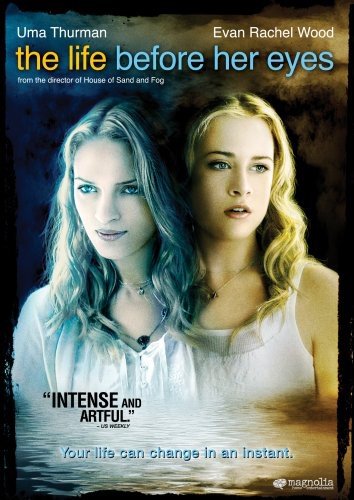
"The Life Before Her Eyes" - a man-hating anthem

Greetings, commies & screenwriters

If you want a lesson on how to create annoying, unsympathetic female protagonists that you cannot wait to strangle with your bare hands, check out The Life Before Her Eyes. It's on Prime now. 

Synopsis:

The Life Before Her Eyes is a 2007 American thriller film directed by Vadim Perelman. The screenplay was adapted by Emil Stern from the Laura Kasischke novel of the same name. The film stars Uma Thurman and Evan Rachel Wood. It was released on April 18, 2008, and revolves around a survivor's guilt from a Columbine-like event that occurred 15 years previously, which causes her present-day idyllic life to fall apart.

My thoughts:

I watched this movie because it popped up in my suggestions. A good chunk of it was filmed in my area - Stamford/Greenwich, CT. I remember entire blocks barricaded for that purpose. What detracted from a potentially compelling story was the blatant misandry. There is not a single redeeming male character in the novel! They are either cheaters, or psychopath murderers, or cowards. Evan Rachel Wood plays the same character over and over again - a sarcastic, rebellions teenager. I am referring to "Thirteen", "Pretty Persuasion" and "Mildred Pierce". I am sure she is a fine actress with some range, but she keeps getting typecast in the same role. It's like the same character with different hopping from one movie into another. In "The Life" she does not come across as very sympathetic. At some point you just want to smack her. Her character Diane acts like she is the only teenager living with a divorced overworked mom. She does not become more sympathetic just because the men around her are dirt bags. I don't know whose shortcoming it is, the director's or the screenwriter's, but tooting misogyny is not the most effective way to create sympathetic female protagonists.

Tuesday, June 1, 2021

"Saint Maud" - the "Bad Lieutenant" for medical workers


Greetings, commies!

I love a horror movie with a greater purpose. There are too many Exorcist knock offs. Saint Maud gets lumped with possession/exorcism movies, though it's anything but. 

Synopsis:

A newly devout hospice nurse, becomes obsessed with saving her dying patient's soul - but sinister forces, and her own sinful past, threaten to put an end to her holy calling.

My thoughts:

This movie is NOT about religion. It does not push Christian dogma, and it does not ridicule Christianity. You can enjoy it and get a lot out of it regardless of your position on organized religion. It does for the medical profession what "Bad Lieutenant" had done for law enforcement. Most medical workers struggle with guilt to some extent. Most of them can name that one incident that left them questioning their professional competency. "Saint Maud" features an extreme case of survivor guilt mixed with professional liability. Katie, a hospice nurse, who blames herself for the death of her patient, invents a whole new persona for herself, flip-flopping between asceticism and hedonism. To appreciate this movie better, you should watch it with "Bad Lieutenant" and "Black Swan". 

Sunday, May 23, 2021

"Russian Bride" - more gross than gritty

Hello commies,

A few weeks ago I reviewed another movie about the so-called immigrant experience. Here is another review of a movie featuring a foreign damsel in distress caught in the throes of her American nightmare, Michael Ojeda's The Russian Bride. 

Synopsis:

A Russian woman travels to America with her daughter to marry a reclusive billionaire, who turns out to be a psycho who sends their lives spiraling into a living hell.

My thoughts:

If you watch it as a straight up torture porn with implausible "deus ex machina" twists, you can give it 3 stars. Don't let the title fool you. This movie does nothing to educate the audiences about the plight of international marriages. This is not a story of a deceived mail order bride overcoming adversity. The movie does reinforce some unsavory stereotypes. If you are a Russian divorcee in your 30s with a kid corresponding with an American multi-millionaire, this is NOT a cautionary tale. Most American men are not sadistic sociopaths, as most Russian women seeking husbands oversees are not meek, accommodating lambs with angelic children. This is lazy character development and an insult to American audiences. So the fact that the female protagonist happens to be Russian is not crucial to plot development. Substitute Russian with any other nationality. She could have as well been Asian or Latin American. As for the plot itself, it tries to tackle some serious bio-ethical issues, but it does it in such a blaring, silly, over the top and unconvincing way, that you will find yourself rolling your eyes. I almost feel bad for the actors, trying to do their best with a flippant, immature script. 

Thursday, May 6, 2021

Most Beautiful Island - the protagonist you want to strangle


Greetings, commies!

As an immigrant myself, I am intrigued by the portrayal of immigrants in film. I get it, every story is unique, and not every story results in the achievement of the American Dream. Here is a psychological thriller/horror film Most Beautiful Island featuring white immigrant experience - the two main characters are Spanish and Russian, respectively. 

I don't know if the director intended to make the protagonist Luciana incredibly annoying and unsympathetic. You almost want something bad to happen to this woman. Contrary to what the synopsis suggests, this is not a true immigrant survival tale. This woman is not fighting for survival. She is flippantly soul-searching and avoiding responsibility after letting her own kid die in an accident. She thinks that caring for other people's children or cleaning houses is beneath her, because she is European. She is looking to make a lot of money under the table without getting her hands dirty. She endangers the children in her care and she damages expensive garments so she doesn't have to pay for them. So don't be surprised if you find yourself wishing that she got what she deserves. This is no "Dirty Pretty Things".

Thursday, April 22, 2021

Come Play: an exploitation of autism stereotypes

Greetings, commies!

April is the autism awareness month, and, being somewhat of an insider, I felt compelled to review a recent horror film featuring an autistic character, Come Play, 2020.

I understand that it's a horror movie first and foremost. It's not meant to build awareness around autism. It's not trying to be "woke" in that regard. At least, I hope it's not. I had very mixed feelings about a mainstream movie using an autistic central character. I had hoped they would depict a young boy in a more authentic, nuanced manner. I will be the first one to tell you that there is no such thing as a "typical autistic person". This boy is a compilation of autistic stereotypes. Wide-eyed and angel-faced, he is endearing enough to keep the shock value to the minimum. Think of it as a vanilla, sanitized version of an autistic stereotype. And of course, the imperfect mother becomes a perfect martyr - another stereotype around families of autistic children. I give the storyline a B-. It's another bud on the "Babadook" tree.

Thursday, March 25, 2021

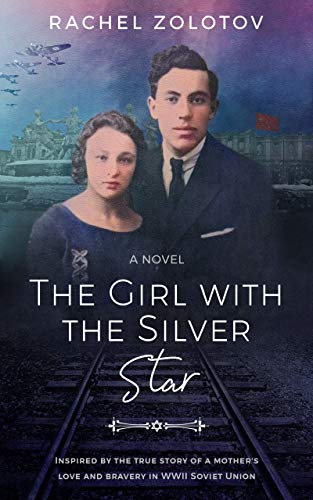
The Girl With the Silver Star: a refreshingly old-fashioned protagonist

Greetings, commies!

I am delighted to post the review of Rachel Zolotov's novel The Girl With the Silver Star. I share the Judeo-Slavic connection, so I read it with particular interest. The topic of WWII refugees in evacuation does not get nearly as much attention as it should. So be sure to add this gem to your collection.

My thoughts:

It would not be entirely accurate to file this novel under Russian Literature or Russian History category. Eastern European Jews comprise a unique and enduring sub-culture. The characters of "The Girl With the Silver Star" speak Yiddish in addition to Russian and they retain elements of their religion at a time when atheism was sweeping through the newly formed Soviet Union. It would be more appropriate to file this novel under Jewish literature. Believe me, I am of mixed Judeo-Slavic heritage myself, so I know the cultural nuances. Jews and Russians do not appreciate being referred to interchangeably. Even though the Soviet influences had softened some of their differences, they are two very distinct cultural universes. 

What I found refreshing about this novel is the fact that the speaker/protagonist is not a talking head for "progress". Raisa is a sincere, demure, domestic, feminine, wholesome and in some ways childlike. It seems like historical fiction abounds with female characters that push some left wing agenda. You expect to have some female artist trying to assert herself in a man's world. If you want to take a break from that, try looking at WWII through the eyes of a humble housewife, whose only ambition is to ensure survival for herself and her loved ones. She is not motivated to "change the world" or "improve the lot of women". As matter of fact, Soviet propaganda strove to minimize the differences between men and women. Women were encouraged to ditch the "bourgeois" gender roles, roll up their sleeves and toil side by side with men. In that regard, Raisa is outside the mainstream. It was not common for Soviet women in the 1930s and 40s to stay at home and take care of their children. Raisa is more Jewish than Soviet. Her husband Abraham is equally meek. He never abuses his role as sole provider for the family. That makes the reader all the more concerned for this soft-spoken family man who is hurled into the world of violence that his traditional Jewish upbringing did not prepare him for.

I also found it surprising that the characters spent so little timing thinking and talking about the obvious - the Nazis. There is very little room for rage and hatred in the hearts of the characters. They barely talk about Hitler. It's almost like he is this foggy, distant bogeyman whose name they dare not utter. Or maybe they do not fully understand the enemy's motivation. 

Ultimately, we have to remember that his novel is Rachel Zolotov's recreation of her great grandmother's story. This is not a straight up memoir. It's a fictional reconstruction of family history. 


Monday, March 1, 2021

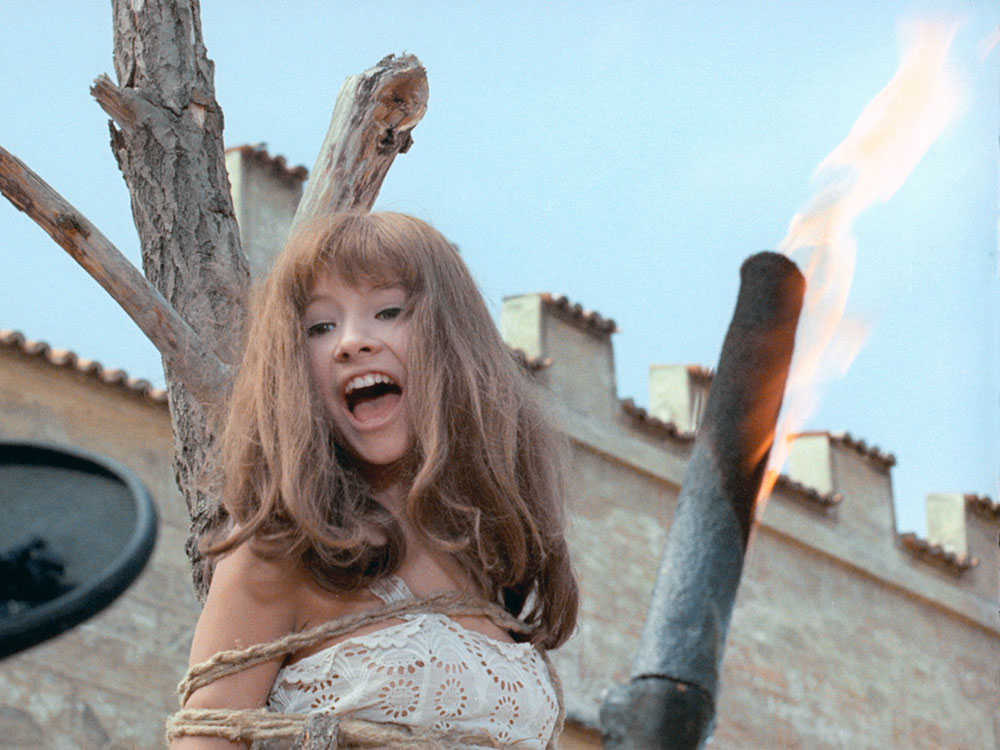
Valerie and Her Week of Wonder

Greetings, commies!

Spring is around the corner, and all sorts of "awakenings" are in store for us. If you are up for an artsy, sexy European flick that pulls no punches, consider Valerie and Her Week of Wonders, a 1970 masterpiece of the Czechoslovak New Wave movement. The film portrays the heroine as living in a disorienting dream, cajoled by priests, vampires, and men and women alike. The film blends elements of the fantasy and horror film genres.

My thoughts:

If you are fans of Kurt Russell's over the top, dreamlike, hallucinatory, gorgeous films, you must add "Valerie and Her Week of Wonders" to the list. If you are familiar with the historical and political nuances behind Czech cinematography of the 1960s and 70s, you will enjoy the movie on a different level. But if you are just watching it as a straight up psychedelic fantasy, you will still appreciate it. You will pick up on the plot elements from "Little Red Riding Hood": a pubescent young woman with a rather complicated, potentially sinister relationship to her maternal relatives, predatory males, heroic rescuer figures. The film depicts that sexual awakening in a woman is not just about having attraction to a boy. It also contains an element of violence. It's not just about consummating with the boy next door - sometimes it's about setting the whole village on fire.