Sunday, May 31, 2015

Her Sweetest Downfall by Kellie Wallace - a picture of pedestrian brutality and moral ambiguity

Say hello to my friend and fellow-writer from down-under, Kellie Wallace. 2015 has been a productive year for her. One of her recent releases is a historical novel set during WWII, Her Sweetest Downfall.

The synopsis
At the height of the London Blitz, Viola Craft, a sexually repressed young woman is trapped in a loveless marriage to her God fearing husband Vernon. She spends her days working in her mother's dress shop while Vernon pulls the dead from the rubble with his rescue crew.

Their marriage is turbulent and Viola feels pressured to bear a child. After failed attempts, Vernon believes she's barren and alienates himself from their marriage.

One night during an air raid, she meets alluring German born Kristoff Richter. They make an in-stant connection. He's young, good looking and emphatic. They embark on an illicit affair that leads to tragic consequences.

My thoughts
I am delighted to finally see this work in print. I had the pleasure of reading the early draft, under a different provisional title at the time, and I had no doubt that this novel would eventually find a home with a publisher who would not be so concerned about sticking the novel into one particular niche. The cover is overtly erotic, tastefully so.  I'm thankful that it's handled in a blue-grey color scheme. Full color covers featuring naked lovers definitely belong in the erotic romance section, and Her Sweetest Downfall goes beyond that genre.

In genre fiction, characters are more black and white.  Their actions are a little too consistent with their beliefs.  Genre fiction relies heavily on stock characters and situations, generic conflicts with generic resolutions.  In psychologically authentic fiction that is more reflective of real life, people's actions are often paradoxical. Morality is very conditional and fluid - very much like human loyalty and affection.

As a critical reader who focuses on the form and style, I appreciate the skillful juxtaposition of universal, impersonal evil, which is used as a back splash in the novel, and the pedestrian, trivial, everyday acts of brutality that people commit against each other. The cliche assumption is that war brings people together and makes them set their personal petty differences aside. And it's true to some extent that the character do engage in activities to benefit their country.  Still, that doesn't stop them from abusing those closest to them. They risk their lives rescuing victims of bomb raids, and then they resume cheating, raping, beating and insulting. Take Vernon, the husband of the female protagonist Viola's, a man who digs through debris with his own hands to look for potential survivors, and then comes home to make his wife miserable. Every tyrant has a pathetic side. Vernon carries around a bundle of insecurities regarding his masculinity, his ability to sexually satisfy and/or impregnate his wife.  He views divorce as a great sin, yet that does not stop him from taking a mistress and trying to start a family with her.  Another example is Lori, Viola's friend, who mourns the death of her infant love child in France, "Losing a child destroys you" - after having terminated three previous pregnancies.

Still, the most contradictory character is Viola herself. Even after falling for the charms of a German-born milkman, she is not too hasty to sever the ties to her boorish husband. Having allegedly found the love of her life, she still hesitates to make the final leap, so for a while she ends up sitting on two chairs.  Interestingly enough, her state is far from agonizing.  In a way, she enjoys the duplicity of her situation and the uncertainty of her unborn child's paternity.  In a traditional romance novel, the heroine would be tormented by guilt and barely tolerating the bedroom duties with her husband.  However, Viola learns to derive pleasure, excitement and a certain sense of empowerment from her duplicitous sex life. For once she understands what cheating husbands experience. In Her Sweetest Downfall, the author exposes the glorious hypocrisy of human nature.

Friday, May 29, 2015

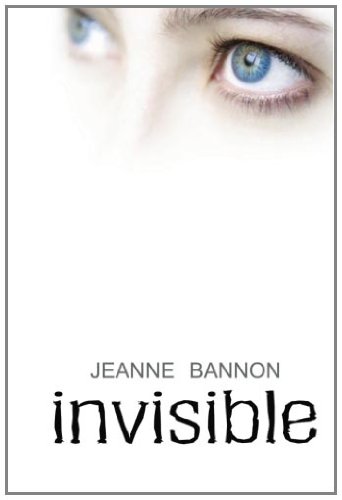
Being invisible - oh, the possibilities! - interview with Jeanne Bannon-Repole.


Today I am pleased to welcome a Canadian author Jeanne Bannon-Repole whose debut novel Invisible was optioned for a film. Jeanne opens up about the real life angst and heartbreak behind her sensational novel. It's currently being edited and revamped, so if you want to obtain a copy of it, please contact Jeanne directly.


MJN: Undoubtedly, you have read H.G. Wells' influential sci-fi novel, The Invisible Man, in which the protagonist, a chemistry prodigy, Griffin makes himself invisible as means of gaining impunity and power.  In your novel, Invisible, you explore the common teenage fantasy of vanishing.  It's no secret that many teens, even those who do not experience a lot of social rejection, think about suicide.  Usually those thoughts do not lead to action.  But in a way, becoming invisible is a form of social suicide, one that's morally more acceptable, because you don't cease to exist for yourself - just for the rest of the world.

JB: I suppose you’d just like me to comment on your statement?

Actually, I have not read The Invisible Man. I wrote Invisible because I was a victim of bullying when I was in grade 7 and 8. It was purely a cathartic endeavor for me. I wrote it quickly, in only six months, and it was picked up by the first publisher I sent it to. I was incredibly lucky. I’ve learned since then, that writing is not an easy profession and is fraught with challenges.

By writing Invisible, I chose a character who was physically different from me but possessed some of my traits. Lola Savullo is tall and overweight. I’m neither. I didn’t want readers, especially those who know me, to think it was autobiographical. It does however, contain a few tidbits from my own experiences. Though it really is a work of pure fiction. I want those who read it to be able to identify with Lola’s struggles as well as those of her sexually ambiguous best friend, Charlie. I hope I’ve helped a few people with the positive message Invisible conveys.


MJN: Congratulations on having Invisible optioned for film. Can you tell us what the process of optioning involves?  There are many writers who think that selling movie rights automatically guarantees that a movie will be made.

JB: A little over two years ago I was on top of the world. I’d just signed a contract for a movie option. I was given a bit of money for signing and was told Invisible was being turned into a screenplay and pitched to CBS and Netflix. What more could a writer want? However, that all changed just a month ago when I got the news the company holding the movie rights closed down. The movie rights reverted to me. Guess I can’t give much insight as to the process as nothing came of the option.

MJN: Say, in a perfect world, if your novel were to be made into a movie, which actress would you pick to play Lola?  If you had any say in the casting process, would you opt for a big name or a relatively obscure name? Based on Lola's physical description, she is not exactly a traditional Hollywood beauty. Sometimes it's hard for a young actress who does not correspond to the standards to break into mainstream roles. You would probably be dealing with character actresses.  Or a traditional 5'10" beauty who would be willing to pack on 50 lbs for the role!

JB: I have given this a bit of thought but could never think of anyone to play Lola. I don’t think girls/women of her size and height are common leads for Hollywood movies. You’re right about the character actor thing. Lola would more than likely be played by an unknown or an actor just starting out.

MJN: Let's talk about what makes someone an easy target for the peers.  It's interesting that most male bullying victims are presented as puny. But for girls, it seems that the criteria is opposite. A tall and big-boned girl can come across as very vulnerable. As you can probably tell, the subject is very sensitive for me.  Growing up, I suffered socially, in spite of my many apparent advantages.  I was petite, always got good grades in school, had two successful parents who bought me fashionable clothes. And yet I still was at odds with my peers, sometimes violently. I've been trying to figure out what makes someone a victim, or at least puts someone at risk for victimhood. 

JB: As I wrote above, I, too, was a victim of bullying and can understand your pain. I tried to fit in; wore the ‘right’ clothes, etc., but it didn’t work. It’s as if bullies sense vulnerability and pick on kids who are easy targets. For me, the bullying began when we moved. I came from a great school and the new one was less than stellar. I was a high achiever academically and the kids in my class saw that as a reason to pick on me. I even dumbed myself down for a little while, but it seemed nothing I did was good enough. I’m happy now, of course, because I wouldn’t want to be like those who picked on me.

I believe I was a victim because I didn’t speak up for myself. I never told a teacher (though, I think they knew), and never told my parents. I thought I was being bullied because something was wrong with me. I felt it was my fault.

Over the years, I’ve seen a huge change in bullying awareness and tolerance. I know it still exists but we, as a society, are not sweeping it under the rug like we used to. It’s not a verboten subject anymore, and for that, I’m grateful.

MJN: I understand your latest project in the works is a paranormal thriller with a working title Dark Angel.  Do you have any concerns about your novel standing out, since there are quite a few items on the market with the same title, including a TV series with Jessica Alba?

JB: Dark Angel has been in the works for about six or seven years now. It is the first novel I wrote but I keep putting it on the back burner because of its complexity. It’s the story of a female vigilante who’s tasked with murdering a kingpin of an elitist group. A group set on reducing the world’s population to suit their own needs. Think illuminati meets Nikita. It’s close to being completed, however, there are a few problems that need resolving. I’m not sure it will ever be done.

I’m not concerned with Dark Angel standing out. It’s unique and I’ve never seen or read anything like it. As for the title, well, it can be changed and they often are once a publisher gets a hold of the manuscript.

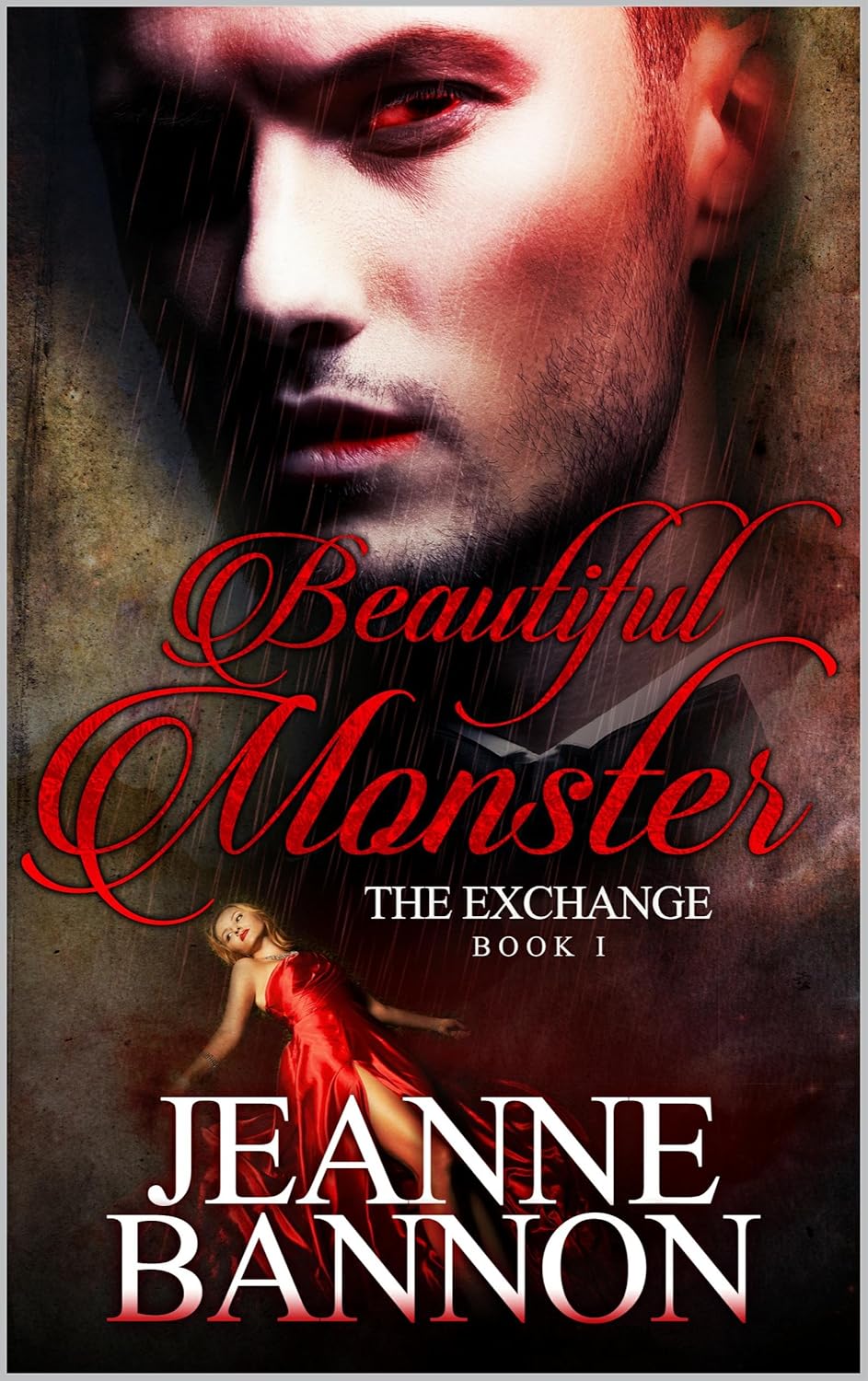
That said, I’m working on other projects as well. I’ve written a novella entitled, Beautiful Monster — The Exchange (Book One) about a vampire whose mortal lover dies. He wants to be with her in the afterlife but cannot since he’s soulless. I’ve started Book Two and want to have that completed by the end of the summer. I also have a few other projects on the go. I guess I should pick one and stick with it.

I work as a freelance editor/proofreader and it’s difficult to find time to work on my own projects.

Saturday, May 23, 2015

Author Mike Cooley on the archetypal power of crystals

A very warm welcome to Mike Cooley, an author of science fiction and fantasy, a passionate dreamer and a skilled wordsmith. Over the course of the interview I found out that he and I have a lot in common as far as our tastes in speculative fiction and film are concerned. Thank you, Mike, for taking the time to talk to us about your Legend of the Crystal series.


MJN: There are so many fantasy novels featuring crystals. I've often asked myself about the roots of our fascination with crystals as vessels of mystical powers. There must be some Jungian explanation behind it. It's in our psyche to tremble before a hard, glowing cluster of minerals.

MC: I agree. There is something about light reflecting through crystal that touches us in an ancient way, like the flickering flames of a fire protecting the entrance to our cave.

I’ve always been fascinated with artifact stories, where the artifact is mysterious and has powers. In Crystal Warrior I wanted the source of magic to manifest itself in many different ways. Originally there were supposed to be eight crystals, but I realized that would make things a bit too complicated, so I settled on six. Each crystal has a color, a power, and a god or goddess that it represents. And although the temples to the gods have crumbled over the centuries, the legends remain. Here are the crystals, their alternate names, their colors, their powers, and the gods they represent:

·        Crystal of Foreboding (Spirit of Kiefer) — White, future sight, Kiefer (God)

·        Crystal of Accuracy (Eye of Gort) — Red, accurate aim, Gort (God)

·        Crystal of Healing (Hand of Malkt) — Green, self-healing and healing others, Malkt (Goddess)

·        Crystal of Time (Skull of Platkar) — Gold, temporary time stop, Platkar (God)

·        Crystal of Illusion (Skin of Serna) — Silver, invisibility & changing appearance, Serna (Goddess)

·        Crystal of Love (Heart of Palnk) — Purple, makes others love and obey you, Palnk (Goddess)

MJN: When you come up with fictitious names of places and species of birds and animals, is there any particular ethos you draw your inspiration from? For instance, do you seek to make them sound Native American, or Celtic, or Arabic, or Greek?

MC: That’s a tough question! In the Legend of the Crystals series I tried to make the names fit the characters, while not making them sound too Earth-like. Since the story takes place far across space on a planet that has never heard of Earth I didn’t think the characters should have common names. Larissya, of course, is a fairly normal name, but many of the others are not. In particular there is a magical creature named Taradahn. I named him that because he is similar to a pterodactyl in some ways and I liked the way the name sounded. Often with names I go with hunches and how they sound. I also try to avoid using names that are hard to pronounce, as I think that gets annoying for the reader. The Widgen—who are kind of like tree elves—have more whimsical names, like Jinga, as I thought that fit in better with their personalities.

MJN:  In your biography you say that you enjoy to explore the dark and surreal landscapes of the mind. Can you name a few of your favorite filmmakers? I imagine you would be a fan of Lynch and Cronenberg.

MC: I love this question! I am heavily influenced by dark fantasy and science fiction. When it comes to filmmakers, you are correct, Lynch and Cronenberg are near the top of my list along with Kubrick, Ridley Scott, John Carpenter, Paul Verhoeven, and Joss Whedon--to name a few. Some of my favorite films are: Bladerunner, Alien, Serenity, and The Matrix.

MJN: Your Crystal series feature the same model on the cover. Would you say your readership for that particular series is predominantly female?

MC: I wish I knew! From the reviews and emails I get I think it’s about 60/40, with females in the lead. Those covers were done for me by a friend, and she sent me a few choices to choose from for the model. Then, once I chose the model, there were a limited number of shots to choose from for books two and three. I wanted it to look like she was growing up a bit from book to book since the timeline from book one to book three is a number of years. All I knew before the cover was created was that I wanted her to look like a teenager with long dark hair and green eyes. I sent the first four chapters to my friend and asked her to use her best judgment about what model would work.
      
MJN:  If you could introduce an element of magic into our reality, any element, what would it be? Can you think of a particular supernatural talent? Would it be granted to everyone to the same degree, or would it have to be earned by the select few? How would it potentially upset the balance of things?

MC: I’m a firm believer that magic needs to be limited, and that using it shouldn’t be “free”. If there isn’t a price to pay then I think it’s less dramatic and feels more like a cheat to get the author or characters out of a jam. When it comes to magic in our reality, I would introduce a healing ability like Melanie has in my novella, Alpha Male. And it would be rare, which would make it very sought after. I’m torn between whether it should be earned or inherent, but I lean toward inherent but hidden until triggered by something. A magically augmented empathy like that, where a person is willing to take another’s pain in an effort to save them appeals to me. And I think it appeals to others, on a deep level, since almost everyone at one point or another has probably wished they had that power.

Thursday, May 21, 2015

Susan Kaye Quinn - rocket scientist who writes sci-fi and steampunk

I am beyond thrilled to introduce Susan Kaye Quinn, a rocket scientist, bestselling speculative fiction author, indie publishing mentor, wife, mother of three and fellow cat-lover.

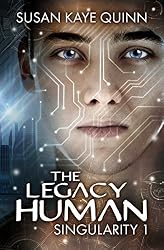
MJN: You have a stunning website. The graphics and the color scheme evoke images of Ender's Game. The young male model on the cover of your Singularity 1 novel looks like a mixture of Elijah Wood and Haley Joel Osment. Were you using those two teen icons as a guide when picking the model for your cover?

SKQ: Considering I don’t know who Elijah Wood and Haley Joe Osment are, I’m going with no on that. J But I did search long and hard to find just the right cover model for my main character (also named Eli!) – I needed a range of shots, a young man that looked like Eli in my head, and a model that could emote. I even worked with a photographer to do a custom shoot to get just the right look. Just when I was despairing of finding the right model, I stumbled across this talented young man on a stock photo site. Here are a few of the myriad photos I’ll be pulling from for covers.
https://www.facebook.com/groups/susankayequinn/permalink/1705867186307196/

MJN: I was intrigued that you got "a bunch of engineering degrees". My grandma is a retired engineer, and I have a lot of respect for scientifically-minded people. I'm just a poor English major ;-) But you seem to have been able to combine your passion for science with your passion for writing, which resulted in convincing, thought-provoking prose. Do you consider yourself a scientist who writes or a writer who invents?

SKQ: These days, I’m a writer who invents – I write full-time and don’t plan to ever stop! I loved doing science when I was working in the field, but writing is my true calling.

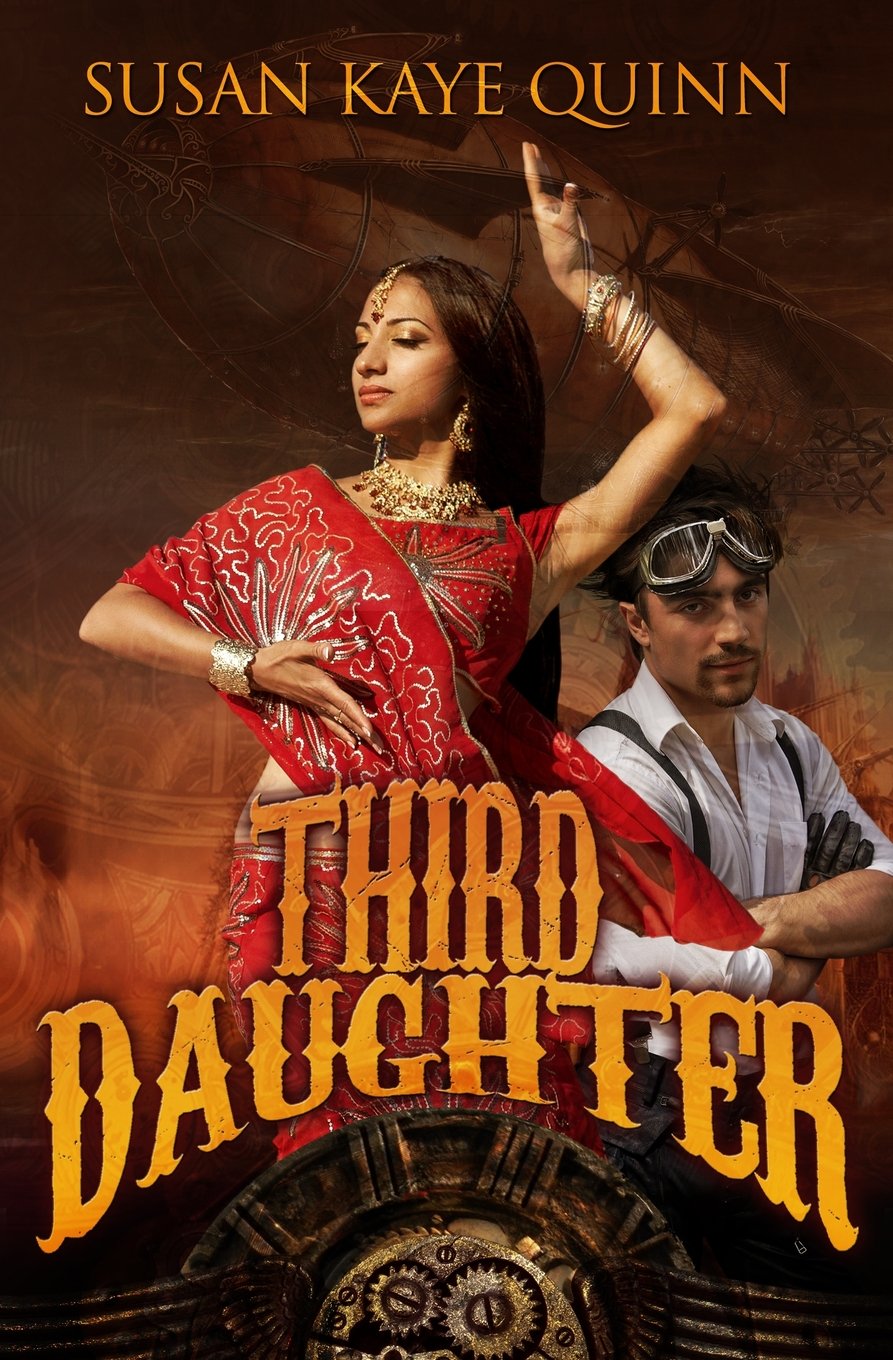
MJN: Let's talk about the esthetics behind your steampunk trilogy Dharian Affairs. You combine the elements of Bollywood and retro futurism traditionally associated with British settings. One of the reviewers dubbed is a Bollypunk. The fusion is far from inconceivable, given that India was a British colony for a long time.

SKQ: Exactly! When I started writing Dharian Affairs, moving beyond the British setting of most steampunk was just starting to happen. Now there’s all kinds of non-British steampunk. One of my favorites is this Asian-themed fantasy steampunk series by SM Blooding – isn’t the cover gorgeous?

MJN: You have a blog on indie publishing that offers a wealth of support for authors contemplating the indie route - or looking to make their current marketing practices more effective if they are with a small publisher. Do you get more fan mail from your readers or from other writers who follow your blog? 

SKQ: I get a healthy mix of both – most of my actual fan (e)mail comes from readers, but I connect with writers every day on Facebook. And writers are readers, too! I’m a fan of writers like Hugh Howey (Wool), Jennifer Wells (Fluency), and Annie Bellet (Twenty Sided Sorceress). These writers are my friends, they inspire me with their business practices, but I’m a reader-fan as well.

MJN:  I'm going to ask you a question that I asked another author recently. If you could introduce an element of sci-fi into our reality, any element at all, what would it be? Can you think of a particular supernatural talent? Would it be granted to everyone to the same degree, or would it have to be earned by the select few? How would it potentially upset the balance of things?

SKQ: So many good questions – and ones I incorporate into my fiction all the time! Relevant to my Singularity series I’m writing now… I would have to say neural augmentation. My brain needs all the help it can get! But when it comes (and I think it will), it will turn our world upside down. When brainpower is what literally runs our world, what will we do when some select few have access to even more? Or if everyone has the ability to upgrade… at a price. It’s a shocking thing to think about. And something I’m going to be writing about this summer.

Tuesday, May 19, 2015

Stolen by Sheila Dalton: an exploration of moral ambivalence

An exploration of a nightmare
As a child I was plagued by a pervasive fear of something horrible happening to my mother. In my nightmares, I would come home to a demolished apartment to find my mother gone. If my mom was running late from work, or if the windows were dark, or if she did answer the phone on the first ring, my imagination would get the best of me. My mom would scoff at my fears, "What, you think I got kidnapped and sold into slavery?" Well, guess what? For the heroine of Sheila Dalton's genre-transcendent novel Stolen this scenario is more than just what night terrors are made of - for her it becomes reality. After a routine trip to the market, she comes home to find her native village ravaged and the inhabitants enslaved. In literature, the scenario of a parent looking for a missing child is explored quite frequently. You don't see as much of the reverse - when a child is looking for his/her parents.

The global landscape of slavery
I applaud the author for highlighting the subject of Christian white slavery in a Muslim country. I know it's very popular and politically correct to demonize the infamous Christian White Male as the enslaver of the world. I'm sure there are some people there who'll tell you that it was the white man who invented slavery. It's really refreshing to see a more balanced picture. Don't get me wrong, there are some very graphic scenes of the Senegalese being chained up and shipped to Morocco. But there are equally graphic accounts of white paupers in England being rounded up and shipped off to the Colonies to work on plantations, and white women being used for breeding "super slaves". Avarice and cruelty know no color.

Beyond genre
I am grateful that the novel is not a swashbuckling pirate tale, nor is it a swoonworthy romance, nor is it a combination of the two. Genre fiction puts the expected plot elements above psychological authenticity. Sheila Dalton's work is a cut above genre fiction.

A study of moral ambivalence
I am also grateful to the author for sparing me, the reader, scenes of melodramatic moral agony, of hair-pulling and chest-beating. The young heroine is refreshingly practical and in touch with her survival instinct. In order to stay alive, she does certain things that contrary to the mainstream teachings of her church - oh, like sex outside marriage, stealing and killing. One by one, she breaks those barriers, experiencing only mild moral discomfort. A less seasoned author might have been tempted to play up the internal conflict. What I got out of this is that we are all whores, thieves and murderers. We can repress those vices to some extent, but if put in a certain environment and forced to choose between our principles and survive, we will most likely choose the latter. The philosophical musings are woven seamlessly into the plot and do not stick out. The characters do not become talking heads for various ideologies.

The only thing I struggled with was Lizbet's repeated allegation that she was "not in love" with either one of the two men she had been intimate with. Her ongoing trail of thought is, "Sure, this guy is kind of interesting, and we have great sex, but it's not love." I have trouble believing that a young girl with limited experience would be able to make that distinction between love and lust. It's something a 35-year old divorcee would be able to identify. Apart from that, the author does not step outside the era.

Overall, "Stolen" is one of the most enjoyable and stimulating books I've read this year.

Friday, May 15, 2015

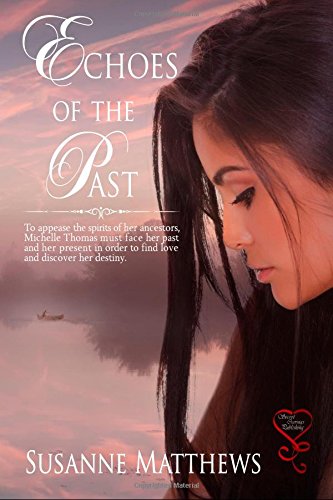
Echoes of the Past - romantic environmental thriller with paranormal elements

Today I am spotlighting a fellow Secret Cravings author Susanne Matthews who has written Echoes of the Past, part ethnic romance, part environmental thriller, part paranormal murder mystery.

Synopsis
Born Mohawk, raised white, forensic pathologist, Michelle Thomas is trapped between two worlds—this one and the spirit world where the ghosts of those who’ve drowned speak to her. Haunted by crippling nightmares of her own drowning death and erotic dreams of a phantom lover, she strives to make sense of her life. When two suspicious deaths occur at the Lake of the Mountain Resort, she’s sent to investigate. She’ll face the greatest challenge of her career when her past and her present collide. One of these men is her future, but which one—the rich and powerful Mayor Ron Davies, or Tony Steele, the hydrology professor who may be responsible for his students’ deaths? Charged by the spirits of her Mohawk ancestors to atone for her previous sins by protecting Lake of the Gods, can Michelle solve the murders, save the sacred waters, and fulfil her destiny?

My thoughts
Allow me to begin that an original, authentic novel like that deserves a more catchy title. There are so many books with a similar name. 

This multidimensional gem that is satisfying on so many levels. It features an otherwise strong heroine who suffers from crippling phobias. While she is able to maintain a poker face for her colleagues - the nature of her job demands that - she falls apart on more than one occasion behind the closed doors. The most praiseworthy characteristic of the novel is the morally neutral, non-judgmental tone. We are dealing with such controversial subjects as environmental protection and the social status of Native Americans in a world dominated by European settlers. I applaud the author for not lapsing into that down-your-throat ultra-liberal sanctimonious tone that a less skilled author would be so tempted to embrace. The characters are convincing 3D individuals, not just talking heads for spreading green agenda. The author does a good job at not demonizing or romanticizing any ethnic groups. I look forward to seeing more of her work!

Thursday, May 14, 2015

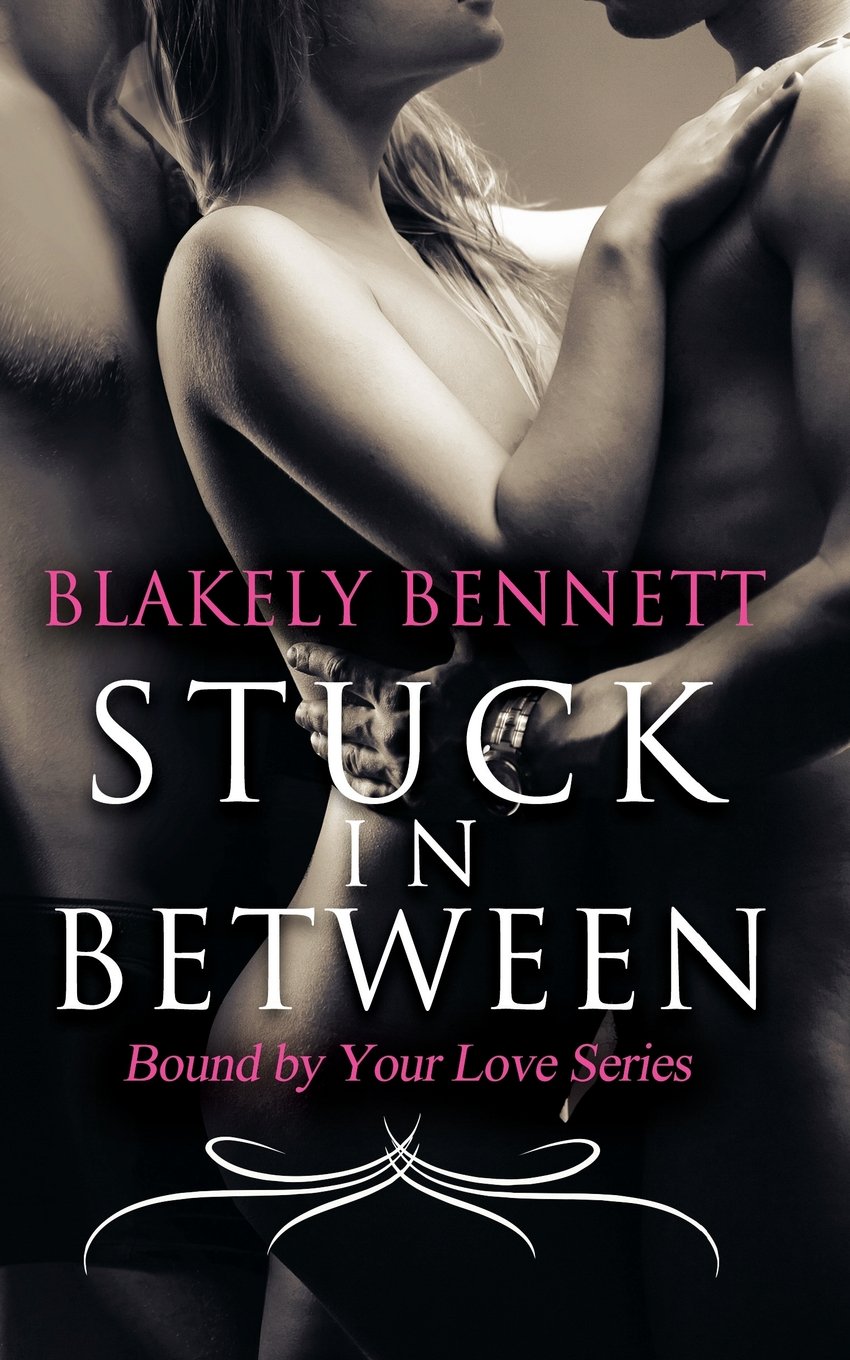
Blakely Bennett - erotic romance writer

Welcome to the torrid world of Blakely Bennett, an author of erotic romance and suspense. A Florida native, she currently lives in Seattle. She graduated from Nova Southeastern University with a degree in psychology, which accounts for her particular interest in crafting the personalities, struggles, and motivations of her characters. She is an avid reader of many genres of fiction, but especially enjoys erotica and romance.

MJN: On your website, you state that you are an author of erotic romance and erotic suspense. Can you educate me a bit about the distinction between the two branches of the genre? Are there any mandatory built-in components?

BB: Any good book has a bit of suspense in it, which keeps you engage in the story, reading past the point you should otherwise be in bed asleep. The difference between erotic romance (Bound by Your Love Series) and erotic suspense (My Body Trilogy) is the same difference you find between romance and suspense. In true romance, the protagonist and his or her love interest end up together in the end. It’s a given. In suspense, however, the ending is unpredictable and the not knowing adds to the tension. What will come next, keeps you on the edge of your seat.

MJN: Many mainstream romance publishers won't touch material that has an element of violence. Or even if violence is present, it has to be depicted in the context of an S&M game in which the heroine has a say. And yet, I find that the combination of pleasure and violence stimulates certain parts in our brain. This is why novels by Marquis de Sade continue to disturb people 200+ years later.

BB: I honestly don't worry about what other people are doing. I just strive to write better and better with each subsequent novel. I want my readers to feel all the emotions, including the hot steamy sex, my protagonists are experiencing. As long as I do that, and do that well, I don't think I need to be worried about the competition. 

MJN: You have organized your novels in series. When an idea for a novel occurs to you, do you know in advance if that will be a segment of a particular series?

BB: I enjoy series myself and I write what I would enjoy reading. It’s really that simple. If I like a novelist, I tend to read all the books they have written especially if they write series.

MJN: With so much explicit material available in various formats, I imagine, the readers have become quite desensitized, and things that used to arouse and disturb people 30 years ago no longer do the trick. How does a modern erotic writer maintain her competitive edge without slipping into gratuitous silliness? (I'm referring to "Fifty Shades").

BB: I don’t agree that we are desensitized. Good writing is good writing. If an author can make you feel what is being written and strives for originality, I don’t think it ever gets old. Each sex scene I write is different but I don’t feel the need to get harsher or darker each time. Each character’s needs and desires are different and I honor that.

MJN: You have co-authored with Dana Bennett. How does co-authoring work in general? Is each author responsible for developing separate characters? Is it always a 50/50 division of labor?

BB: I can’t speak for other co-authors or other experiences. For Dana Bennett and me, writing The Demarcation of Jack, we wrote in all kinds of ways. Sometimes we were side by side, as I typed and we discussed. Sometimes I worked on a scene while he worked on another. One time we recorded ourselves having an argument as Jack and Jenna (I was Jack) and then I transcribed the fight. It was much faster to write together and there was a lot more compromise too. However, we always read and edit each other’s individual projects and act as a sounding board for each other. So in some ways, we are always co-authoring.