Wednesday, November 18, 2015

Kristy Tate - bestselling, award-winning time travel and paranormal novelist

Hello commies!
It is my pleasure to present Kristy Tate, an imaginative and prolific author of time-travel and paranormal novels. Bereaved of her mother at a young age, she channeled her grief and anxiety through her love of books. Years later, she's an award-winning, Amazon bestselling author.


MJN: This question may sound odd, but how did the time travel romance develop in the first place? Why do authors opt for a sci-fi element instead of setting the novel in a particular historical period? Does it add humor to have a contemporary character hurled into a foreign world?

KT: A time traveler is the ultimate fish out of water story. I can't speak for other authors, but some of my very favorite movies are time travel romances, When Peggy Sue Got Married, and Kate and Leopold to name a couple. I got the idea for the Witching Well series while I was watching a documentary on the Salem Witch Trials, long before the release of the Outlander TV series. And of course, I had read and enjoyed Outlander twenty some years ago, and thought I should write a time travel romance! Never suspecting that the release of the Outlander TV series was right around the corner. This has actually happened to me a few times. I was days away from publishing Beyond the Hollow, set in Washington Irving’s Catskills when I learned of the Sleepy Hollow TV series. I was in a movie theater and when the trailer came on I actually screamed. My husband was completely humiliated, but I, of course, was enraged.

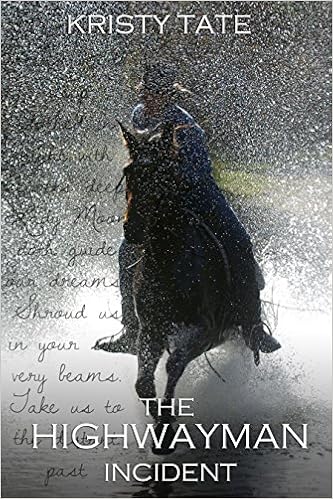
MJN: I am intrigued by the cover on Highwayman Incident. The trend for historical novels is to show a heroine with a part of her head cut off. You opt for a different technique, actually leaving the figure of the horseman but shrouding it in ashes.

KT: My daughter designs my book covers, and I think we’ve grown together. I like to think my novels are getting better and better, and I know her covers are getting better. Frankly, I don’t want to look like a typical romance, because I think that would send a wrong message. I don’t write the ‘typical’ romance, and I think if people are expecting a Julia Quinn (who I love, by the way—although I skip over her sex scenes) they’ll be disappointed, and maybe even write a nasty review.

MJN: Your Beyond series is intended for younger readers. You reference figures like the Headless Horsemand and Grigory Rasputin. How much background knowledge of history and literature does an average reader need to possess in order to have a firm point of reference? Do you hope that reading your works will prompt your younger audiences to read or revisit the originals?

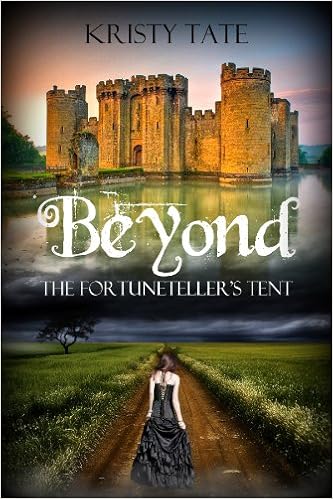
KT: I actually lived close to Washington Irving’s Sunnyside, and I loved his work. I hope Beyond the Hollow reflects that. I got the idea for Beyond the Pale while watching another documentary. This one was on the unusual religious practices of Rasputin. I suspect he’s been demonized, but I would love to meet him. He must have been a terribly charismatic man. And of course, I would love to think that anything I wrote would make people dig into history. Actually, one of my favorite reviews is a 3 star of Beyond the Fortuneteller's Tent where she said after reading it she had to get out a Bible and do some research. But for the most part, my books want to be nothing more than entertainment.

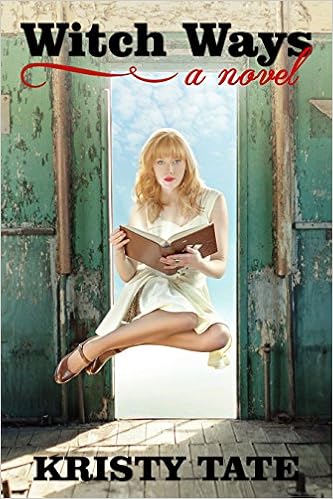
MJN: Your recent title is Witch Ways. It's set in Connecticut where I live! This state is often used as a setting for novels and films that explore the issues of social status and gender roles. Films like Stepford Wives come to mind.

KT: While my husband worked in New York City, we lived in Darien, Ct, and I have really sweet memories of our time there. I didn’t know it when we first moved there, but many of my ancestors lived in Fairfield County as early as the 1600s (Darien is in Fairfield County.) I made lifelong friends there, and I think I will always have a tender place in my heart for Connecticut—despite the witch trials. I'm sure southern Connecticut is often characterized for it's WASPish ways, but it has a rich history.

MJN: It's always a delicate balance between being true to yourself and not alienating your readers. I have a pretty thick skin and an open mind and a sense of humor, so it's next to impossible to offend me. Readers seem to be polarized on the issue of witchcraft and paganism in young adult fiction. There are some extreme cases of religiously conservative parents prohibiting their children from reading Harry Potter. On the opposite end of the spectrum, I've come across a few manuscripts that offered little more than humorless, vindictive Christian-white-male bashing. Honestly, that kind of writing generates more yawns and eyerolls than strong reactions. How do you avoid falling into that trap?

KT: Interesting you would ask! I knew that I’d offend some Christian readers, but I also suspected that those who had issues with witchcraft wouldn’t be reading my books! What I didn’t know was I’d offend those who follow witchcraft. (I got a nasty review from someone who clearly hadn’t read the book who thought I was trying to “convert others to her religion” and that I thought “all witches should burn.”) The truth is this phrase struck me—“everyday we all have to decide whether or not to be a witch,” and I wrote about a teenage girl who didn’t know who she is. Probably more than any of my other characters, I “get” Evie. While writing this series, I really plumbed my teenage self. I lived alone with my dad. I watched his courtship with my stepmother…with horror. I had one boyfriend after another. It was really a difficult time. I’ve since learned that books became my drug of choice—my way of escaping my grim realities—during my mother’s long illness, her death, and my father’s rocky remarriage. I hope my books can offer others a safe and entertaining escape when life gets too real and hard. I know the intent of my heart (and I believe God does, too.) If others choose to be offended, that’s their issue, not mine, and, frankly, none of my concern.

Monday, November 16, 2015

Mesopotamia in historical fiction - interview with author and anthropologist Shauna Roberts

Greetings, commies!
Welcome to the enchanting and perilous world of Mesopotamia fleshed out by Shauna Roberts, who incorporates her expertise in anthropology and science into her historical and speculative fiction.


MJN: You have a B.A. in anthropology from UPenn and an M.A. and a Ph.D. from Northwestern University and worked as a science and medical writer. Your fiction covers many a genre, from sci-fi, to historical fiction, to fantasy, to romance. Given your professional background, do you feel that one genre comes you to more organically than another?

SR: Historical fiction seems to come most naturally. I’ve read a lot of history and biography and visited many historic places. Those experiences combined with my anthropology degrees make me aware of basic facts such when various things were invented, where foods were domesticated and when, what characteristics do most cultures share and what traits are particular to modern Western societies, and so on. As a grad student and again as a medical writer, I did a lot of research and learned how to dig up obscure data. As a result, getting the history and culture right is a lot easier for me than for people without my background.

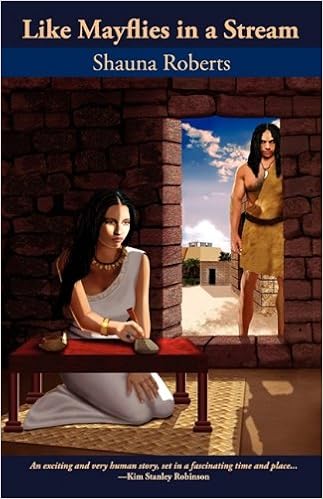
MJN: One of your early novels, LikeMayflies in a Stream is a story of Gilgamesh. Several authors have tapped into one of the world's oldest myths. It's so timeless and can be adapted to suit any ideology. You've been commended on your strong female protagonist. At the same time, one of the reviewers pointed out that your protagonist is not a child of the 60s or a modern 2nd-wave feminist. So many authors make the anachronistic error of imposing 20th and 21st century ideas onto a character who lived thousands of years ago.

SR: Again, I credit my anthropological training and extensive reading in history and biography. I’m aware of many ways of being a man, a woman, a child, a human being. I try to get into the mindset of my characters based on what I know of their time period, social class, and expected roles, and I try not to assume anything (which is, of course, impossible, but it’s the right goal to aim for).

One problem with historical fiction from major publishers is that they underestimate readers’ ability to put themselves in someone else’s sandals/boots/sabots and discourage writers from giving main characters ancient or “foreign” attitudes. Publishers want to buy books with characters “readers can relate to”—code for characters that think and act like 21st-century Americans.

Meanwhile, historical fiction fans I’ve talked to read historical fiction precisely to experience life in another time and place. They’re intrigued or curious or shocked by people who enjoy eating bugs and girls who have to marry and run a household at age 13 or 14 and court ladies who pee in public in the hallways of the palace of Versailles. I suspect a lot of the appeal of Outlander and its sequels—besides Jamie, of course—is learning along with Clare just how different life and basic beliefs were only 250 years ago in Scotland.

Publishers’ timidity and underestimation of readers has been a boon for small presses. Many small science fiction and fantasy presses are turning out books that on average are better and more true to human nature than large presses. These presses tend to be more concerned with publishing excellent books and less concerned with publishing blockbusters.

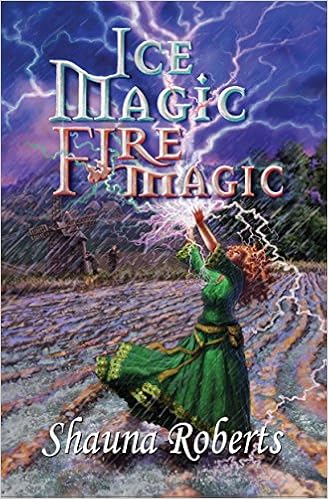
One example is Hadley Rille Books, which published Like Mayflies in a Stream in 2009 and just published my fantasy novel Ice Magic, Fire Magic. HRB insists on archaeological and historical accuracy and scholarly extrapolation when facts aren’t available in its Archaeology Series novels, which are historical fiction, usually set in ancient times. HRB is also expanding its offerings of fantasy with women main characters because the women in sf/f books from large publishers represent such a small sampling of the many types of women there are and the many ways they can be heroic.

MJN: Mesopotamia is not a very common setting for historical novels, so I applaud you for venturing into the underexplored territory. There are so many cable shows set in Ancient Rome. Does that present a problem while pitching your work to publishers? On one hand, publishers don't want a topic that's already been done to death. But then they don't want something that's obscure.

SJ: I’ve loved ancient Mesopotamia since I read History Begins at Sumer by Samuel Noah Kramer back about 1972 or 1973. Why are there 60 minutes in an hour and eggs and other products are sold by the dozen? Why are sheep woolly? Why is the world’s first known literary writer and poet a woman? How could the first civilization start in a desert lacking almost every natural resource? Why do many Bible stories include elements of Mesopotamian stories of much earlier times?

It’s amazing to me how much we still depend on technology and practices developed thousands of years ago in Mesopotamia.

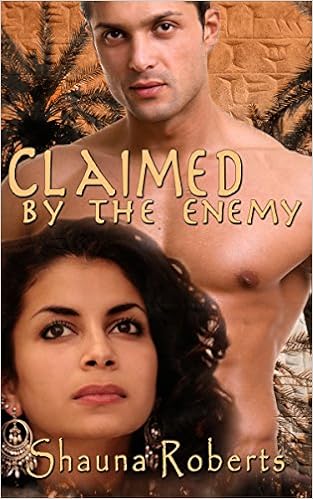
You are right; it would have been a problem to try to find a major publisher for my past and future Mesopotamia books. That’s why I was so glad to hook up with Hadley Rille Books for my first novel. My second Mesopotamia book, Claimed by the Enemy, was too long and relied too much on extrapolation for HRB’s Archaeology Series, so I self-published it. I never considered a large publisher. I wanted the characters to be true to their time and their time’s expectations for men and women, and I wanted to tell the story from a feminist perspective as I did with Like Mayflies in a Stream. (Men enjoy both books, by the way; they’re not stories solely for women.)

I assumed I would get cross-over readers from among fans of novels set in ancient Egypt, ancient Rome, and ancient Greece. So far that hasn’t happened. I still hope it will. The eras and places share many cultural elements, including interesting mythologies and practices that continue to the present day.

MJN: In your recent fantasy IceMagic, Fire Magic you have a land called Veridia. I imagine, the name could mean Green and Truthful. Do you rely on any particular language or folklore when coming up with fantasy names?

SR: Yes. For IMFM, every name is rooted (ha ha) in botany. Fila, the heroine’s name, is a shortened form of “filia,” meaning “daughter’ in Latin and “love" and “friendship" in Greek (φιλία). Her brother’s name, Urushi, came from “urushiol,” the allergenic substance in poison oak, poison ivy, and some other poisonous plants. Hero Celatu got his name from “celatus,” meaning hidden or concealed. Fila’s cousin Kassia was named for the genus Cassia, some of whose member species have poisonous seeds. Some names are completely obvious—Hyacinth and Astilbe, for example.

I wanted the name “Veridia”’ to represent greeness, fertility, youth, and lushness. It was inspired by “veriditas,” a word combining “green” and “truth” and often used by composer, poetess, and abbess St. Hildegard von Bingen to mean "green fire and energy" and to imply redemption, flourishing, knowledge of the world, and the divine as mainfested in the world in everything—every creature, every leaf, even every stone. For more about Hildegard and her concept of “veriditas,” start with these two blog posts: http://www.beyondthefieldsweknow.org/2012/10/viriditas-visions-of-green-saint-mary.html


Our age has lost its connection to the natural world. Some modern people don’t know the names of common trees or flowers; they don’t recognize the smell of a tomato plant leaf or a mint leaf; they’re afraid of all spiders and snakes, not just the harmful ones. In IMFM, I wanted to recreate what it was like when humans were integrated into their environment. So the characters know the names of the animals and plants they encounter and what the properties of different plants are. Some are at home in the woods. The weather reflects Veridia’s moods. For the world of IMFM, I used the plants, animals, and insects and some of the geology and geography of southwestern Ohio.

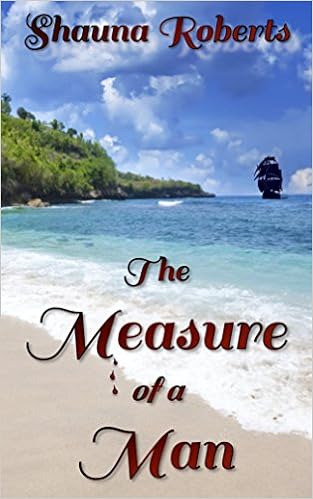
MJN: I'm intrigued by TheMeasure of a Man - a 57 page novella that combines elements of fantasy, history, sci-fi and horror. Zombies on a 16th century island? Is this novel considered a pilot? Have you considered turning it into a novel and launching a new brand of hybrid?

SR: "The Measure of a Man" started as a short story of 7000 words, but it felt too compressed. Too much was happening for the number of words, and it needed more room to breathe. So I expanded it considerably until it felt right. I’ve occasionally considered writing a sequel, but nothing yet has intrigued me into going further. I was interested in the intersection of the three men’s lives at this one moment, not in what came before or after, and I captured that moment.

Anthropologists had collected many stories from Flores Island about little hairy people who didn’t wear clothes, couldn’t talk well, and occasionally came down from their caves to trade for goods or to steal stuff from the villagers. The stories implied that these people had lived just a few generations before, although of course some stories can be passed down orally for hundreds or thousands of years. When bones of a new, tiny human species, Homo floresiensis, were discovered on Flores, many anthropologists thought they had found the little hairy people of legends. Part of the impetus of this story was the question, What if Homo floresiensis had survived into modern times?

The other impetus was my desire to examine the concepts of honor, duty, and manhood from the viewpoints of three very different men faced with the most important decisions of their lives. Will they do what is right or what is easy? How do their views of themselves as men affect their decisions? Are their concepts of manhood positive (these are principles I should follow to be a good man) or negative (if I do this, people will think I’m childish, a coward, a bad husband, a bad neighbor). Many societies place heavy burdens on men to live up to certain ideals, and I wanted to feel what that was like.

Wednesday, November 4, 2015

A Portrait of My Love - a romance through a Dystopian lens

Commies,
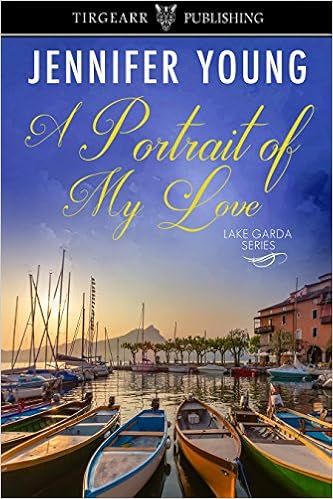
You should know by now that I have a very grim view of humanity. I hope to demonstrate that even a hardened cynic can enjoy a romance novel. Obviously, a reader like myself is going to get something entirely different from someone who gulps romance at face value. So today I am reviewing a romance novel from a Dystopian point of view. A few months ago I reviewed a murder mystery by the same author, Jennifer Young. Today I am reviewing A Portrait of My Love, Book #1 in her Lake Garda Series.

Synopsis:
Terrified of commitment, Skye Ashton ditches her artist boyfriend, Zack, and disappears off to Italy with her best friend, the fascinating and fabulously wealthy Leona Castellano. When Zack turns up, Skye realises how much she really cares for him. But she has a fight on her hands, because Leona has taken an instant fancy to him, and she’s used to getting what she wants.

When Leona sets out to uncover the true story behind an old family feud, she puts herself in danger, and Zack finds himself drawn into an attempt to save her.

Will his intervention in Leona’s life lead to him losing Skye, the girl he really loves?
____________________________________________________________
My thoughts:
I confess that before reading "A Portrait of My Love" I had to deprogram my brain a little. This book is totally outside the scope of my usual reading material. Normally I get a lot of twisted pleasure out of reading truly cerebral, warped, darkly comical fiction. Hence, I am not going to judge "A Portrait of My Love" it according to my regular guidelines. On a personal level, what intrigued me is that the love triangle reminds me of my own story. 17 years ago, while still in college, I successfully stole a man from a commitaphobic "friend". She was also "taking a break from the relationship" to "do some soul-searcing". Well, I didn't waste much time and moved right in. So I have a sadistic soft spot for love triangles like that. I have another sadistic soft spot for decadent Americans - or Brits - running away to do soul-searching in Italy. A prospective threesome in Italy ... Hm... Wings of the Dove, here I fly!

Now we are getting to the most delectable part - the protagonist, Skye Ashton. The author does a marvelous job creating a whiny, entitled, neurotic, impulsive, wishy-washy heroine trapped in the rinse cycle of first world problems, who fancies herself a free-spirit and a citizen of the universe yet agonizes over whom to call, her best friend or her boyfriend, or what flavor creamer to put in her coffee. In short, Skye is someone you want to see ambushed in a dark alley, murdered in a gruesome way and chopped up into pieces, just to stop hearing her high-pitched voice. Her redhead frenemy with a very telling name Leona is made essentially of the same raw materials. The differences are cosmetic. The object of their rivalry Zach is a glassy-eyed anemic dreamer who doodles Celtic knots. Essentially, what we end up with is a cast of hedonistic, spiritually bereft individuals taking a stab at the concept of Love. Ironically, "Love" is in the title of the novel. In reality, these people would not know Love if it fell into their cocktail glasses.

As a parody of 21st century Western World Womanhood, A Portrait of My Love is unparallelled. 

Sunday, November 1, 2015

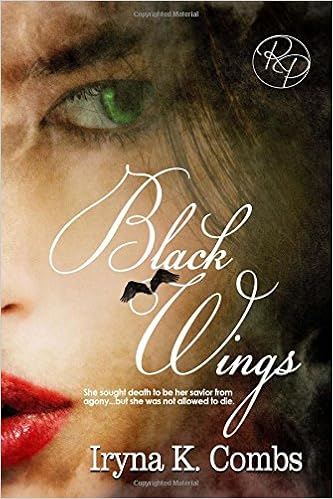
Black Wings by Iryna K. Combs - a poignant society allegory


Synopsis:
A new time. A new planet. A new world. New technologies. Two new humanoid species. A new war. The two species separate, but in the removal, some of the best are left behind among the worst. Captured and held as slaves, they are treated cruelly for entertainment. Torture. Pain. Annabel, endures a year of such cruelty, kept alive only by way of syringes which, while healing, cause a greater agony. She discovers a secret held by their leader, and decides to help her own kind by escaping–even if it means a final death, preferable to the life she has endured. Her escape succeeds, and she joins her own kind at the other end of the planet. Among her new friends she meets many who help her adjust to their happier life. Will Annabel find romance? Or will another war break her down?

My thoughts:
Black Wings is a poignant allegory of societal evolution. There have been so many attempts to "purify" humanity, to purge it of corruption, to dramatically reform various religious and political structures. And the result is usually far from encouraging - very often we go from Bad to Worse. Basically, every time you try to start anew, you end up making the same mistakes. The scientific premise behind Black Wings is fairly straightforward. Our planet is dying (a distinct possibility) and a group of scientist is trying to jump start a new civilization on another planet. The same corruption takes hold of the new home. Very quickly, the new residents revert to the old ways. A schism occurs, giving rise to two races - Varkins and Anlights. It's not hard to figure out from the sound of the names who are the bad guys. Within each race, there is a hierarchy. Equality and peace are against human nature. Both races in Black Wings are humanoid, so their collective psyche and morality have human roots. And whenever you have two races, you are bound to encounter cross-racial relationships. This novel is universal, because the premise applies to any ethnic, religious or political conflict.

The narration style itself is very straightforward and clean "once upon a time", without any pretentious tools. When you are dealing with universal ideas, allegories and alternative universes, it's important to keep the narration clean.

One of the interesting and impressive things about this novel is the fact that the author is not a native English speaker. I think it adds a charming, exotic touch to her diction, perfectly appropriate for the genre. The author is clearly very in tune with the forces that rule the universe, with collective fears and ambitions that human beings experience. She makes astute observations and draws allegoric parallels.

All in all, I'd like to see it adapted as a graphic novel. I would love to see the creatures that the author crafted so meticulously depicted by a graphic artist.

Wednesday, October 28, 2015

Interview with a Yodelling Dominatrix - inside Manuela Horn's dungeon

Morning, commies!

Octoberfest is over, Halloween is just a few days away. Today I would like to introduce you to a very special guest – Manuela Horn, your typical down-to-earth yodelling dominatrix next door. Capitalizing on her Amazon stature and strong versatile voice, this gorgeous Austrian has cultivated a humorous, good-natured, provocative stage persona incorporating elements of gothic and burlesque.  You definitely do not want to miss her house on Halloween.
MJN: Tell us about your experience on America's Got Talent and how that encounter influenced your future career. Do you think you would have been able to reach the same level of prominence on your own, without intervention and endorsement from a major entertainment program?

MH: My experience on America’s Got Talent was fantastic. It all happened so fast. I would say the best part for me looking back is watching David Hasselhoff drool… he literally did not close his mouth during my performance! Priceless!!!! I have always loved working on TV, and the thrill of performing for a live studio audience with such a big production budget really raised my sights and made me dream of some new roles for myself. It is difficult to measure the change in my prominence and it feels like I have only earned a few jobs from people who remember the AGT performance. In the end the endorsement, probably helps distinguish me in more ways than I know.

MJN: The charming persona you created, is that the product of your personal imagination, or did professional stylists and writers have a hand in it?

MH: Oh, thank you for the compliment you make my day! It is all me, myself and I. I want my performing to inspire an open and laughing heart. AGT had a great team that was very supportive of what I had to offer… they wanted me to shine through and didn’t want to interfere with my personality.

MJN: Can you name any icons in popular culture that influenced your repertoire? I see elements of Lady Gaga and Till Lindemann - provocative imagery that's coming from a very warm and humorous place.

MH: I personally love humor of the unexpected. I think Katie Perry, Lady Gaga, Madonna Adam Sandberg, Weird Al Yankovic in America and Helge Schneider in Germany are big sources of inspiration. Yodeling is such a unique art form that I would like to plant it in every type of music, to reach many music lovers. I also have been called, the Weird Al Yankovic of Oktoberfest, since I rewrite Top 40 hits into drinking songs like “Sipping on beer foam” (Katrina& The Waves “walking on sunshine), “I wanna drink your beer” (Beatles “ I wanna hold your hand”) Polka Phase (lady Gaga “Pokerface”) and so on…

MJN: I love your costumes. It must take a special skill to wear such tight corsets and high heels. You make it look so easy and natural. I imagine if some other girls tried your outfits, they would be in agony very soon.

MH: Thank you, I have been very fortunate to get to work with incredible designers and seamstresses when I can not make them myself…. Jamie Von Stratton from the Burlesque world in Seattle built me incredible interactive costumes and the team from the dinner theater Teatro Zinzanni really took my dominatrix look into a regal direction.

MJN: You are a very generous and hospitable person who opens her house to other people on occasion. Who are some of the most fascinating individuals you've housed? And what are some of the lessons you want your children to take away from all those artistic experiences that you expose them to?

MH: I love how my home is becoming a tour stop for so many performing friends from around the world!!!! Most recently we just hosted, Alexander van Bubenheim while he played with my band for Oktoberfest North West. He is an incredible Hollywood music Producer and works with world-class musicians and superstars and is a very German / direct father. I loved watching him interact with my son and make a tsunami water experiment with action figures in the driveway.

I think the most fascinating regular houseguest would have to be Michael McQuilken. He spent a week with me recently working on a one-woman show on his way to a few dates drumming for Jason Webley… I love it when my kids see what life in the arts looks like. I guess there is a lesson there about how any art is a practice and being open and present is the first step.

Tuesday, October 27, 2015

The Dawning of the Tudors - interview with novelist Barbara Gaskell Danvil


Morning, commies!

Say hello to Barbara Gaskell Danvil, an avid world traveller and fellow historical novelist with a focus on the late Middle Ages.  Today she joins us to discuss her cross-genre mystery novels set in 15th century England.

MJN: You were born in England and have lived in various parts of Europe before settling in Australia, and yet your novels are set in your native England. You speak Italian as well.  Here's something I lifted from your site, "You cannot be a minimalist in Italian."  My creative writing professor kept saying "English is the diction of fiction. Use harsh, terse Anglo-Saxon words as much as you can. Avoid words with Latin root."

BGD: It is a hot Australian afternoon and the cicadas are calling so loudly, that I cannot hear the music CD I’m playing. The warm breeze through the open window carries a gentle waft of perfume from the garden; lilac blossom, rich jasmine scents, and the first sweet aroma from the rose bushes. And yet, snuggled warm in my head are the smells of medieval London, the harsh echo of footsteps across the wet cobbles, the flickering suggestion of an oil lamp from behind a casement window, and the sound of the last bell tolling from St. Martin-le-Grand, announcing the closure of the city gates for the night.

So my imagination is firmly glued to old London, and I can see those streets in my head. I dream of them, I walk them, I smell them. It is instinctive for me to set my novels there, against a background I know just as well as the rolling country scenery through my big bright Australian window.

I agree with your professor. The English language combines the fluid beauty of Latin-based emotion, with the opposing beauty of stark Anglo-Saxon practicality. That suits me just fine. I can use both, and appreciate those diverse extremes, for that, to me, is how the history of the British people came into being.

MJN: I personally separate the Late Middle Ages into before the discovery of the New World and after. Blessop's Wife is set in 1480s, at the tail end of that "before 1492" era. It was a time of technological and ideological turnover, with the introduction and popularization of the printing press. Can you tell us about some of the revolutionary movements that were happening in Europe at that time?

BGD: The true Renaissance of great art and the adoption of realism and perspective in panting, was taking place in Italy at that time, whereas France was fairly stuck in the business of international intrigue and domestic dominance, and Spain was getting rid of the Moors and developing the religious intolerance of the Inquisition. England was expanding her international trade, the swell of prosperity and the rising comfort of the new middle classes. Elements of the Renaissance brought waves of enlightened thinking into England at that same time, with a new recognition of justice, moving ever further and further away from the old outworn system of medieval feudalism. It was an exciting and inspirational time worldwide, but I believe your own example of the printing press was the most exciting of all. It changed everything. That influence spread far and wide. Personal education became possible, mass availability of knowledge was born, and the striking beauty of the book became a widely accepted delight. Previously books had been principally (although not exclusively) religious, and extremely expensive. Only the titled wealthy could afford such luxuries. But Caxton’s invention gradually brought books within the reach of many, and fiction such as King Arthur, the Green Knight, and Chaucer, could be enjoyed by ordinary folk. The growth which sprang from this was huge and exciting.

MJN:  It's no secret that English in the 15th century was different from contemporary English, but not to the point of being unrecognizable.  This is not the English of Chaucer, but it's not Elizabethean either.  When you write dialogue, do you ever face the dilemma of whether make the language historically accurate or translate the content into something more contemporary?

BGD: This is an interesting question – but a little hard to answer without becoming too dull and detailed. The fact is – although (exactly as you’ve pointed out) the language of the late 15th century was not as different from our own as Chaucer’s delicious follies, – if I truly wrote dialogue as it would actually have been spoken, then very few readers would find it an easy or entertaining read. A major translation into understandable modern English is essential for simple comprehension.

Some nod to the era should be included, but I dislike the artificial ignorance of unnecessary ‘thee’ and ‘thou’ usage so I make every attempt to avoid any ‘historical pretence’ in dialogue. My characters therefore speak basic English – but there’s a ‘but’! I also very strictly omit any modern slang, Americanisms, references to modern jargon concerning scientific knowledge, psychology or other subjects which would certainly not have existed back then, and even avoid words which sound particularly out of place with this era of history. It’s a personal choice. I do sometimes include 15th century words when they seem appropriate. Like most authors of historical fiction, I have my favourites. Yet my dialogue may seem too modern to some readers, even though they wouldn’t understand it if I wrote in accurate 15th century English.

So the question is whether to modernise entirely – partially – just a little – or go all the way!

In the end my choice is to concentrate on characterisation itself and therefore the dialogue is a way of individualising each one, and that actually rules my writing far more than the historical era.

MJN: Your novels can be described as cross-genre. They contain elements of adventure/action as well as romance. Some publishers are looking for manuscripts in which one element prevails, which makes them easier to market. Personally, I think that the elements feed from each other.  Wherever you have adventure, you are going to have romance.

BGD: Thanks, Marina, and I agree. When my novels were published in Australia by the major publishing house Simon & Schuster, they were marketed as historical fiction, but the covers were somewhat over-romantic. I had no complaints, but I do wonder if avid readers of romance might find my books somewhat more adventurous than expected. I am fascinated by history and I sink myself into the past as I write. Romance is an important theme in every novel, but it cannot stand alone. My characters lead varied and dangerous lives, they interact with the tumultuous historical events of the period, and they overcome many obstacles before they can pursue the romance of their choice. My books tend to be longer than most, covering this multi-faceted genre, and I keep a fast pace. That means more than simple sweet romance alone. I think you are quite correct to say that adventure and romance feed from each other. After all, even in my own life I have found that romance is the greatest adventure of all.

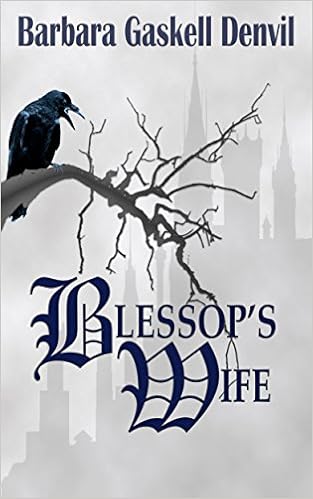
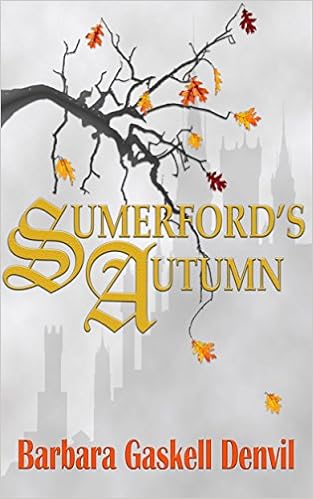
MJN: Let's talk about the covers.  All three novels feature the same background image and the same branch in the foreground. Based on the varying condition of the foliage, I assume you meant to indicate various seasons? Do you intend to have your novels perceived as a series?

BGD: What an interesting idea. Thanks, Marina. Actually although my covers follow a similar theme, it is not the seasons that inspires them, but my own belief in the great family tree of humanity. One small branch combines my covers, but this represents the tiniest limb of our combined inheritance from the past. I see history as the foundation of all our lives. Hence the reaching fingers of the tree.

My novels all tend to be set in England during the latter half of the 15th century during the reigns of Edward IV, Richard III, and on into the dawning of the Tudor dynasty. However, the stories and characters are entirely separate and only references to the genuine historical characters occur in more than one book. My fictional characters are all quite different.

Not a series then. But certainly there are sufficient similarities of background and genre, and so I hope anyone reading and enjoying one of my books would also enjoy the others.

I have a new historical fiction due to be published early in December and I’ll follow the same basic cover design with that too – I love getting into the details of those designs.

Thanks for talking to me about my work, Marina. It’s been most interesting. My inspiration continues uninterrupted and as long as it does, I shall continue to write. My three published novels are now available worldwide in both printed paperbacks and digital ebooks, all on Amazon, and my next book will be out soon.

Thursday, October 15, 2015

Janet Stafford - author of "Saint Maggie" on race and faith

Commies!
Welcome Janet Stafford,an author of inspirational novels, namely a Brag Medallion Honoree Saint Maggie.

Maggie Blaine, a widow with two teenage daughters, runs a rooming house smack dab on the town square.  In 1860 this makes her a social outcast.  Boarding houses are only semi-respectable and hers has a collection of eclectic boarders - a failed aging writer, an undertaker's apprentice, a struggling young lawyer, and an old Irishman.  In addition, she has a friendship with Emily and Nate, an African-American couple with whom she shares her home and chores.  It is a good thing the town doesn't know that Maggie, along with Nate, Emily, and Eli Smith (the free-thinking editor of the weekly newspaper) are involved in the Underground Railroad.  When she is asked to house handsome, gifted Jeremiah Madison, the new Methodist minister, Maggie hopes that he will both revive the little church she attends and provide her boarding house with a bit of badly-needed respectability.  But Jeremiah comes with some dark secrets that challenge Maggie's resolve to love and respect all people.  As the town's people reel from a series of shocking events, the compassionate, faithful Maggie searches for truth and struggles to forgive and love. (Based on a historical event.)
_______________________________________

MJN: You pride yourself in writing character-driven and uplifting stories.  I scratched my head and asked myself: what makes a story uplifting? A mandatory happy ending?  Some sense of moral closure where the main character has an epiphany? This could be just me, but some of the most uplifting stories I've read had ended with the death of a protagonist.

JS: I don’t pride myself in my writing. I’m just saying that’s what I like to do or try to do. I’m giving readers a clue as to what they’ll encounter. I probably should add, “Don’t read these stories if you like your books religion-free.” Ha!

To me, uplifting indicates that there is hope imbedded somewhere within the story – although it is not necessary to have a happy ending. There is a great deal of pain and suffering in the world, and I believe that it is helpful to face these things with hope and to respond to them with love and action. There is a happy ending of sorts in Saint Maggie in that Maggie’s husband survives an ordeal – but he is physically changed. He will never be the same. Frankly, as I went on to write a series I realized that Eli’s situation also changed the way I had to write him.

As for moral closure with a main character having an epiphany, epiphanies do occur in what I write. Maggie has an epiphany half-way through the book, but it has to do with how she, as a faithful Methodist, relates to others. The epiphany actually gives her the grit to do what she does later in the book. She was already half-way there, but needed confirmation that she was on the right path. Saint Maggie deals with the audacity of forgiveness in the face of violence and betrayal. Maggie’s response brings criticism and the cold shoulder from the majority of the people in her town. Also, the “bad guys” in the story don’t necessarily get their due. You know how unsatisfying it is these days when a shooter commits suicide? We want that person to be arrested, put on trial, and if found guilty receive a just punishment. Well, I allowed that not to happen in Saint Maggie. Our thirst for justice is thwarted somewhat by the chain of events in the book.

The other books in the series follow a similar path. Walk by Faith, the second in the series, deals with the effect the Battle of Gettysburg has on the town and the impact of the war on newspaperman Eli (Maggie’s husband), his fellow reporter Carson, and soldiers Edgar and Patrick. How do we deal with the violence of war? How do we define the word “enemy”? (I fear I’m not happy with the ending of the book. I plan to revise it to allow a bit more ambiguity at the end.) A Time to Heal, the third book, looks at how the family recovers. In the process, they get in hot water when Maggie’s daughters take compassionate action that also is civil disobedience. Again, how do you deal with difficult times? How do you live compassionately within the rules of wartime?

I also have written a contemporary romance called Heart Soul & Rock ‘n’ Roll. I was surprised when a couple people told me it made them cry. One said she had to keep tissues next to her all through the second half of the book. Another said it made her sad, so I asked why. She said it was because of the broken relationships and pain of addiction within the story. Yes, I confess that the book does have a happy ending, but it does not come without one of the protagonists having been pretty well wounded on an emotional level. This “sad/happy” pull is biblical. In the book of Genesis, Jacob wrestles with God and wins and then goes on to be reconciled with his brother, Esau. Happy ending! And yet Jacob is left with a limp from his wrestling match with God: hence, not so happy.

MJN: I see you have also written film scripts.  Your award-winning novel Saint Maggie features a cast of eclectic characters including a failed writer, and Irishman and an African-American couple.  I see an ensemble cast production for Lifetime or Hallmark.

JS: Good Lord, I hope not! (The money might be nice, though.) The truth is after playing around with both formats, I find writing novels to be much more satisfying. These days I define myself as a novelist. Strangely enough, Heart Soul & Rock ‘n’ Roll started out as a film script, although I like it much better as a novel. In the book I was able to develop the characters, delve into their backstories, and enlarge the plot.

Writing a script for a prospective film means that much of the story has to be told through images and abbreviated but powerful dialog, all of which you have to do in about 90-120 pages. Also, since film making is a collaborative process, you’re delivering your precious baby into the hands of a producer, director, set designer, and actors, among many others, who go on to change it. Writing a novel allows the author to control the process. Essentially you are writing a film that people will then play in their imaginations. Yes, that process also changes things, but it’s on an individual basis. In fact, I enjoy people telling me what they think my characters look like and guessing which real New Jersey town is Maggie’s little Blaineton, and so on. In addition, writing a novel allows me the luxury of describing the environment and the characters’ appearance, dress, speech, and backstories.  

That aside, I might consider having my work translated into a movie as long as the director brought that “outsider” ensemble feel to the film. I think we desperately need images of diverse people living and working together to dispel the past 30 years’ self-fulfilling prophecy that we are hopelessly divided. My theory has always been that getting to know someone who is different from you generally will explode group stereotypes. That is not to say that there aren’t jerks, fools, and evil individuals out there – but the vast majority of people seem to be well-intentioned.

MJN: Your formal education includes a B.A. in Asian Studies and a Ph.D. in North American Religion and Culture.  Impressive!  The two geographic areas are so far apart physically. How do the two pools of knowledge you've build up complement each other?

JS: The two degrees came at two different points in my life. I received the B.A. when I was twenty-one, a traditional-age college student. I ended up in the degree program because I had enjoyed a smattering of Asian studies in high school. Also, because we were experiencing a recession at the time, I thought, “What does it matter? I’m not going to use my degree anyway, so I might as well major in something I like.” Ironically, I did work for a couple of years at Kawasaki Motors in California shortly thereafter!

I pursued the Ph.D. in my forties after I had been through theological school and served two churches, one as a local pastor and the other as a Christian education director. As I like to put it, God kept nudging me to go into ministry. I finally gave up in my early- to mid-thirties – because … well, God is a total nudge. Unlike the B.A., the decision to go for a Ph.D. was well-thought out. I wanted to learn more about the history of Christian education, since that was my vocation. I planned to go on to teach the subject in a seminary. Boy was I wrong. At the same time I was going for the Ph.D., universities and colleges began hiring adjuncts rather than full-time professors to save paying health insurance, retirement, and higher salaries. It’s another form of outsourcing – you hire hungry Ph.D.’s and only pay them per course. You never give them more than two or three courses because then they would become full-time. Yet, ironically you still demand that they attend faculty meetings and take training, just like the full-time professors. But I digress…

How do my two streams of study complement each other? Hmm. Well, I think my exposure to Asian thinking, philosophies/religion, and cultures, as well as my exposure to people of Asian background were a big part of my early journey. These things opened me up to new ideas. I learned to appreciate individuals and cultures different from mine. Later I realized that, even though my Ph.D. degree program was called North American Religion and Culture, I really was studying North American Religions and Cultures. (Regrettably, we really didn’t study Canada all that much – the university rightfully should have called the program Religions and Cultures of the USA.) In the United States we have, or should have a unity based on our governmental structure and philosophy. Folks outside of our nation might say we have one culture. They might say Americans are overly friendly, somewhat noisy, and I don’t know what else. If you ask someone from anywhere else in the world, they probably will describe us as a unity. However, if you are living in this country you know that our regions and even our states have differing cultures, and within them live subset groups with their own cultures.

As someone who has a vocation in the church, I think that sensibility has helped me relate to people who are part of our congregation, to those who visit, and to those we encounter in the community. Our area of New Jersey is fairly diverse and our church is beginning to reflect that diversity.

By the way, I learned to speak Chinese fairly fluently at Seton Hall University. After college, I shared an apartment with two fellow students. But they had studied Japanese. We also had a friend of theirs on a year-long visa from Japan living with us. That meant I spent a lot of time at the dinner table nodding my head and saying “Hai, Hai, (Yes, Yes),” while everyone else was having a conversation I was unable follow since it was in Japanese. Luckily, I managed to pick up a few phrases and injected these randomly into their conversations, much to their great mirth. It was my not-so-subtle cue for them to finish the conversation in English! But I have not had much of an opportunity to speak Chinese (Mandarin) since then. I kind of miss it.

MJN: One of your characters in Saint Maggie is a gifted and eloquent Methodist minister who resolves to revive a parish. As a fellow Christian and a historian, I am absolutely heartbroken to see historical churches in small towns closing down. My husband was born in Central Pennsylvania, an area known for its history of coal mining.  Over the past decade he has seen many neighborhood churches close down. It's always painful to see, even when you tell yourself that "Christ is in your heart."

JS: The reason the loss of congregations is so painful is because Christ isn’t just in the heart. Christ is in the community. In fact, I don’t believe that we can be Christians all on our own. Christianity is essentially a communal religion and we come by it honestly. Judaism is communal and familial. We are connected to that tradition through Jesus, who had his disciples around him in good rabbinical fashion. Later, the disciples went out and founded communities of people. The Acts of the Apostles tells us that these groups – churches – ate with one another, worshiped together, and shared what they had.

It’s not that I don’t think we cannot experience God while taking a walk outside or in solitary meditation or in any other single pursuit, but we are at our best and are what Christ intended when we are in community. A community of people can do so much more than one person. We can solve problems, we can inspire, we can encourage, we can help those in need, and more. Jesus said that when we are open and caring and reaching and teaching, the Kingdom of God is present. That is why losing congregations is so painful.

The senior pastor I work with always says, “Change comes one death at a time.” So although the closure of so many congregations may appear to be deaths, perhaps it actually may be call for us to reconfigure how we do church. I don’t mean adding a rock band up front or a coffee stand at the back. That’s cosmetics. We need to become radical in how we do church. How do we touch those whom Jesus told us to care for?

The other Sunday the folks at my church had a commissioning service and then went out to do something for our community. Some participated in a walk to raise funds for a young boy suffering from ALD and for ALD research; another group walked to raise funds for suicide prevention and awareness; some packed lunches for the homeless; another organized a food drive; and another helped at an animal shelter. My group held a rummage “free sale” and a carnival of activities for kids, both held outside as it was a nice day. At the free sale I saw people sharing their stories and mutually helping one another find the items they needed. Some who came for help later returned with clothing or items for us to add to the sale. And then someone asked, “Hey, where can I give a money donation?” I had to scramble to find a jar and make signs. People put $175 into that jar. They were the same people who came to get free stuff. The jar provided them with the dignity of making a donation if they could. One lady stuffed her trunk full of bags of clothing then ran back and proudly presented us with a ten dollar bill. Outside our building we found ourselves in community with others. There was a Kingdom-like mutuality to it all.

My question now is: how can we make this part and parcel of who our church is and what we do and how we relate? How do we show the love we have experienced in Jesus with our community and with the wider world? That still remains to be seen. But we do know one thing: we all agreed that we’re definitely doing “The Church Has Left the Building” again.

MJN: Saint Maggie is set in 1860, on the eve of the American Civil War. Several of your characters are abolitionists and involved in the Underground Railroad. I heard one author say that "racism is a disease". And I agree that racism is a disease, but like any disease it tends to mutate. It's like chemo-resistant cancer. The old medication doesn't work, because the disease itself has changed shape and course. This is my personal view, and feel free to disagree, but in the past few years fight against racism has taken on an unattractive turn. I feel like some self-proclaimed human rights activists are making matters worse, aggravating the polarization of races. One African-American author actually said that when white people proclaim themselves "color-blind", it's not good enough and actually insulting to the people of color. Apparently, the only acceptable thing to do for a white person is to admit that they are benefiting from "white privilege". The statement seems a little outrageous to me. So I'm asking you, as a woman of faith, who presumably believes that "all lives matter", what can be done on the level of media to neutralize the further polarization of races?

JS: I think we’re talking two things here. 1) Whether white people should participate in the struggle to end racism; and 2) whether emphasis should be put on the lives of black people over and above the lives of everyone else.

I agree that “all lives matter.” Theologically speaking, Jesus held the same view – are we not all children of God? But he also had a heart for the “least of these”: the poor, the demon-possessed, the ill and injured, the powerless, and those at the bottom of society. The problem with “all lives matter” is that it tends to lump everyone equally together and thereby negate the idea that we actually have a problem with regard to race.

The argument presented by some African Americans today about excluding white people in the struggle is similar to the early Malcolm X’s statements back in the 60s. He was adamant that whites could not help because they didn’t get it. They were well-intentioned do-gooders, but they did not understand the dynamics of racism much less understand and acknowledge their participation in it. However, it is also interesting to note that toward the end of his life Malcolm went on a Hajj, during which he saw all races worshiping together. That experience changed his perspective. He became more open to those white people who wanted to help put an end to racism. Perhaps some African Americans today are where Malcolm was early in his career. Perhaps they have not yet had an experience of unity. But the work should not be all on those who are black.

A couple of experiences in my life taught me the value of shutting my mouth and listening. One came in high school when my tenth-grade teacher, John Pinkard (the only African American teacher in the school at that time), brought a Black Panther to speak to us at a special evening meeting. What can I say? It was 1967 or 1968. The man explained his life and his take on racism. With regard to integration, he told us the same thing Malcom X had once said, “Say you have a cup of strong, black coffee. Now you add cream to it. What happens? It’s diluted!” I remember thinking, “Oh, yeah? Well, what if you have a nice glass of milk and you add chocolate syrup to it?” The answer of course is: “A tasty treat” Obviously my fifteen-year-old brain’s analogy didn’t work! But, all humor aside, I did hear the man. He actually was talking about dignity and self-reliance, and how fragile those things were in his community.

Later when I went to theological school, I enrolled in a class called “The Black Worship Experience,” taught by the amazing Dr. Dean Trulear. The class had about 1/3 white students, 1/3 black students, and 1/3 Korean students (the Drew University Theological School has and still has a large Korean population).  I recall sitting in that class and listening to the black students express their anger and frustration. In my head, I was screaming “Wait!! I never did that to you!! Not guilty! Not guilty!!” Then something told me to shove my feelings aside and just sit there and take it. So I did. As a result, I ended up feeling compassion for my fellow students and their anger.

These experiences, plus a few others, have led me to realize that I am the recipient of certain privileges because I am white, although not all, since I also am a woman. I recognize that racism is not prejudice but an institutional process. I also see that we desperately need to learn from and listen to each other. Sadly, what we’re doing now is waiting until the “other guys” stop talking so we can yell our talking points back at them, and vice versa. True listening means putting your ego and pride aside and hearing with compassion what the other person is saying. Needless to say the attitude needs to go both ways. But when someone has been badly hurt they may need to scream and shout, because they feel no one really has heard them. So the process is not easy – complicated by the fact that we live in a mediated culture that wants to boil everything down to 10-second sound bites and photo-shopped images. The truth is there is no magic pill to make racism go away. It will take work, lots of work.

Another essential is getting to know each other as individuals. As I said earlier, once you start having friends who are not like you, it tends to explode stereotypes. I’m lucky. In my life I have had the opportunity to work with, learn from and with, and live with people who aren’t like me. Now when I hear someone saying something potentially hurtful or outrageous on the news, I usually wonder what propels them to make those statements. I suspect it is because they themselves are experiencing pain, fear, or feelings of exclusion. We can’t go on like this. We must learn to listen and hear, rather than erect walls and yell.