Friday, August 5, 2016

Connected Underneath - GLBT psychological thriller by Linda Legters


Today I am honored to feature Linda Legters, a fellow Connecticut novelist and writing instructor, author of a psychological thriller Connected Underneath.

Synopsis:
Madena, upstate New York. Like any other small town, everybody keeps an eye on everybody else's business without recognizing the secrets that connect them. The wheelchair-bound Celeste conjures up lives from what she sees and thinks she sees while peering through binoculars from her kitchen fan vent. Fifteen-year old Persephone trades sex for tattoo sessions that get her high and help her forget her girlfriend doesn't love her. Theo was the high-school bad boy who couldn't have the respectable girl he adored from afar, but now, sitting behind the counter of the last video store in town, worries wretchedly about the restless daughter he never understood. Natalie, trying to grasp the last shreds of respectability, would do anything to forget the baby she gave up long ago, including betray her husband and son. Celeste, longing to connect, combines truth with fantasy, intervenes and interferes, finally understanding that things have gone terribly wrong and that she stands at the heart of disaster.

Connected Underneath is a lyrical, scalpel-keen dissection of the ties that bind and of those that dissolve.

MJN: You and I are both CT authors. The Fairfield County is often associated with the NYC scene, and authors are often pressured (at least in my experience) to embrace that New Yorker mentality and esthetics. As a workshop facilitator, how do you ensure that all voices are heard, regardless of the political affiliations of each author? 


LL: I haven’t felt that pressure, but it’s possible this is because it is engrained in me, making me part of it. I do feel a distinct difference between urban sensibilities and Midwest (I’ll leave Southern to others) but there must be room for both, since there is an audience for both. Urban seems to be defined as edgy, radical, harsh, but there are soft stories in NY and other cities, just as there is edge in, say, Iowa. Besides, so many New Yorkers were born elsewhere. We don’t lose our Midwest or Southern or foreign sensibilities just because we move to New York, or our New York sensibilities when we leave. I believe our experiences shape the way we see New York, and that New York shapes the way we look back.


As far as workshops, I tell my students that a good story reveals instead of yelling, ‘you have to believe this,’ and that literature sheds light into corners of motivation and behavior. A reader should be allowed to reach his or her own conclusions, and evaluate where a writer has taken them. Essays are the place for exploring political positions, and the place for outright persuasion. Fiction ought to allow us to see the very many ways there are to be human.  


MJN: Your novel Connected Underneath is published by Lethe Press, which appears to be a boutique thematic publisher of gay and lesbian speculative fiction. What is the requirement for a novel to fall into the GLBT category? As our society is becoming more accepting of all sexual expressions, do you see GLBT literature going away as a separate genre and becoming incorporated into the mainstream? 


LL: It’s been an interesting journey having a novel published by an LGBT press while not being a member of the community. It has also prompted all sorts of conversations about the true depth of societal acceptance and tolerance. After all, Orlando is fresh, and anti-LGBT hate crimes top the charts, and several states are still trying to pass discrimination laws. Television and movies still haven’t come to terms with how to handle LGBT characters, not completely. Gay, lesbian and trans are still often seen as part joke, often stereotyped, often seen as aberrations which implies something unnatural, instead of part of the fabric of our daily lives.


One issue that has come to light for me is that while the LGBT community wants full acceptance, they don’t want to lose their identity. I see this as no different from, say, someone from Italy wanting to be fully accepted into American life but not having their Italian heritage denied. In other words, see me as a whole person, with many facets, regardless. This seems no different from us women wanting to be fully accepted, and not segregated in any way, but still seen as women. I assume it’s the same for Blacks and Hispanics. There are fewer gay presses and gay lit outlets, but hopefully the LGBT voice won’t be obliterated in the name of assimilation.

MJN: The names of the characters in your novel are very symbolic. We have Celeste, Persephone and Theo. They evoke cosmic, mythical themes. 


LL: True. Hopefully not over the top. I discovered that each of these characters were influenced by things that can’t be seen, and sought names that reflect this.

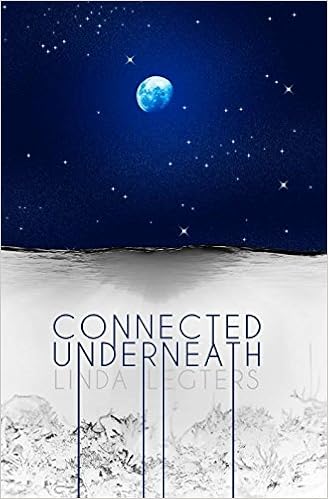
MJN: That brings me to my next question. Your cover is very chilling in its simplicity. The frozen landscape, the indigo sky and the moon as an indifferent onlooker. Did you have any input in designing the cover? 


LL: I did! Steve Berman at Lethe Press was very generous with this. I hear it’s uncommon for an author to have input. I absolutely didn’t want any imagery that defined the book or segregated it as ‘women’s lit,’ and I didn’t want to use the obvious imagery of wheel chairs or tattoos. I asked that water be a dominate theme, that it be largely monochromatic, and either Steve or the designer saw how the moon figured in to the story. Three or four options were suggested, but as soon as I saw this, I knew it was the one.  “Moon as indifferent onlooker.” I love that.

MJN: You have traveled across Europe as well as New Zealand and Australia. Your novel is set in upstate New York. Do you feel that the experiences you've gathered in other parts of the world affected your worldview? Do you consider yourself an American writer, or just a writer whose novel happens to be set in America?

Thursday, August 4, 2016

Sister Agatha: The World's Oldest Serial Killer - Blarney Pulp Fiction by Domhnall O'Donoghue


Synopsis:
It is not secret that the Catholic Church in Ireland has taken a hard fall in the past few decades, plagued with sexual and monetary scandals. The films coming out of Ireland have been mostly depicting the church in the light of hypocrisy, deceit and conflict. After a while, every movement gets old, loses its cutting edge shock value and solicits more eye-rolls and gasps. That's when you know you need to shake things up and redirect the movement. Domhnall O'Donoghue takes the trend one step further in his novel "Sister Agatha: the World's Oldest Serial Killer". His title heroine, (nee Butsy Miller) is not some dour two-faced, child-beating embezzler. She's a serial killer - bent on becoming the oldest person in the world! The only way to achieve that status is to dispose of the four individuals ahead of her, who are scattered all over the world. It's an impulsive end-of-life desire to be "first". Aged 118, she is going through a teenage phase for the second time in her life.

The tone of the novel is that of bittersweet naughtiness. Its' marked by the same sharp, effortless eloquence one would expect from an Irish author. O'Donoghue lampoons Irish stereotypes and perpetuates them at the same time. As a wishy-washy Catholic like myself can certainly appreciate it. The novel is meant to tease and appease both who shamed the Catholic Church and try to exonerate it. 


My thoughts:
It is no secret that the Catholic Church in Ireland has taken a hard fall in the past few decades, plagued with sexual and monetary scandals. The films coming out of Ireland have been mostly depicting the church in the light of hypocrisy, deceit and conflict. After a while, every movement gets old, loses its cutting edge shock value and solicits more eye-rolls and gasps. That's when you know you need to shake things up and redirect the movement. Domhnall O'Donoghue takes the trend one step further in his novel "Sister Agatha: the World's Oldest Serial Killer". His title heroine, (nee Butsy Miller) is not some dour two-faced, child-beating embezzler. She's a serial killer - bent on becoming the oldest person in the world! The only way to achieve that status is to dispose of the four individuals ahead of her, who are scattered all over the world. It's an impulsive end-of-life desire to be "first". Aged 118, she is going through a teenage phase for the second time in her life.

The tone of the novel is that of bittersweet naughtiness. Its' marked by the same sharp, effortless eloquence one would expect from an Irish author. O'Donoghue lampoons Irish stereotypes and perpetuates them at the same time. As a wishy-washy Catholic like myself can certainly appreciate it. The novel is meant to tease and appease both who shamed the Catholic Church and try to exonerate it. 

Tuesday, August 2, 2016

Bug Jargal - one of the first African protagonists in Western Literature


Victor Hugo, arguably the definitive figure in French Romanticism, mostly known for Les Miserables and Notre-Dame de Paris, wrote a couple of novels in his youth that were not as widely known. The critics dismiss them as juvenile and sensationalist. However, that's not to say that those novels were not valuable in their own right, even though they pale in literary merit before his other works. One of such novels  is Bug Jargal. Originally published as a novella in a literary magazine, it was republished as a full-length novel in 1826. It features the adventures of an enslaved African prince of the title and a French military officer named Leopold D'Auverney during the tumultuous early years of the Haitian Revolution. Hugo was known for his sympathy for the underdog and toying with the societal boundaries, even though he personally had little to no direct contact with the oppressed whose rights he championed. In writing Bug Jargal, he was really playing with fire - and enjoying every bit of it - by having his main character, an African slave, fall in love with a high-born French girl.The novel is out of print, but there are electronic versions of it floating around. At a time when race and privilege are such hot topics, it would be really interesting to take a moment to see how race was handled by a 19th century novelist. Bug Jargal is an enthralling and daring tale of a romantic black hero.

Monday, August 1, 2016

Lars D.H. Hedbor - novelist of the American Revolution - ordinary people involved in extraordinary events

Lars D.H. Hedbor is a novelist of the American Revolution whose work speaks to me in a special way, as his mission is very similar to my own: to explore the obscure stories. He is an amateur historian, linguist, brewer, fiddler, astronomer and baker. Professionally, he is a technologist, marketer, writer and father.  His love of history drives him to share the excitement of understanding the events of long ago, and how those events touch us still today.


MJN: You state that your mission is to explore the lesser known episodes from the American Revolution. I feel solidarity with you in that regard, as it is my own mission to uncover hidden gems and illuminate obscure figures. That presents a potential challenge from the marketing perspective. On one hand, you don't want to write an umpteenth fictionalized account about George Washington. On another hand, you want the characters to be somewhat recognizable. Some readers gravitate towards the familiar, and others gravitate towards the obscure and previously unexplored. How do you find that balance?

LH: One of the animating principles of my writing is the fact that events are shaped not only by those who stride across the pages of our history books, as mythical colossi, but also -- perhaps mostly -- by ordinary people, making daily decisions about how best to muddle through.  

Too, as you note, many of the stories of the powerful and famous have been explored ad nauseum in fiction, and there's not much that I think I can add to those accounts.  I have discovered that there's a hunger for stories that readers can relate to their own lives, too, and only a small fraction of any potential audience consists of people who will be historical figures in a future classroom text.  ;)


Beyond that, though, the American Revolution is often reduced nearly to caricature -- the brave and heroic Minutemen facing down the craven Redcoats in Boston, New York, and Philadelphia -- and the complexity and context of the familiar events of that struggle are lost.  There were good and brave men (and women!) on both sides of the contest, people with less-noble intent, and lots of folks just muddling through while events beyond their ken unfolded around them.  

Their stories are no less compelling for being less-known, and I like to think that by telling them, I can help to right the many injustices committed by simplistic teachings of our national origin story.

MJN: You list playing fiddle as one of your passions. I imagine, you have endeavored playing some of the English, Scottish and American tunes from the Colonial period. 

LH: Oh, I wish I had enough skill to play those!  In truth, I would love to take them on, but time for practicing on the fiddle is quite limited with everything else that I do.  Now you've got me wondering where to find some sheet music, though... so perhaps soon.  

MJN: Tell us about your publisher. It looks like it's a small tight-knit group of authors. Is it a thematic co-op, or a traditional small press that occasionally opens to submissions? 

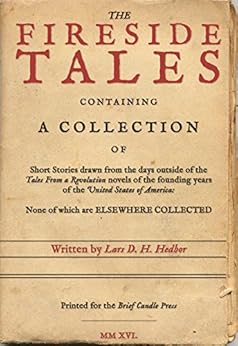
LH: I started out published by a small indie press.  After my first book, which enjoyed modest success in their hands, they developed an interest in going in other directions than traditional historical fiction, so I struck out on my own, founding Brief Candle Press.  Later, I had the tremendous good fortune to acquire a handful of solid midlist science fiction books by truly gifted and well-reviewed authors.  Since then, I have taken on a couple of new titles, but being essentially a one-man show, I do not at present have the luxury of developing a "slush pile," although that may change in the future.

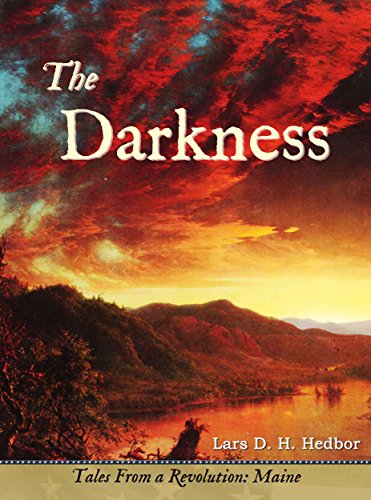
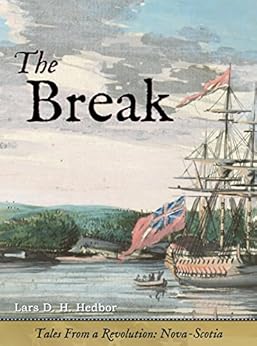
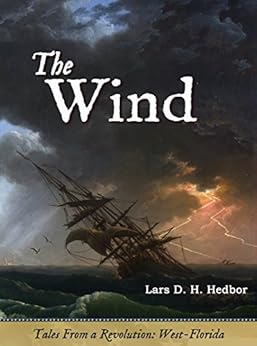
MJN: The titles of your novels are terse, even Spartan in their brevity. The Prize, The Break, TheSmoke, The Light. Is there a deliberate motive behind the titles of the novels? 

LH: In titling my books, I have tried to capture their central themes in a single word.  The Prize refers both to Carleton's Prize, a tiny island in Lake Champlain that figures heavily in the story, and to the prizes of liberty and love that my characters seek.  The Smoke evokes both the smoke of a campfire, and the brutal destruction suffered by the tribes of the Iroquois Confederation as they were forced to choose sides between the British and the Americans.  And The Light reflects the deep introspection of its Quaker characters as they seek the moral clarity of their inner light as they consult with God to find a way forward between the violence of the Revolution and their core beliefs, at risk of British suppression.  

I'll confess that I sometimes struggle to find a title for a new book that fits this now well-established pattern, but then I'll go back and re-read the book and discover that there is a central theme that I'd like to bring to the fore.  With their subtitles (e.g., The Prize: Tales From a Revolution - Vermont), they would be pretty unwieldy names for books, too, so this practice works well for a number of reasons.

MJN: The blurbs of your novels also have a similar element, referencing a seemingly ordinary protagonist: "another farm boy", "a simple sailor", "an ordinary young woman". There is something special about everyday people who hold no political power witnessing or participating in events of historical significance.


LH: I think that most of us feel that we are people of limited political power in our own lives, and I would like both to entertain my readers with stories of how "just folks," while they might sit outside of the limelight of the historical record, helped to create that historical record -- and also, more subversively, to cause my readers to realize that they are capable of leaving their own marks on history, even if their names are not recorded in its hallowed halls.

I believe very strongly that we can best understand our present (and work to shape our future) by understanding our past, and while it is informative to study the lives and choices of those whose names we do remember, I think that it's even more interesting and useful to understand how regular people lived and what choices they made.