Tuesday, January 19, 2016

A labor of lust - interview with Shaunna Peterson, author of fantasy & erotica


Morning, commies and kinky peeps!
Today's guest is Shaunna Peterson, a daring and prolific author of fantasy and erotica.
______________________________

MJN: One of the hats you wear is being a stay-at-home mom. There seems to be this popular myth that full-time moms are somehow bland and sexless. As a woman and a writer, do you make an effort to maintain a certain level of appeal? If you write erotic stories, it definitely helps to have an alluring head shot to go on your Amazon page. I really need to update my bio on Amazon. :)

SP: I am no longer a stay at home mom. I am a full time mom, I work full time and write. It's a lot on my plate but there is no rest for the wicked, with the help of my husband I am able to juggle this most of the time. As far as full time moms being bland or sexless I would have to disagree, we just learn to prioritize. I don't find it necessary to get all dolled up to do laundry and clean house I am no June Cleaver. But I do try to maintain my appearance. If I am working or have an outing that requires more than yoga pants and a tank top then yes I will take the time do my hair and make-up. :) I agree having a head shot that is alluring or attractive might make readers take another look is great, but I would much rather them read my books than stare at my picture.

MJN: There are many venues, digital and print, that publish romantic and erotic fiction. You have published your works independently. Was it a conscious decision, to gain more control over the final product? That's one of the reasons many independent authors cite.

SP: I like the fact that I can be hands on with every aspect of my book. From the template I use or the design for front and back cover. I like the control I have over it. If something doesn't look right or doesn't come out the way that I wanted it then I have no one to blame but myself. I am still fairly new to writing and publishing and I really wanted to be able to have final say in how my book was published.
MJN: Some romance publishers have a "heat level" scale and they assign a number/category to each book based on the content. When you write your fiction, do you make an effort to adhere to any particular heat level?

SP: No, not really. I make sure that there is a disclaimer in my books warning the reader that what they are about the read has nudity or strong language, ect. I strongly recommend that anyone under the age of 18 not read my books. They are not young adult or for the faint of heart. It is written for adults by an adult. In my mind I don't feel it’s necessary to give a heat level. For this reason not everyone finds the same things sexy or a turn on. For example: One might be completely turned on by the thought of being spanked, where as another person may find it archaic or barbaric. So they heat level wouldn't really apply to either of them. Everyone has different level of what they consider sexy or arousing. All I am doing is trying to titillate your mind a bit. If you like reading my erotica that's great! If not then go back to reading Chicken Soup for the Soul, my books are obviously not for you.

MJN: Many of your reviewers have commented on one particular technique you use: throwing curveballs and constantly surprising the reader. Diamonds in the Sea contains an element of ... almost X-files? The novel starts off as a rebound romance between a single mom and her ex brother-in-law and ends with government conspiracy.

SP: I like curve balls but I hate cliff hangers. One of my pet peeves when reading a book is predictability. If I am reading a book and I can see how the end is going to happen before I even get there then I become bored with the book. I want my readers to think they know where I am going and then BAM I throw you a curve ball that you will either love me or hate me for. But in the end you keep reading and that's the goal is to keep the readers reading, keep them interested. I want my readers to be able to escape there real lives and slip into the ones I write. I want them to think about my book even when they aren't reading it. Curve balls keep them on their toes. Diamonds in the Sea was my baby, my first published book. It is surrounded in danger, action, lies deceit, love and my favorite part....mermaids! I wanted to give people a story that they could become attached to. I knew I was on to something when my mom called my crying asking me, "Why? Why did you have to kill that person off?" Hence she did not like my curve ball.

MJN: With so much romantic and erotic fiction released, how does an author who writes in this genre stay competitive? One of the reasons why I've avoided writing in that genre myself is because the scenarios are really limited. At first it seems like with sex possibilities are endless, but in reality there are just so many potential combinations. MF, MFF, MMF, and only so many potential outcomes. The originality is in the details. It's not the sex itself but what happens before and after.
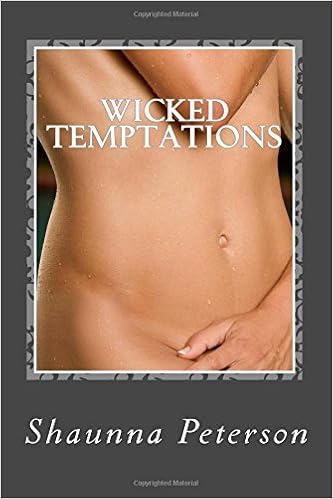
SP: As far as competitiveness goes the only competition I feel like I have is myself. When I first stepped foot onto the writing scene I wasn't sure what to expect. I didn't know if other authors would be catty or degrading or what. But I was surprised at how I was welcomed with open arms and the amount of friends that I have now that are also authors. I am not trying to compete with anyone. I am simply trying to follow my dream instead of sitting around and talking about following my dreams. When I first started writing I had no interest in become an erotic writer, however after publishing Diamonds in the Sea, I literally had these amazing opportunities fall into my lap. These opportunities would give me a platform to explore that side of writing. My first erotic short story was Dirty Little Devil a FF story with a twist at the end, followed by Wicked Temptations: An erotic twist onnursery rhymes. After writing them and reading the reviews it turns out that I have a dirty mind and people like to read the stories that are produced from it. I think that one thing that readers get wrong is that they think that erotic writers lead the lifestyle they write about. That is not always the case. I have never had a FF encounter, I have never been to a brothel. I have never had group sex, yet I can write about them. I write what I know, I write what I like and I write what I think the readers will react to.....good or bad. I realize I am not everyone's cup of tea and I am okay with that. As long as my fans and followers keep coming back for that teas then I am good.

Monday, January 18, 2016

Like Footprints in the Wind - a novel of Russo-Germanic heritage by Pamela Atherstone

Guten tag, commies!

Today I am featuring an award-winning indie author Pamela Atherstone whose eloquent novel Like Footprints in the Wind: a Generation Lost tells a story of a Russian-German family caught in the whirlwind of economic purges of the late 1920s in the Soviet Union.  In the US this initiative would be called "redistribution of wealth". Since I am of mixed heritage myself (that can almost be described as contradictory), I was fascinated by the concept. This novel is a Must Read for all those who are quick to fall to "power to the people" propaganda.
_________________________________


MJN: I absolutely adore the trailer for Like Footprints in the Wind.  It's very comprehensive and covers most of the key imagery, including the propaganda posters glorifying "the common worker".  The sinister dark undercurrent is not always obvious when you look at the highly stylized posters executed in red and gold hues.

PA: Thank you, I’m thrilled you like the trailer. That was a special project on its own, and I was trying very diligently to provide the viewer with a feel for what my novel is all about.

As to the dark undercurrent not being obvious in the posters, I kind of disagree.  I know the posters in the trailer go by pretty quickly, but if you really look you will notice that there are only women working in the fields, and I know it’s difficult to make out, but on the upper poster a Soviet soldier can be seen handing some sort of paper to the only man worker, who appears to be some sort of supervisor or overseer.  I think that sends a couple of subliminal messages; 1) the government is always present and watching, and 2) even though the Soviets claimed women were equal, men still ruled. 

Additionally, the red in the posters reflects the red of communism. The Bolsheviks chose the color red to symbolize the blood of the workers, and became known as the Red Army during the 1917 revolution. They fought the White Army, who were loyalists to Tsar Nicholas II. The red flag of the Soviet Union was decorated with a gold-colored hammer and sickle, so Communists or Soviets are called Reds in popular culture.

The German-Russian people in my book fell into the loyalist category, sort of by default.  They had been supporters of the Tsar for over a hundred years, and with the rise to power of Stalin and the Red Army, the world as they knew began collapsing around them.

MJN: When you do author events, do you feel like you have to explain a lot of background history or do you feel that most audience members possess enough foundation knowledge on the subject?  


PA: The amount of explaining I find myself doing is really dependant on location. At most events, I do have to explain who the people were and what happened to them. Readers are amazed they have not heard of these people and what happened to them. I have even had history teachers question me about this ethnic group and ask why they are unaware. I explain that Russia was a US ally during WWII; so many Soviet atrocities were swept under the table. What’s most interesting, though, is I had no idea about these people either, until I began doing family history research in 2000.  I started finding information about some of my ancestors, and not finding information about others, that’s when I began looking for answers.  The more I learned about this ethnic group, the more I wanted to share with others. People are excited when I tell them there is a short history in the back of …Like Footprints in the Wind.

On the other hand, I have done several events in the heart of the “German-Russian Triangle” in the U.S.  This encompasses part of the mid-west (Kansas, Nebraska and Colorado) and up into the Dakotas. Actually, the triangle extends up into Alberta and Saskatchewan, Canada, as well.   There are parts of California that also have strong German-Russian communities, specifically Fresno and Lodi. I have had an event in Lodi, CA. These people know their history and are willing the share details with which I might not be familiar.

Some of the people I interviewed for background on my book are from Lodi.  There are a few still living that experienced the situation first-hand.

MJN: The word "friends" doesn't immediately come to mind when you think about Russia and Germany, given the events of the 20th century.  But, before they became enemies in the two world wars, Russians and Germans had a history of cultural collaboration. Many of the progressive ideas implemented by Peter the Great came from Germany.

PA: Well actually, Peter spent a lot of time in various parts of Europe and England in the early years of his rule.  Although there were Germanic fiefdoms and minor principalities at this time, Germany did not exist as a country per se. It pretty much all began in 1762, when Catherine II took the Imperial Throne, following the assassination of her husband Tsar Peter III.  Catherine was born in Prussia, and was the daughter of a member of the German ruling family of Anhalt. It’s all very complicated, but technically Catherine was German.

In the years just previous to Catherine’s assumption of the throne, Russia had gained vast amounts of land around the Black Sea from the Ottoman Empire.  Catherine needed someone to farm this land and provide a buffer zone between the Turks and Mother Russia. She also knew there was a lack of good farmland left in the Germanic states, due to overpopulation and land inheritance mandates. 

In 1762 and 1763, Catherine published manifestos inviting Europeans, (except Jews) to immigrate and farm these new Russian lands.  They were able to maintain their language and culture, pay few taxes, and their young men were exempt from the Russian military draft. Germans responded in large numbers due to poor conditions in their home regions. These manifestos remained in effect for 100 years. Things began to change in 1881, when Alexander III took the throne. Russification became the official policy, schools were required to teach Russian, and business was to be conducted in Russian. All of the rights of self-government once enjoyed by German colonists were lost. And, all young men were required to serve in the military. With the onset of WWI in 1914, all ties between Russia and Germany were severed.

MJN: There has been so much talk in the US about the "redistribution of wealth" and penalizing the successful and the fiscally responsible. I often mention that something similar had happened in the early days of the Soviet rule. My American friends often shut me down when I bring up that parallel.  They tell me, "Oh, but it's not the same.  It would NEVER happen in America."  And it's already happening, in a very subtle way.  

PA: Wow, that’s a deep and complicated subject. There are so many theories on how and why “redistribution of wealth” will or won’t work. Yes, there are US government programs that institute such redistribution, such as income taxes and food stamps for example.  But Soviet wealth redistribution was implemented through land reform, transferring ownership of land from one category of people, in this case the German colonists, to another, the government.  In most cases, these transfers were done through direct violence, landowners were arrested and shot, or entire families were deported to Siberian Gulags. Definitions of “wealth” were also left open to interpretation.  If a German farmer could afford someone to help him work his land, even though they were his own children, he was considered wealthy.

In Stalin’s view, the fact that the farms in the German-Russian villages were highly productive was due to the fertile land, not the amount of work that went into farming that land.  As a result, his sovkhoz (state farms) failed because Russian workers refused to work as hard as the independent German farmers did. One also has to remember that Russia had been dealing with a long period of famine, and the common man had little or no money to buy food, much less politicians.

I personally can’t see this happening in the US to the extent that it happened in Russia.  The capitalist system is too entrenched in our psyche and money talks.

MJN: Your book is an absolute gem.  I am delighted that I discovered it through Readers' Favorite.  I understand it won an award.  Can you share more about the submission process?  

PA: Thank you for your lovely comment.  As an indie author getting a book recognized is a big challenge.  Book contests are important because they put your book on a level playing field against all other entrants, whether they have been published by one of “the Big 5” or a small press.  I love Readers’ Favorite, because the contest entry also includes an impartial, professional review. Reviews are extremely important to any book, but especially to those of indie authors.  Because the reviewer gave me high marks, my book was a finalist in two categories. But, Readers’ Favorite gets so many submissions they only give one award per book. 

Submissions to contests aren’t difficult; it’s usually just sending copies of the book and an entry form with required fees.  But there are many contests out there, so an author has to be careful they are choosing the right contests to enter.  It can get very expensive, very quickly.  I only submit to contests which offer reviews, because I feel that justifies the expense of the entry.

The really cool thing about placing in a contest is receiving the award seal to place on the cover of the book.  That little gold or silver circle says “Look at me! I’m a winner.”  People notice, and even if they don’t buy, they will pick the book up and look at it.  There again, that’s very important to an indie author.

MJN: Also, tell me about the beautiful soundtrack in the trailer. Is it an original piece?

PA: Yes, it is an original. In the process of developing the trailer, I began searching for background music on the internet.  I wanted something really special, something that would flow well with the information in the trailer. However, I couldn’t afford huge licensing payments to professionals.  So I searched for royalty free music and stumbled on this piece.  Instantly I fell in love with it and found that it fit perfectly with the images and animations.  The site it on which it was posted had a contact for the composer, so I asked for permission to use the music.  The composer was willing to let me use it in exchange for a copy of the completed trailer.  I also sent him a copy of my book as a thank you.  It turns out the composer, Grady Klein, was seventeen years old and studying music in high school. After he received the trailer, he changed the title of the song to …Like Footprints in the Wind to match the novel. He wrote several more pieces from the imagery he envisioned after reading my book. He’s now 20 and studying music in college with a desire to do background compositions for video games and movie soundtracks.  I love his orchestrations. To me they are very visual and make my imagination soar.  Grady recently released a 2 disc album of his instrumentals called Triumviri .  The album is on iTunes or can be purchased here:  http://www.cdbaby.com/cd/fractalmusic1

Thursday, January 14, 2016

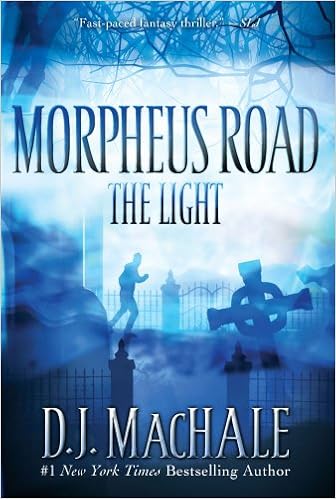
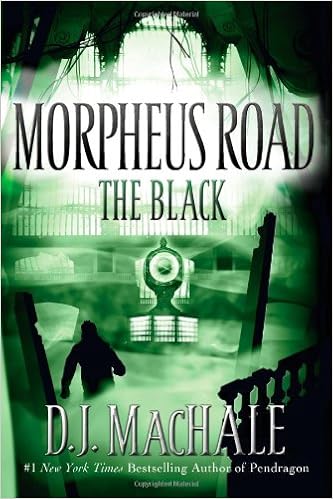
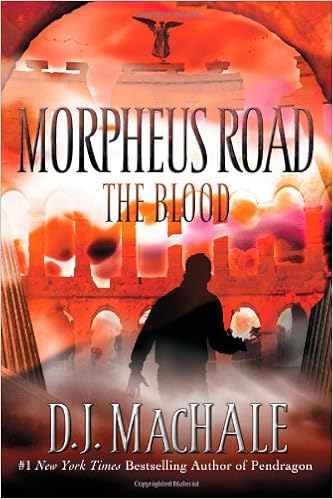
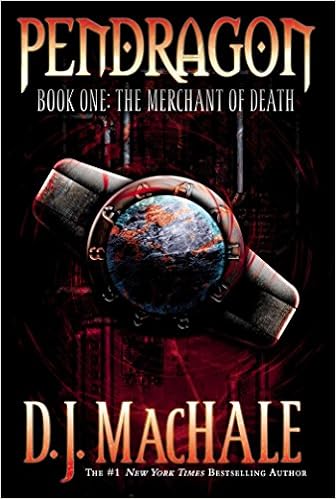
Bestselling D.J. MacHale - horror for young adults (and their parents) - Morpheus Road series


Greetings, commies!

Today I am thrilled to feature a fellow Connecticut native, who has since settled in California. Meet D.J. MacHale, writer of young adult horror. Extremely accomplished, multi-talented (hello, New York Times bestseller!) he is extremely humble and down-to-earth. I came across his MorpheusRoad series at the Greenwich Library. His books will entertain, frighten and enlighten a wide range of readers. My son is a teenager, yet he's not above coming into his parents' bed at night after watching a scary movie or reading a scary book. MacHale's novels are in that keep-your-lights-on category. They are set in American suburbia, but you don’t need to be inside a spooky castle in Romania to experience terror.
________________________________

MJN: To come up with a convincing horror concept that will resonate with the audiences you need to understand the psychology of your readers and tap into certain archetypes and common nightmares. A floating cadaverous figure, reptile-like figures jumping from under the dark water. Some of your scenes gave me chills because it felt like you had read my mind. I've actually had those nightmares myself. What were some of the scariest dreams you had as a kid?

DJM: Most of my scary dreams had (and have) to do with real-life situations. Falling, being chased, taking a test I hadn’t studied for. I believe that’s what works best with creating horror scenarios as well. Start with something real. Something everyone can relate to. And then twist it into something strange. I did have a recurring dream about being chased by the Frankenstein monster. But what I remember most about those dreams was not that I was in some gloomy castle in Europe. I was in my own house or backyard. It’s the strange intruding on the familiar that gives a scene it’s true creepy quality that resonates with readers.

MJN: Many of Stephen King's novels are set in rural main. Your Pendragon and Morpheus Road series are set in suburban Connecticut, a place of privilege that comes with certain ... how should I put this milidly? Impunity. That's the word. You certainly have explored it in your Morpheus Road series. I'm referring to people who think they can get away with murder, literally.

DJM: Ha! I think another word you’re looking for is entitlement. I wish I could tell you that setting stories in such an environment was done intentionally in order to make some sort of social statement. But it wasn’t. It simply was where I grew up so I could write about it with authority. Though I did have a fairly unique perspective in that I grew up lower-middle class in a very high-falutin’ town. (Greenwich, CT) That may have given me a unique perspective on entitlement or the lack thereof.

MJN: You explore the concept of illusion. I don't know if you subscribe to the Judeo/Christian metaphysical dogmas, but as far as I remember from Sunday school, we were always taught that demons could not physically hurt you. They would mess with your mind, confuse you and inch you towards actual danger. In most cases fear is good and healthy and can save your life. But sometimes fear can make you run in the wrong direction. In Morpheus Road: the Light the two characters, Marsh and Sydney, actually learn to discern between illusion and reality. And yet, the inability to discern between reality and illusion is at the very core of horror.

DJM: I’ve used illusion quite a bit in my stories. Not just with Morpheus Road, but also with my TV show Are You Afraid of the Dark? and with my new book series The Library. Putting it simply, it’s a device. It gives me free-reign to use my imagination to concoct all sorts of horrific situations and scares. If an antagonist has the ability to conjure someone’s deepest fears and make them appear real, suddenly the bag of tricks at my disposal to create scares is limitless. So the need to differentiate illusion from reality isn’t so much a philosophical dilemma for the characters as it is a practical challenge.

MJN: Let's talk about the character of Marsh, a middle-class teen protagonist and his bourgeoning awareness of his manhood. There are so many horror stories in the media about "rape culture" and "war on women". Men tend to be demonized. You did a marvelous job depicting the sexual maturation of a sixteen-year old boy. Morpheus Road is not an inspirational/Christian series by any means, but I applaud the fact that you depicted your protagonist in a wholesome light. He's not a prudish saint, by any means, but his behavior is appropriate for his age, and I imagine, fairly typical. The truth is, most teenage boys do find attractive girls terrifying. And even if they say something lewd or gross, it's usually not a precursor to any physical violence.


DJM: All of my main characters are different versions of myself. I take some characteristic that I am very familiar with and make that the principal trait of my fictional character. In Marsh’s case, he’s 16 going on 12. He’s imaginative, creative and thoughtful. He’s more comfortable living in the world of his imagination (through his drawings) than he is dealing with the realities of growing up. He’s the kind of guy who can speak with enthusiasm and at length about things that nobody else cares about. (i.e. his theory about Superman) He’d rather build model rockets than hang out at the beach to pick up girls. Basically, he doesn’t want to grow up because he’s enjoying being a kid way too much. But therein lies the conflict with his best friend, Cooper...and with life in general. Cooper is 16 going on 25. It’s that dynamic between the two that really drives the emotion of the story. These two guys are polar opposites in many ways, yet they have a history and care very much about each other. Over the course of the story, Marsh is faced with some serious challenges that force him to break out of the safety net of childhood, something we all have to grapple with at one time or another.

MJN: I'm sure you've imagined your novels adapted to screen. Do you think they lend themselves to a big budget movie trilogy, or a TV series similar to Buffy and Angel. Can you think of any actors that you would like to see cast? I thought of Megan Fox for Sydney, though she's a bit too old to play a high-schooler.

DJM: I haven’t thought much about Morpheus Road as a film or TV project. There’s such a glut of this kind of story being told on screens everywhere. The thing is, I write what I call horror-lite. It’s legitimately scary for a younger person to read, or for a highly imaginative reader of any age; yet it isn’t disturbingly horrific. In other words...no blood, gore, demented killings, violence, etc. That’s a very narrow market. Certainly The Light could be easily translated to the screen, though as we move further along the Morpheus Road, the canvas becomes bigger and by the end we’re talking a Lord of the Rings level battle between the forces of Heaven and Hell. That’s tough to pull off on TV. As for casting, because my principal characters are young, I don’t ever think about what actors might play what role because someone who might be perfect today, would be too old tomorrow. So I hold off on thinking of it in terms of contemporary actors.


Thursday, January 7, 2016

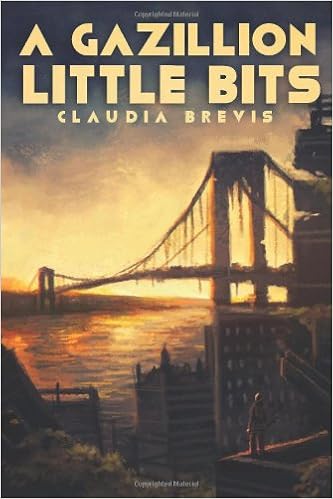
A Gazzillion Little Bits - a novel of post-apocalyptic New York by Claudia Brevis

Morning, commies!
Today's guest is multi-talented Claudia Brevis, dramatist, composer, novelist and enthusiastic New Yorker.  Today she joins us to discuss her acclaimed post-apocalyptic novel A Gazillion Little Bits set in New York in 2256. (Personally, I don't think we'll last that long).

MJN: I understand you are a lucky native of NYC. The city makes an excellent setting for a post-apocalyptic novel. It's so diverse and liberal, and it lends itself as a likely epicenter of a major disaster (as the events 9/11 have shown). How did it feel making NYC, the city, I assume, you love, the setting of your gritty novel? Do you ever have nightmares about waking up and seeing what your protagonist saw?

CB: Thanks, MJ! I've lived in NYC for most of my life and am very passionate about this place! There's always something new to find-- a building, a park, a street-- interesting to research and exciting to explore. When we drive around town my head is usually out the window, looking up at cornices, around at alleyways, back at street corners, and in fact, it was during one such drive that A Gazillion Little Bits showed up in my brain. I began to see in my beloved city images of change that I came to understand belonged to a distant future! So, in a sense, the book chose its own locale. Interestingly, or maybe oddly, exploring this future world was somewhat comforting. There is the sense that this city always changes but it will always be here.

MJN: There are so many theories regarding to when the world will end and in which manner. Some authors reveal the causes of the apocalypse, while others prefer to stay ambiguous. I keep thinking of Cormac McCarthy's The Road. You can sort of detract that the culprit is a cataclysmic volcano.

CB: I tried to focus on the aftermath, but I thought deeply about how a world could end up as I've written. I used history as a guideline to some extent and took into consideration the spiraling effects that natural disasters would create. So although it might be major earthquakes, tsunamis and other extreme planetary changes that began the descent in my novel, it was also disease, fall of government, disruption and dissolution of society as a result of these multiple, sudden disasters. As a genealogist and researcher I know that information is lost very quickly between generations, and it was easy for me to imagine that 200 years in the future my characters wouldn't know what had happened to create the world they lived in. Most of the story is told through the viewpoints of these future characters, so the reader's knowledge is limited to the characters' knowledge! I did try to leave enough hints that the reader could more or less figure out what had happened.

MJN: Your writing style is breathtakingly vivid. I was immediately hooked after reading the first few pages of A Gazillion Little Bits. Can you name any authors, Dystopian or mainstream, who influenced your style?

CB: Thanks so much! I can't think of any authors in particular that influenced my style, but I did spend a couple of years working out other stories in screenplay format, and I think that visual approach informed my writing. Also, because I explored this novel through the senses of my characters, I had to rely on what they were seeing and feeling and touching and smelling to know myself what was going on and where I was! :)

MJN: I'm not surprised to hear that you are also a playwright and a composer. I live 40 minutes away from New York, and, schedule-permitting, I can to into the city to see shows. Some of the most interesting shows are seen off-off Broadway. I need your honest opinion. Do you think that New York is a promising destination for aspiring authors and actors, or do you think that young talent should work on becoming #1 in their respective home town before taking it to the next step?


CB: Ahh, well, this is a great time to be able to create wherever you are...and with telecommuting and all the great tools for writing and creation, I don't believe you need to be in NYC to write and to write successfully. It's not easy to get something new up theatrically in NY. Many cities have theater festivals, contests, schools, camps, communities and what have you....so as a playwright, if you aren't here, I don't think it’s your first stop. It's not quite the same for actors -- your work is going to be here, or in LA or maybe Chicago. Certainly your major casting opportunities are here. I think young talent should take advantage of home town opportunities but get to NYC or LA as soon as they can! :)

MJN:
It appears that your husband shares many of your interests. I consider myself blessed that my husband and I also have a lot in common. That's how we met, in fact. So I'm always delighted to hear about other Bohemian artsy power couples. The joke is that New York is a great place to have your heart broken - but if you're lucky, you can meet the love of your life.

CB: I met my husband when I was 19, and I met him in a theater! I worked at the bar at the Uris Theater (now the Gershwin) during college. My husband's uncle ran the concession there and he worked there occasionally, too! We've been together a thousand years and work on many projects together. I feel very blessed and lucky and grateful for the life we have. He's an amazing musician and musical director, and one of the funniest people I know! I couldn't have dreamed up a better life. So thankful for him and my talented sons!

Tuesday, January 5, 2016

International romance author - Melinda de Ross

Greetings, commies!
Today's guest of honor is gorgeous, daring, resilient and talented Melinda de Ross. A native of Romania, she is a journalist and graphic designer. She writes zesty, sizzling novels in various romance subgenre.

MJN: You are an international author. I've been dying to ask you about the state of the publishing industry in other countries. Do you feel that your two markets "feed" from each other?

MDR: Unfortunately, no. While a lot of worldwide literature gets translated and published here in Romania, very few Romanian authors ever make it on the international market. That is one reason why I chose to write in English and I became an international author before I was a local one. 

MJN: You have a degree in law - although it appears that your work experience is predominantly in journalism. Does your insight into the world of litigation enhance your fiction, or do you prefer to keep the two worlds separate?

MDR: Just like my career as a journalist and my other numerous activities, Law school was a great experience. I think every event – major or minor – is important and helps one develop and enhance his own conceptions, ideas, principles. My personality and each of my life experiences are almost always reflected in my writing, and I think that makes it more credible and more colorful.  

MJN: Your novella Rendezvous evolved from the heartbreak you experienced after having to give up target-shooting due to health issues. It's one of those cases of one door closing and another one opening. Fortunately, as a writer you are not hostage to tip-top physical form.

MDR: Yes, it was a rather odd irony that I had to give up something I loved to discover what I am. I say that because, although I adore target shooting, I know now I am a writer at heart. It took some heartbreak for me to discover my true vocation, but I don’t regret anything. I wouldn’t change anything that has happened in my life, because I like where I am now. I not only have a profession and a purpose, but I’m getting better at it with every book. And having a lot of fun in the process!

MJN: Your bread-and-butter is romance with paranormal elements. Can you think of any
new genre you would like to tap into?

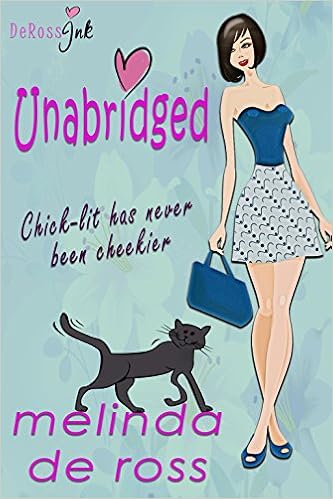
MDR: Actually, I have already expanded my field of activity, so to speak. Now I write in two major genres: Suspense Romance (The Coriola Saga, RuinedInnocence, The Plot), and Romantic Comedy (Unabridged, and a new novel I am working on at present). I like experimenting with new genres, so I’m sure I will not limit myself to these two.

MJN: One of the services you offer is creating book trailers. Can you tell me a little bit about what goes into the art of creating an effective book trailer where the visuals, the text and the sounds work together seamlessly to entice the reader?

MDR: Yes, I make book trailers and book covers as well. Personally, I prefer creating book covers, because book trailers are much harder to make, and more time-consuming. It’s difficult to choose and coordinate all the elements you mentioned, and if the book trailer is too long, people tend to lose patience and not watch it until the end. While I will continue to do book trailers for Classy Designs, my first love remain the covers and banners.

Sunday, January 3, 2016

A young author with an old soul - review of Rachel Demeter's "Finding Gabriel"

A few months ago I had the privilege of interviewing Rachel L. Demeter for my blog. I felt a kindred spirit right away. This angel-faced Californian who is still in her twenties has an old soul that understands torment and can write convincingly about it. After reading a few reviews for Finding Gabriel, I had high hopes, and the novel exceeded my expectations in so many ways. I applaud the author for taking risky chances and the publisher for keeping the integrity of the manuscript, with so many publishers slapping an age minimum on sexually active characters in the name of political correctness. 

My instant reaction was: "Wow, I've met these characters before ... Once upon a delicious nightmare." Gabriel and Ariah have always lived in my soul, in the depths of my imagination. The author taps into the darkest erotic archetypes that live in our collective psyche. You can sense the solid foundation of French and English Romanticism - Victor Hugo, Alexandre Dumas, Gaston Leroux, the Bronte sisters. Those authors used body horror sparingly and skillfully as a literary tool to create certain visual and emotional contrasts.

You can tell that her robust talent bursts beyond the constraints of the romance genre. I have to say, the  most powerful, poignant and memorable passages in the novel do not involve lovemaking. Although the romantic component was convincingly executed, it was the scenes of battle, violence and public mayhem that really sent shivers down my spine. I hope that the young author continues to expand her repertoire in the direction of horror, Dystopia and literary realism.

Friday, January 1, 2016

The Lady Bornekova - a clean Bohemian romance from Sara Turnquist


Happy New Year, commies!
Today's guest is Sara Turnquist, whose fascinating resume spans zoology to historical literature. Today she joins us to discuss her historical novel The Lady Bornekova set in 15th century Bohemia and the loose boundaries of what is labeled "clean fiction".

MJN: Your novel The Lady Bornekova was published by Clean Reads. I can see the appeal of a counter-movement to the "steamy" novels. I know there is a market for Christian novels. I imagine, not everything that is clean is necessarily Christian.  Can you elaborate on the subtle difference?

ST: A "clean" novel simply means that it doesn't contain language, gore, "open door" sex scenes...you know, things that would give it an "R" rating if it were a movie. A Christian novel is going to have a faith arc in the story. A character that comes to faith or has a faith story.

MJN: I am of Slavic descent myself, so it was a pleasure to see a historical novel set in Central Europe, which remains somewhat of an underexplored frontier. By choosing a locale off the beaten path, an author takes certain risks but also increases his/her chances of standing out.

ST: That is true. It was challenging for me to find a lot of research on this specific area/period in English (and I do not speak/read Czech). But I have visited the Czech Republic several times and absolutely fell in love with the region and the culture, becoming fascinated with what history I heard. I visited this chateau/summer palace and was quite inspired to set a story there.

MJN: What sources did you rely on while doing the research for The Lady Bornekova? Did you ever run into a situation where different sources were giving you conflicting information?
                           
ST: As I mentioned, it was difficult to find as many resources in English as I would have liked. There was definitely conflicting information and, this being my first novel, I was new to the amount of research that would be necessary. I relied heavily on the location that inspired me and the information I gathered while in the Czech Republic (which was largely told to me by Czech people as there are not many sources there written in English).

MJN: This is not a criticism by any means, but the blurb describes Karin, the main character as "strong-willed and determined". Do you think it's necessary to rely on that language to connect with your readership?  Sometimes I feel like authors, especially female authors writing about female historical figures, are under pressure to make that disclaimer, so the readers, God forbid, would not presume the heroine to be a "damsel in distress". Being strong-willed meant something different in 1400s.

ST: You make an interesting point...all of my completed novels (which, this is the first one to be published) feature a female character as the central main character. I try to find words that describe them adequately. Of them all, I would say Karin is the most strong-willed. I wanted to communicate about Karin that she has a mind of her own and does go against the grain as much as she can for a woman of the 1400s as, you are right, it meant something much different during that time. I have another novel being published in January 2016 with a female character who I describe as being "somewhat naive" as she is rather sheltered in her upbringing and ignorant to the ways of the world. "Strong-willed" is not a word I would use to describe this character (not to say she doesn't possess a strength of character all the same).

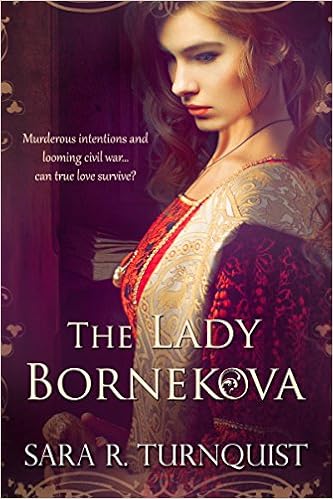
MJN: The cover has a bit of a Preraphaelite feel to it.  Is it an actual painting or a stock photo made to look like a painting?  I commend you for not cutting the woman's head off, leaving just the lips.

ST: I have gotten so much positive feedback about the cover. I cannot take much credit for the artwork. I gave my input, of course, but the graphic artist, Cora Graphics, who works with Clean Reads, is the one who deserves the accolades. She is amazing, in my opinion. I am almost certain it is a stock photo made to look like a painting. That is my understanding.