Tuesday, March 17, 2020

We All Fall Down - a pandemic anthology

Greetings, commies!
If you are sick and tired of reading about COVID19 in the news, switch gears and read about a different pandemic that was a lot deadlier than the one we are facing now. We All Fall Down is an anthology of stories revolving around the plague epidemic in Europe, featuring some of the most eloquent indie voices in historical fiction. You may recognize some of these names!

Synopsis
Plague has no favorites.
In this anthology, USA Today, international bestselling, and award-winning authors imagine a world where anyone—rich, poor, young, old—might be well in the morning and dead by sundown.
Readers will follow in the footsteps of those who fought to rebuild shattered lives as the plague left desolation in its wake.
* An Irish woman tends her dying father while the Normans threaten her life and property—
* A Hispano-Muslim doctor fights the authorities to stem the spread of the deadly pestilence at great personal cost—
* A Tuscan street hawker and a fresco painter watch citizens perish all around them even as they paint a better future—
* A Spanish noblewoman lives at the mercy of a jealous queen after plague kills the king—
* The Black Death leaves an uncertain legacy to Dante's son—
* In Venice, the artist Titian agonizes over a death in obscurity—
* A Scottish thief loses everything to plague and repents in the hope of preventing more losses—
* Two teenagers from 2020 time-travel to plague-stricken London and are forever changed—
* And when death rules in Ottoman-occupied Greece, a Turk decides his own fate. 
Nine tales bound together by humanity's fortitude in the face of despair: a powerful collection of stories for our own time.

My thoughts
I am surprised that more reviewers did not mention the fact that the release of this anthology coincided with the corona pandemic. Perhaps, the Black Death is the last thing people want to read about. Toilet paper hoarders will probably feel a little ashamed. Even the title of the anthology is "We All Fall Down", taken from an English folk song, the message of the anthology is about rising up. I am already familiar with most of the contributors to the anthology, having followed their other works in various historical fiction groups. This anthology serves a dual purpose. In addition to giving you a collection of delectably literary yet readable stories about a particular tragic even in European history, it gives you a sample of each author's writing. If you haven't read their novel length works, maybe the short stories in this anthology will whet your appetite. This is what a pandemic looked like before globalization and social media, before diagnostic and curative advancements. That should put things in perspective. 

Wednesday, March 11, 2020

The Road to Montfaucon - a novel about the fire at Notre-Dame de Paris

Hello commies!

We are approaching the 1 year anniversary of the bizarre fire at Notre-Dame de Paris, one of the high profile Catholic landmarks. In light of my personal attachment to that cathedral, I wrote a mystical thriller The Road to Montfaucon. It weaves in the realities of modern urban life and fragments of Victor Hugo's celebrated novel. Special thanks to Jenna Meuer, the beautiful cover model who embodied the 21st century Esmeralda.

Synopsis
Modern Paris. The fire at Notre-Dame has unleashed an eerie force and awakened the ghosts of Victor Hugo's novel. Dr. Molendino, a jaded psychologist with a penchant for the occult, finds himself ejected from the clinical community for publishing controversial articles on the subject of past lives. To his colleagues he is a heretic, who compromises the prestige of the clinic.

After losing his job he immerses himself in private practice and research. Among his patients is Thomas Dimanche, a young journalist who suffers from dysmorphophobia and despite being handsome, considers himself hideous, avoiding human contact. Thomas makes a living by hosting a radio show called Parisian Toll, a criminal review, where he often features one of the city's most gruesome crimes -- the murder of an indie performer Annaïs Guybertot. The teenage girl was found strangled in the basement of an underground nightclub aptly called Montfaucon.

With help from an experimental drug, the doctor and his patient dive into a hallucinatory world where a deformed bell ringer and his arrogant master rival for the heart of a gypsy dancer.

Will they stop in time, or will they repeat the fate of Hugo's characters?


Tuesday, February 11, 2020

3022 - nothing wrong with B sci-fi

Greetings, commies!
If you are in a mood for a low-key, low-budget but intellectually stimulating sci-fi movie, consider 3022. I know the title is cryptic. It doesn't refer to a year but rather to the number of days the main characters have been in space. 

Synopsis:
Halfway through a 10 year mission in deep space, a group of astronauts awaken to find Earth has suffered a catastrophic event. The already unstable crew desperately races to repair their deteriorating space station and fight off unforeseen threats.

My thoughts:
I am not sure why this movie got negative feedback for being "low budget". You don't need a huge budget to create a quality sci-fi piece. Not every sci-fi movie aspires to be the Star Wars. This one is one of those 3022 is one of those small budget - notice, I don't say cheap - sci-fi movies. The idea is very simple and has a lot of potential for exploration. What happens if your home gets destroyed while you're in outer space? I'm sure many astronauts ponder that question before they take off. This movie explores this common nightmare. What if you are one of the few human beings left in the universe? Do you continue to adhere to the principles of human dignity? What do things like loyalty and self-sacrifice mean? I really hope that you give this movie a chance. There are some things I would've liked to see done differently, like some of the special effects handled in a more creative, suggestive manner. Overall, it's a solid B+ movie.

Tuesday, January 28, 2020

Flesh and Bone - killed by annoying secondary characters

Greetings, commies!

If you don't have the budget to see ballet in New York, consider watching Flesh and Bone - it comes with Amazon Prime. The dance sequences make it worth watching - you can always fast forward through the clumsy trying-too-hard drama sections. If anything, it's a lesson to aspiring writers on what NOT to do. 

Synopsis:
"Flesh and Bone" follows a young ballet dancer, Claire, who has a distinctly troubled past, as she joins a prestigious ballet company in New York. The dark, gritty, complex series unflinchingly explores the dysfunction and glamour of the ballet world and New York's inherent drama. Claire is emotionally wounded, sexually damaged, and possesses self-destructive tendencies amid her vaulting ambitions.

My thoughts:
I don't know how many people contributed to the development of the plot, but it looks very patchy, like a quilt sewn together by a team of schizophrenics. It's almost like the series was meant to be 18 episodes, and they had to cut it down to 8. So many vital questions were unanswered. And so many secondary characters got too much screen time. The homeless guy Romeo is incredibly annoying. He's not sympathetic at all. He's a caricature of a socially disenfranchised person. Same can be said for the ballet-loving strip club dancer with that horrible fake Russian accent. There was too much of him, and he was redundant. And don't get me started on the creepy looking old lady with her little dog, who is supposed to be an assistant choreographer. Why, why introduce so many characters that contribute nothing to the plot and distract from the main story, whatever it is?

Thursday, January 16, 2020

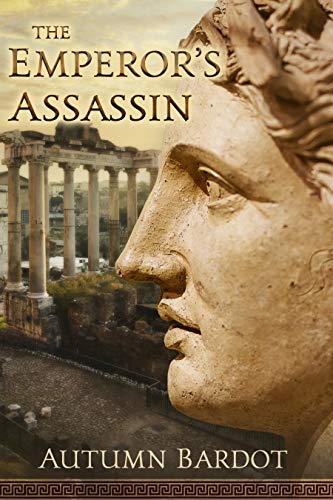
The Emperor's Assassin: #MeToo in Ancient Rome

Greetings, commies & SJWs!
If you want more of the same old, same old, women's historical fiction fueled with "wokeness" and man-bashing, here is a well written novel by Autumn Bardot, The Emperor's Assassin. Don't let the in-your-face title deter you. Here is a hint: the Emperor doesn't show up until later. It's an endless angry girl aria, an estrogen fountain.   

Synopsis:
History paints her as the first female serial killer.

Locusta is the daughter of a winemaker in the Roman province of Gaul. She enjoys the indulged childhood of the elite, her concerns only about the day’s amusements. She rides gentle ponies, attends parties, reads Ovid, and learns the herbal arts from her servant. But the day after meeting her betrothed, Locusta discovers the consequences of possessing such dangerous knowledge.

Ordered to leave her pastoral life, Locusta is thrust into a world of intrigue, scandal, and murder—where treason lurks behind every corner and defying an emperor means death.

Locusta’s life changes forever when a young Emperor Nero requires her herbal expertise. And commands her to be his personal poisoner. Caught in an imperial web, Locusta must embrace her profession or die.

Or is there another way out?

History has nothing good to say about this woman. Or is that because men wrote her story?


My thoughts:
Storytelling merits apart, this novel is a blatant, unabashed #MeToo fest. You'd think the author was writing a "woke" sitcom. You can find every key ingredient: the autistic brother, the demented father, the LGBT best friend, the bratty materialistic younger sis, the hunky one night stand boyfriend, the arrogant-sadistic-entitled patrician. Those are well developed stock characters. It's a 2020 ABC-worthy prime time drama set in ancient Rome. Obviously, I cannot get inside the author's head, but my guess is that she was catering to the ultra left modern audiences to create a string of "relatable" characters. A part of me is rolling my eyes: Here we go again, demonizing men. But a part of me is humming and nodding: the book has literary merits. The premise and the delivery are not astonishingly original. A woman in the man's world, fighting for survival, validation, etc. Blah, blah. That's what 90% of historical fiction is about these days. So I am not going to knock it. It's really hard to write something original for the #MeToo audience.

Saturday, January 4, 2020

Death and Nightingales - an unapologetic, authentic BBC masterpiece

Happy New Year, commies!

If you are tired of artificial "woke" or "empowering" costume dramas that aim to appease the left wing viewers and leave them with a feeling of "triumph", consider this BBC miniseries.

The BBC adaptation of Eugene McCabe's literary slow-burning thriller Death and Nightingales is extremely satisfying and faithful to the original. I actually read the novel first, so it was very gratifying to see all the key scenes and quotes included into the script. No unnecessary liberties, no frivolities, no attempt to put a "woke" spin on the story or infuse it with "girl power" to make it more palatable to modern audiences. I don't see Hollywood producing this film. The subject matter is probably too regional and not universal enough. There is not much material to entertain global audiences. Eugene McCabe is a contemporary author who dies a stellar job recreating the Ireland of the 1880s. It definitely helps to possess some rudimentary knowledge on the political and economic climate of the era. Even if you are totally new to the painful Anglo-Irish, Catholic-Protestant conflict, it will not take you long to catch on. 

The narrative is not always linear, so the director had to rely on flashbacks, which were done seamlessly and never took the viewer out of the moment. The novel spans the events of one day in the life of a young woman whose fragile world is about to collapse. 23-year old Beth Winters is not by any means "feisty" or "defiant". She does attempt to defy her guardian as a contemporary woman would - instead, her frustration takes a homicidal twist. Under certain circumstances, it is easier to murder your oppressor, or get someone else to do it, than attempt to defy him in a battle of wills. 

Sunday, December 1, 2019

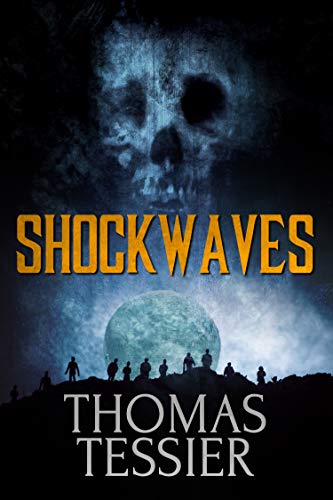
"Shockwaves" by Thomas Tessier - a revival of a meaty 1970s slasher

Greetings, commies!
While the memories of turkey carving are still fresh in your heads, I wanted to recommend a meaty, hearty horror thriller by Thomas Tessier Shockwaves. It features a serial killer called the Blade who decapitates young women. If you want an an antidote to all this holiday cheer, consider this gem.

Important: this is a reprint of a novel written in the late 1970, so the style reflects the tastes, views and sensibilities of the time. That being said, "Shockwaves" can be extremely stimulating and eye-opening for many modern readers. 

There is something to be said for a horror/thriller novel set before the internet or even consumer video recording devices. It closes certain doors and opens others. Imagine a serial killer on the loose in a time before cell phones, security cameras or alarm systems. It would take a different forensic process to apprehend and convict the killer. Thomas Tessier's novel "Shockwaves" is set in the 1970s, when the novel was originally written. That would make some of the main character's decisions a little less shocking. Most modern young women would not drop out of college to marry a much older man and settle into what looks to be conventional domesticity. In a girl nowadays dropped a bomb like that, she would encounter some resistance from her friends and family. Also, modern politicians do not consider it beneficial to their image to marry 20-year olds with unfinished degrees. It's not good for their image. However, 40+ years ago such a match was not considered terribly gauche. Jackie, the main female character (I hesitate to call her protagonist, as disillusionment does not constitute "character arc" in my book) truly believes that she lucked out when Brooks Matthews, a seasoned lawyer who's been around the block, proposes marriage. Without much agonizing, she decides to leave her familiar world of studies and peers for a very different world of her husband's predatory colleagues and their stiff image-conscious wives. What can possibly go wrong, right? 

If you are an English or creative writing major, you will have to tune out your instructor chiding you for "head-hopping" or liberal usage of the third person omniscient. Thomas Tessier does quite a bit of that, and I'm actually grateful for it. His narrative is split in a way that sometimes you feel like you are reading two separate parallel novels. The sequences depicting Jackie's dysfunctional marriage alternate with the sequences of the gruesome murders committed by the Blade. The author gives a human face to each victim, creating miniature universes within the larger universe of the plot. Personally, I like that approach. At the same time, I can see some English majors going over certain passages with the proverbial red pen. I can see some critics saying that the author gives too much attention to people who are going to get killed and not mentioned again, developing their back stories too much. It can be distracting and misleading for some. Again, I don't mind feeling distracted. The author plays with my concentration, with my attention span, throws a few red herrings, thus engaging me even deeper. The author doesn't walk on eggshells for fear of confusing the reader. He also pulls no punches and doesn't soften any blows. He actually goes through with your deepest, darkest fears. 

A warning to those who are seeking an empowered, purposeful female protagonist on a mission to change the world.  I am not going to say the generic "this novel is not for you". You should still give it a chance, even though you may not get all the elements that you find satisfying. This is not an inspiration or social justice piece. It's not supposed to make you feel good. It's a horror novel about a serial killer targeting young female victims. We're talking naive teenage girls getting butchered. If you can stomach that and suspend your personal need for justice, this novel is an absolute page-turner.