Friday, August 7, 2020

Ao, the Last Neanderthal - an inter-species adventure romance


Greetings, commies!

Ao, the Last Neanderthal is a one of a kind speculative anthropological film set 30,000 BC in prehistoric Europe. When his clan, including his wife and baby girl Néa, are massacred, Ao, a desperate Neanderthal, decides to leave the North country where he has been living for the South where he was born. His aim is to join his twin brother, from whom he was separated when he was nine. On his long and adventurous way home, he meets Aki, a Homo sapiens woman.

My thoughts

The movie is based on an actual novel that I hope to read some day. Hopefully it will be translated into English. Given how little is known about the psychology/physiology of Neanderthals, this is a highly, highly speculative piece of historical ... no, more like prehistorical fiction. The author of the novel takes certain genetic and anthropological differences pairing a Neanderthal male with a Cro Magnon female. It's yet to be determined if those alliances took place and if they led to viable progeny. I think the split between the actual articulated speech and the internal speech worked well. You have characters, both Neanderthal and Cro Magnon, spout incoherent beastly sounds at each other, but then you hear their internal voices that bridge the genetic and cognitive differences between the species. Despite the overt violence, the spirit of the film is strangely life-affirming, almost naively so, if you don't look beyond the first layer of the happy ending. It's a happy ending - but an ending nevertheless, for a whole chapter of human evolution.

Monday, July 20, 2020

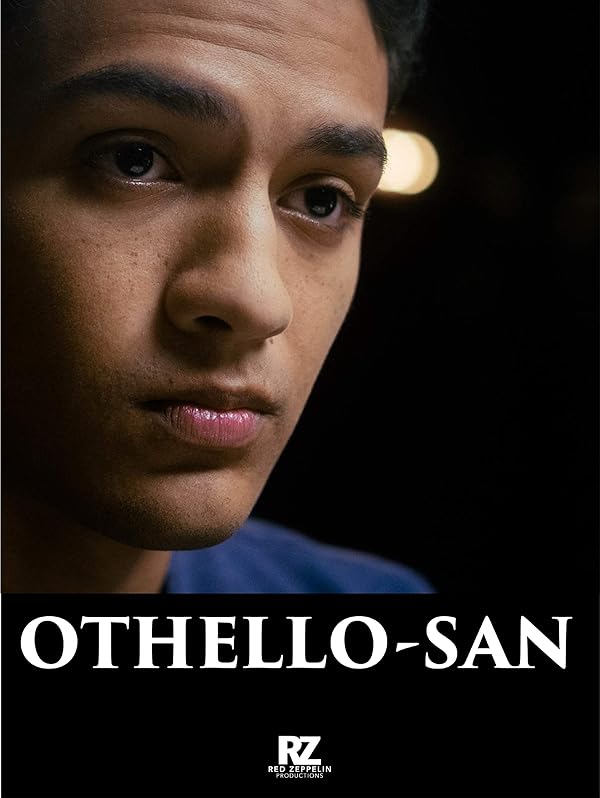
Othello-san - a challenge to Western thinking

Greetings, commies,
I imagine, in light of recent events, some of you have been watching various Othello adaptations. Here is a powerful short film about a young African American actor trying to establish himself in Japan - pigeon-holing himself into the token role of the Moor of Venice. There is so much talk about black-white relations, it was a breath of fresh air to see a different racial dynamic. 

My thoughts
I wrote a perfectly respectful, reasonable review, and it wasn't posted the first time around on Amazon. Not sure who is policing these reviews. Anyway, take two. 

This kind of movie should be shown in American acting schools. It touches upon the concept of American - and Western in general - hubris. It's not about an African American student going to Japan. It's about a Westerner going to an Asian country. I must say, I was not convinced when the young actor talking about being cast as a thug or a slave. He is too refined to be typecast in those roles. Though I have no trouble believing that many talented African American actors are held back from achieving their full dramatic potential by being pigeonholed into those token roles.  All and all, it's 20 minutes well spent. 

Sunday, June 21, 2020

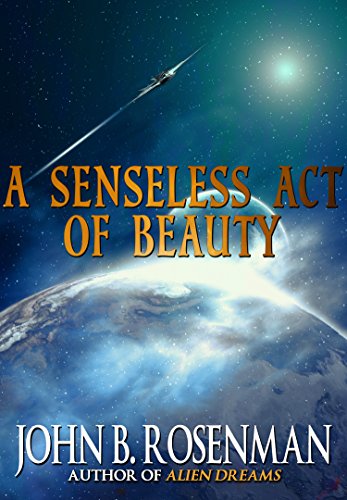
"A Senseless Act of Beauty" - it's "Island of Dr. Moreau" meets "Avatar"

Greetings, commies!
There seems to be so much discussion around race, colonialism and privilege lately, and not all discussion as civil. Understandably, those are pretty hot and sensitive topics. Imagine exploring them in a sci-fi novel! Now would be a perfect time to visit John B. Roseman's "A Senseless Act of Beauty". It's so much more than just another space opera! Rosenman is known for his eloquent, multi-layered, philosophical sci-fi. 

Synopsis:
Aaron Okonkwo, a Nigerian scientist, travels with a crew in the 24th century to evaluate Viridis, which proves to be a beautiful and fabulous world. There, Aaron discovers a strange, alien species and amazing machines and technology left in a vast underground complex by a mysterious race called the Creators.

Aaron soon falls under the irresistible, seductive spell of Nightsong, a green alien female with ominous and bewitching powers. However, an even greater danger rises. He will be forced to fight for the planet’s survival against a ruthless invasion of many ships to conquer and enslave the planet – just as Africa itself was once enslaved. Aaron knows it’s A Senseless Act of Beauty to try to reclaim his ancient warrior heritage and fight back against such overwhelming odds, but he knows he must try.


My thoughts:
John B. Rosenman demonstrates once again that originality lies in the clever combination of familiar topics and images. He likes to take an archetype and twist it a little to fill it with new meaning. In his philosophical space travel sci-fi novel "A Senseless Act of Beauty" the readers will her echoes of "The Island of Dr. Moreau" and the movie "Avatar". The concept of experimenting with nature and the ethical implications of this practice is at the core of the works by such sci-fi icons as H.G. Wells. On one hand, our instinct tells us "don't mess with nature". On the other hand, science would not progress if not for a few daring maniacs who were willing to push the boundaries, not fearing judgment from their colleagues and contemporaries. "A Senseless Act of Beauty" opens on earth in a scientific facility in Nigeria. Aaron, on of a scientist, takes a leisurely hike with a human-enhanced male monkey. The hike nearly costs Aaron his life, for he discovers that his companion has murderous tendencies. The intricate experiment came with hidden dangers. The experience piques his curiosity and sets him on the path of interstellar colonization and interspecies sexual affairs. The line between human and animal/alien is very fine. What happens when you cross it? 

It is refreshing that the main character, a conqueror and a colonist, is not the so frequently demonized white man. Aaron is African - and privileged. His color is of little significance on the new planet. I commend the author on raising certain ethical and philosophical questions without passing judgment. 

Monday, May 18, 2020

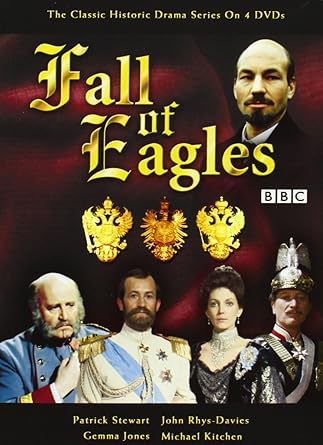
Fall of Eagles - a must see for political science students

Greetings, commies!

If you have any history buffs or aspiring political science majors in your family, this amazing box set is for you! Fall of Eagles examines the demise of several European empires condensed to 13 episodes.

Series summary
In the latter half of the 19th century, three ruling houses dominated Europe: the Hapsburgs of Austria-Hungary, the Romanovs of Russia and Hohenzollerns of Germany. Centuries of despotism, a continued lack of social reform and the advent of the devastating First World War caused the vultures of revolution to start circling. This 13-part epic drama features an all-star cast including Patrick Stewart, Gemma Jones, John Rhys-Davies, Gayle Hunnicutt and more!

My thoughts
This brilliantly cast and acted BBC gem is an absolute must-see for every political science and history student. A very discerning examination of "what went wrong". The series breaks down the toxic and complex chemical formula that had resulted in WWI and ultimately the demise of several European empires. The dialogues are rich, lush and profound. Your jaws will drop. Of course, it's BBC, so the content is not dumbed down or made more palatable for wider masses. In my humble opinion, the highlight is Patrick Stewart's rendition of Lenin. It's amusing to hear the Bolshevik leader speak with a cultured British accent. Here is your chance to be the proverbial fly on the wall and hear the conversations that determined the fate of Europe. 

Thursday, April 23, 2020

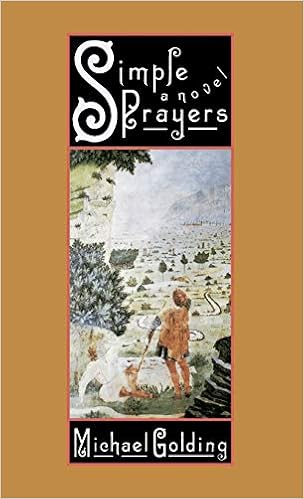
"Simple Prayers" by Michael Golding - a medieval sitcom

Hello, commies!
Another oldie but goody. I read this novel the old fashioned way: actually picked up a paperback at Waldenbooks (does that name ring a bell?) At any rate, if you want to add another gem to your pandemic list, consider Michael Golding's Simple Prayers. 

The novel, even though it is sat in Medieval Europe, is structured very much like a sitcom. There are stereotypical characters that one may expect from a sitcom: the town stud (Gianluca), the town geek (Albertino), the fat girl (Ermenegilda), the mysterious hottie (Miriam), the mandatory abusive single mom (Valentina) and the freaky child (Piarina). The interaction between the characters is very generic and stylized. You can predict right away who will fall in love with whom. What you can not predict is the horrible outcome of the novel. The plot takes a sudden turn, and the small town idyll falls apart.

I have no idea why the book critics called it "delightful". "Delightful" is not the word that comes to mind when you think about plague wiping out a whole village. There is nothing life-affirming in this book. If the reader expects a happy ending, he/she will feel deceived in the end. The book does not end with a wedding. It ends with a mass funeral.

Sunday, April 19, 2020

Horseman on the Roof - a forgotten "epidemic" novel


Hello, chaps!
Nobody can get enough of Covid19 media. Here is another unfairly underrated novel by an equally unfairly underrated Provencal author Jean Giono - Horseman on the Roof. Giono had fallen in and out of favor with college professors and mainstream readers over the past century. 

The 1995 film adaptation is also worth seeing. Angelo, a young Italian patriot is trying to get home in the midst of a cholera outbreak in early 19th century France. On the way he meets a beautiful married Frenchwoman named Pauline. The "woke" crowds will be particularly pleased with the courtly manner in which he handles their mutual sexual interest. Spoiler: there are no steamy sex scenes. The idealistic young stud with a sword remains a gentleman, even when Pauline becomes vulnerable and receptive. There are, however, some stunning panoramic shots of the French countryside. If you are sensitive and easily triggered, it's probably not the best idea to look at piles of corpses. You can't have a cholera epidemic without them. 


Thursday, March 26, 2020

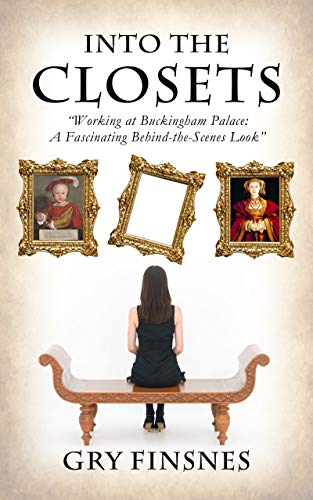
Into the Closets - a coming of age mystery!


Greetings, commies!
If you want to take a break from the depressing news, consider picking up this entertaining and insightful coming of age mystery Into the Closets set in the archive rooms of the Buckingham Palace. 

Synopsis:
A former Buckingham Palace employee recounts her time working at Buckingham Palace, through the eyes of her fictional character Aurelia Macintosh. With anecdotal observations of what really goes on at Britain's most famous residence, this novel, while a tale of fiction, draws an entertaining and enlightening portrait of life at the Palace the public rarely sees.
Aurelia goes to work for the Royal Collection, cataloguing the contents of several famous palaces. Her colleagues are a mixed lot of aristocrats, almost normal English people and foreigners. Security is a big issue in the palaces and when things start to disappear, they are all suspects.
The famous Holbein watercolour is stolen and Aurelia and her boyfriend Nick are asked to try to help finding the thief. But before they find any helpful clues they discover that Aurelia's workmates are not all what they seem, and their sexual preferences as well as their inherited problems can lead them into trouble. Above all the invaluable works of art in the palaces have to be protected from evil forces.
Click on the BUY NOW button to get your copy today.

My thoughts
To a recent art history grad, cataloguing artwork at the Buckingham Palace might sound like a dream job. Well, Aurelia Macintosh, the protagonist of the novel doesn't seem to think so. If you have read/watched "The Devil Wears Prada", you'll understand the predicament. A bright, serious young woman, who is apparently overqualified for the job, views it as a stepping stone. If anything, it's a flashy resume filler. A candid and open, someone socially awkward individual, Aurelia learns to navigate the world of her colleagues, learn to read between the lines and interpret subtle sneers. Her observation and analytical skills will come in handy when several pieces from the collection go missing. 

I have already read this author's historical novels set in Norway and Germany during WWII. This novel is semi-autobiographical, set in the 1990s. It's important to be mindful of the setting, because the world was different back then in terms of available technology, forensic tools as well as morals and sensibilities. It doesn't sound like a long time ago, but we're talking quarter of a century difference. The author does a good job keeping you in that period. You don't easily forget that the novel is set before the internet was at everyone's fingertips. LGBT individuals were more likely to hide their orientation from the world. Coming out could mean alienation from your family and unemployment. So many liberties and privileges that we take for granted in 2020 were still out of reach to many. 

The reader should be ready for many political discussions and references to the Parliament and the royal family. The title itself "Into the Closets" is such a loaded and intriguing title that evoke so many potential conflicts. I would not classify this novel as a straight up mystery. It's a coming of age story more than anything. A wide-eyed, sometimes overreaching Aurelia undergoes an emotional maturation process.